
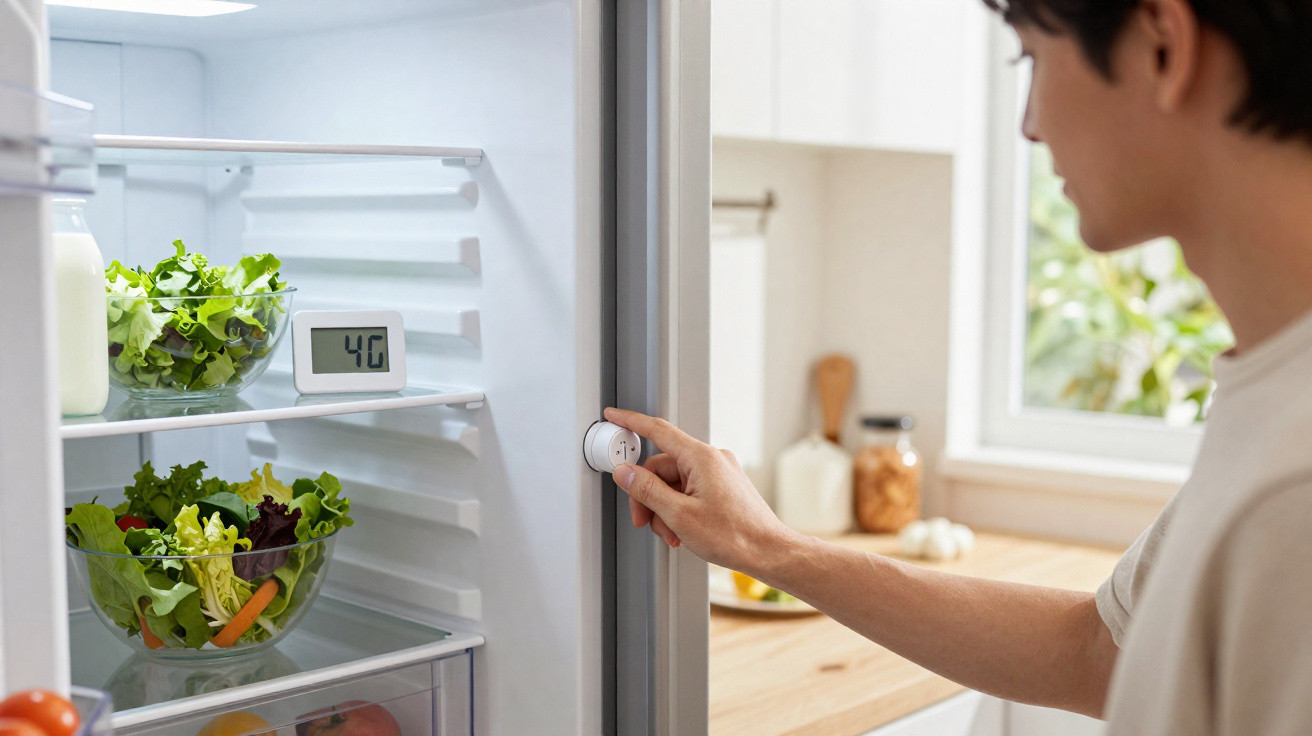
Before changing any setting on the control panel, first check that the refrigerator is level and that airflow is not obstructed. Minor changes to the appliance’s position, or to the number of items placed against its internal walls, can directly affect the temperature you notice. This may prevent unnecessary thermostat adjustments and help establish whether the issue really lies with the cooling setting.
Why is the correct refrigerator temperature so important?
Refrigerator temperature affects food preservation, food safety and energy consumption. If the appliance is too cold, vegetables, fruit and some dairy products may freeze unintentionally, changing their texture and flavour.
If the setting is too warm, there is a greater risk of microorganisms multiplying in meat, sauces, prepared leftovers and already opened products. In general, a temperature of around 3 °C to 5 °C is recommended inside the refrigerator, with the freezer kept below -15 °C. Always follow the manufacturer’s specific guidance in the instruction manual.
How can you adjust refrigerator temperature practically?
Before turning a dial or changing the digital display, identify the type of control fitted to the appliance. Older models commonly use selectors numbered from 1 to 7, whereas newer versions show the temperature range for each compartment, allowing more precise adjustment.
It is also worth checking a few usage conditions that support proper performance, reduce strain on the compressor and prevent sudden temperature changes. The following simple measures can make a difference every day:
- Check that the doors seal properly, with no gaps or dried-out rubber seals.
- Make sure no objects are preventing the door from closing fully.
- Avoid placing containers and packaging directly against the internal cold-air vents.
- Arrange food so that there is space for air to circulate between the shelves.
When does the refrigerator setting need changing?
The need to adjust the temperature often follows sharp weather changes, changes in how the appliance is used, or food not keeping as expected. On very hot days, it is usually necessary to increase the control by one level; during colder periods, some manufacturers recommend reducing it by one level to balance refrigeration and energy use.
Several signs can indicate that the setting is unsuitable, including excessive ice in the freezer, drinks taking too long to chill, strong odours developing quickly, or vegetables damaged by cold with ice crystals. In small kitchens, leaving a minimum gap between the rear of the refrigerator and the wall helps the condenser release heat and makes any setting more stable.
How can you keep refrigerator temperature stable every day?
Once the suitable setting has been found, everyday use becomes crucial for maintaining the internal temperature. Opening the door repeatedly or leaving it open for long periods makes the compressor work harder, while placing still-hot pans inside or using uncovered containers raises humidity and can encourage ice build-up in some models.
A few habits help keep refrigeration consistent: decide what to remove before opening the door, allow hot food to reach room temperature, store leftovers in sealed containers, and clean the appliance regularly, removing ice from models without automatic defrosting. If refrigeration remains inadequate despite these measures, consult an authorised service centre to inspect internal components and avoid risks to food safety.




Comments
No comments yet. Be the first to comment!
Leave a Comment