
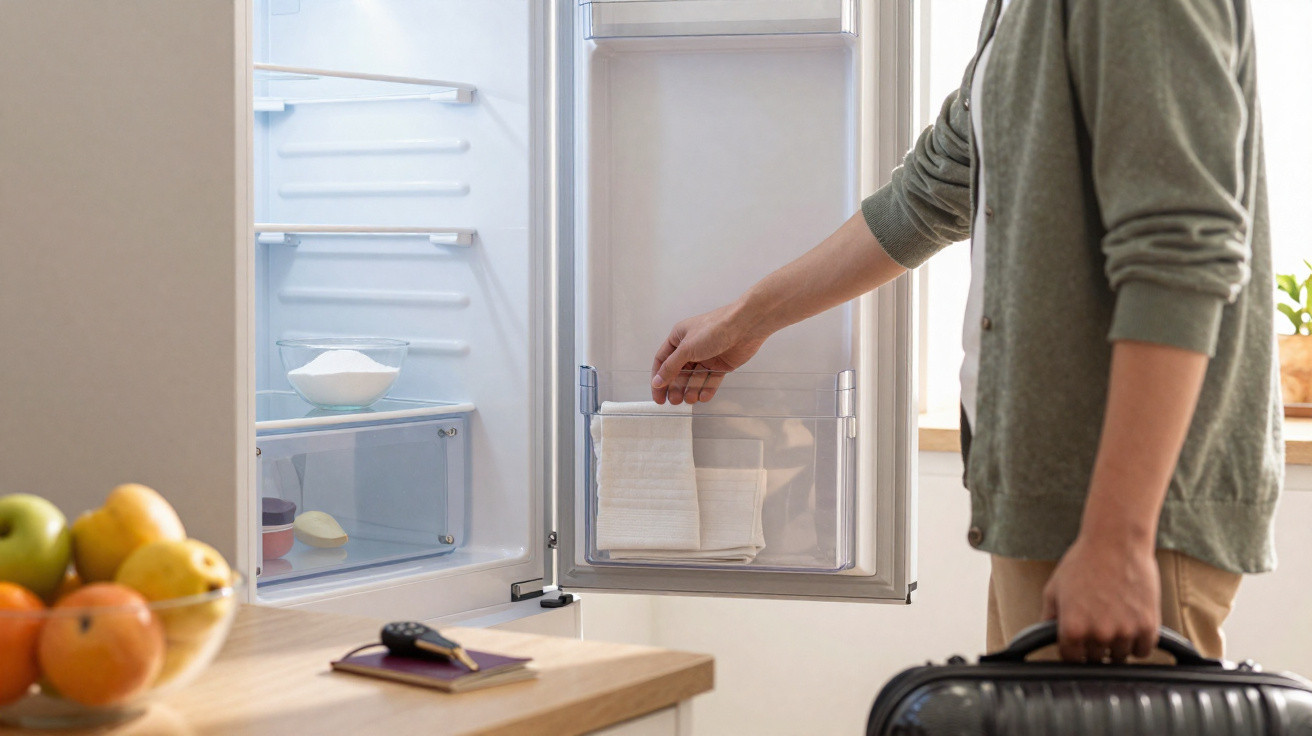
Switching off the refrigerator before a long trip may make it seem sensible to close everything up, but doing so can cause a lingering, hidden issue. With no air movement, a sealed door traps moisture, encouraging mould, fungi and stubborn odours.
Why is it recommended to leave the refrigerator door ajar?
Once the refrigerator is switched off, its interior no longer receives continuous cooling and can hold onto droplets, food smells and unseen residues. If the door remains shut, this dark environment becomes ideal for mould.
Leaving the door slightly ajar allows air to circulate and limits the build-up of this stuffy microclimate. A folded cloth or simple wedge will stop it closing completely, providing light ventilation without putting pressure on the original sealing rubber.
This precaution is most effective when a few details are observed:
- Opening: leave only a small gap rather than opening the door wide.
- Wedge: use a folded cloth or lightweight object to prevent it from closing.
- Air: circulation reduces the stale smell inside the appliance.
- Cleaning: leaving the door open only helps when the interior is clean.
- Freezer: make sure this section is dry as well before travelling.
What happens inside a switched-off, closed refrigerator?
A household refrigerator, used to keep food and drinks fresh, is essentially an insulated cupboard with a door designed to retain cold air. When it is switched off and shut, that same seal holds in stagnant air, residues and internal odours.
The issue is not the door itself, but the combination of darkness, moisture and no air circulation. Without the compressor running, any water left in drawers, on shelves or around seals can become a source of smells and fungi.
How should you prepare the refrigerator before switching it off?
Before unplugging it, remove every item of food, including open containers, sauces, fruit and any ice built up in the freezer. Then take out removable shelves and drawers to wash them separately, preventing small residues from remaining concealed in hard-to-reach internal corners.
An empty, dry and ventilated refrigerator
Cleaning comes before leaving the door ajar. Completely empty the appliance, remove any remaining ice and wash all removable parts. Then dry everything with a clean cloth before creating the ventilation gap.
The interior can be cleaned using a damp cloth and diluted bicarbonate of soda, without soaking components or pouring water directly onto them. Afterwards, wipe it with a clean cloth and allow it to dry thoroughly, as complete drying determines the result.
Before leaving, check the following steps:
- empty the refrigerator and freezer completely;
- carefully wash shelves, drawers and seals;
- wipe the interior with diluted bicarbonate of soda;
- dry everything before unplugging it.
How can bicarbonate of soda prevent residual odours?
Bicarbonate of soda can reduce residual odours after cleaning, particularly when the refrigerator has retained the smell of strongly scented foods. Use a mild solution on the internal surfaces, carefully wiping drawers, sides, seals and removable shelves.
Once everything is dry, an open container of bicarbonate of soda can be left inside the switched-off refrigerator to absorb some remaining odours. It does not replace constant ventilation, but it provides support in keeping the interior more neutral.
To use it without overdoing it, follow these steps:
- mix bicarbonate of soda with a small amount of water and apply it with a cloth;
- do not use a thick paste on sensitive components;
- leave an open pot of bicarbonate of soda inside the dry appliance;
- replace the bicarbonate of soda if the trip lasts for many months.
What should you do when you return from your trip?
Anyone familiar with the advice to leave the refrigerator door ajar while it is switched off should regard it as a straightforward preventative measure for trips. Its purpose is to avoid mould, persistent odours and extra work on returning.
When you get back, check for strong smells, dark marks or accumulated moisture before switching it on again. If everything is dry and clean, close the door as usual, turn on the appliance and wait for the temperature to stabilise before restocking it.






Comments
No comments yet. Be the first to comment!
Leave a Comment