
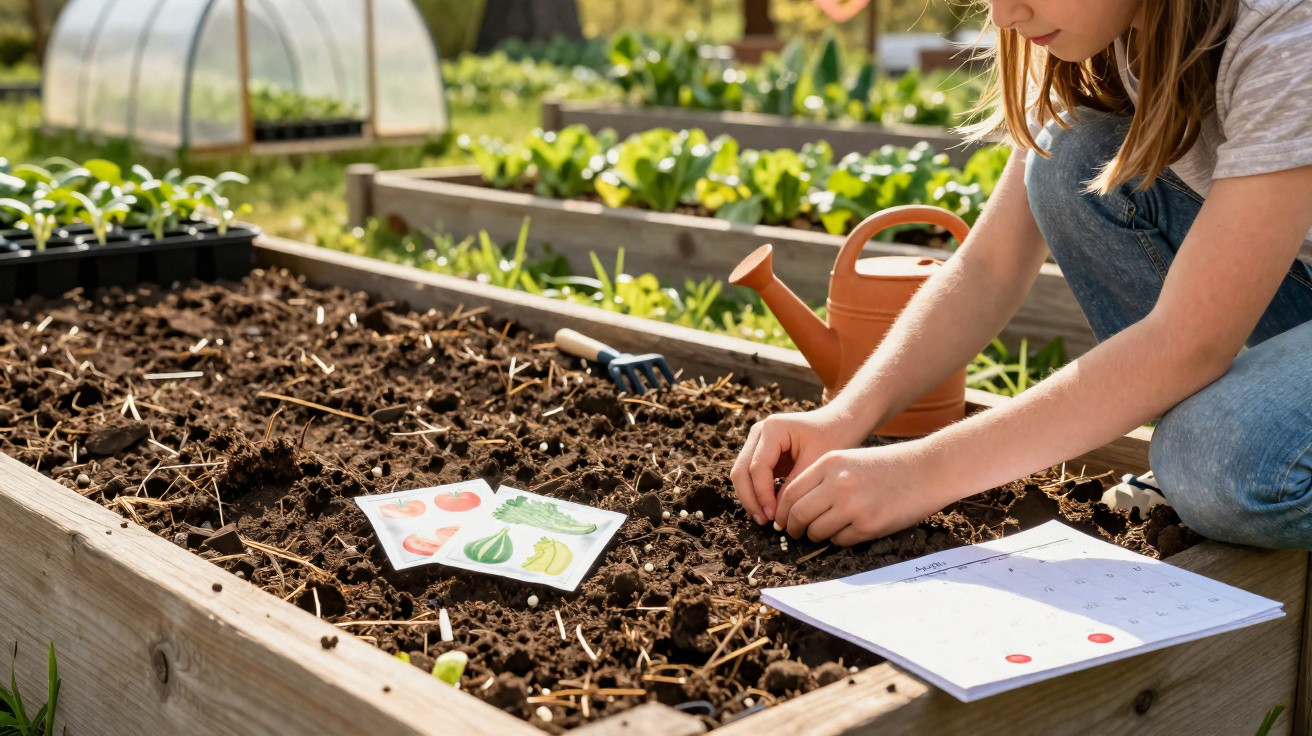
April makes the difference in the vegetable garden between a sparse plate and a generous bowl – sow the right crops now and you will be ahead by summer.
The days are getting longer and the soil is gradually thawing, yet every cold night can still hold young plants back. Choosing the right vegetables to sow in April helps safeguard your harvest against unpredictable weather and gives you valuable extra weeks before summer.
Why April determines your summer harvest
April marks a turning point beneath the surface: temperatures rise, microorganisms become active and seeds begin to germinate. At the same time, conditions remain changeable, with mild afternoons often followed by overnight ground frost.
This contrast is where the key decision lies. Sowing too early can leave seeds rotting in cold, wet soil, while acting too late sacrifices harvest time in June, July and August.
“Those who plan wisely in April harvest earlier, for longer and more reliably at the height of summer – even when the weather is unsettled.”
Your two most important guides are the condition of the soil and the weather window. The soil should no longer form sticky clods, but crumble loosely when rubbed between your hands. The forecast should also offer several frost-free nights, particularly for sensitive crops.
The best vegetables to sow by the end of April
The focus now is on crops that tolerate cool temperatures well or germinate especially quickly. They fill empty spaces in the bed while preparing the ground for crops planted later.
Fast-growing, hardy staple vegetables
- Summer lettuces: Sow thinly at around 1 cm deep, leaving 20–35 cm between rows. They provide crisp leaves early on and give the soil a little shade.
- Carrots: Sow these 1 cm deep too, with roughly 15 cm between rows. The soil needs to have a fine, crumbly texture; otherwise, carrots may grow crooked or forked.
- Peas: Direct-sow outdoors as soon as the soil is no longer cold and sticky. Leave 3–5 cm between plants within each row; a support frame keeps them upright and saves space.
- Bulb onions: Sow shallowly, approximately 1 cm deep. They prefer soil that is warming up and relatively dry.
- Leeks: Ideally, start them in pots or modular trays so that you can plant out strong young plants later.
Starting heat-loving summer favourites in time
Some classic summer vegetables are better started under cover in April, as cold spells can immediately slow their growth.
- Beans: These are highly sensitive to frost. Do not sow until the soil feels distinctly warm. For greater certainty, wait until late April or early May before sowing outdoors.
- Sweetcorn: A soil temperature of about 13 °C is ideal. In cooler areas, sowing in pots indoors or in a cold frame can produce sturdy plants for planting out.
- Courgettes and summer squashes: Sow in pots at a depth of around 2 cm and keep them warm. They grow rapidly and are generally ready for planting out after three to four weeks.
- Tomatoes: April is often the final opportunity for fresh sowings. Keep them somewhere bright and warm so that plants stay compact rather than becoming leggy.
- Melons: Place two seeds in each pot, about 2 cm deep. Germination is particularly dependable at roughly 18 °C.
Which vegetables should be sown directly in the bed
Some crops dislike being transplanted. They develop deep or delicate roots and react poorly when moved.
“Root vegetables such as carrots thrive when started directly in the bed – every disturbance reduces yield.”
The following are particularly suitable for direct sowing:
- Carrots
- Peas
- Lettuces, depending on the variety
- Onions grown from seed
Sow into shallow drills, then draw a light layer of soil over the seeds and firm it gently. A careful watering with a fine rose is enough. Powerful jets can wash seeds away and dislodge tiny emerging seedlings.
Early starts under cover: plants that need protection
Sensitive vegetables can suffer leaf damage or stop growing after only a few degrees below zero. Giving them a warm start provides a crucial head start.
Benefits of sowing indoors or in a cold frame
- Faster germination thanks to steady warmth
- Stronger young plants when planted out
- Better use of beds, as they can remain unused for longer
The following are especially suited to starting in advance:
- Tomatoes
- Courgettes and other squashes
- Melons
- Leeks for summer and autumn harvesting
Put pots on a bright windowsill, in an unheated greenhouse or in a cold-frame box. Plenty of light is essential, otherwise plants will stretch upwards and remain thin.
How to protect April sowings from cold and stress
Covers and straightforward protection methods
You can soften the effects of poor weather even without a large greenhouse. A few simple aids will raise soil temperatures and protect against overnight frost.
- Horticultural fleece cover: Lay lightweight garden fleece directly over the rows. It retains warmth at soil level and reduces wind exposure.
- Mini tunnels: Hoops and plastic sheeting create rapid protection for several rows at once.
- Individual cloches or cut-off bottles: These are ideal for sensitive young plants, such as courgettes or the first outdoor tomatoes.
If you are raising plants in pots, a basic wooden or metal frame covered with plastic can become an improvised cold frame. On sunny days, leave a small gap for ventilation; otherwise, plants can overheat.
Managing water and growing medium correctly
Seeds need moisture, but not waterlogged conditions. For trays and pots, use a loose, low-nutrient seed compost, as it does not clump and allows fine roots to develop freely.
“Keep it consistently moist, never soaking wet – this rule determines the success or failure of many sowings.”
The most suitable watering methods include:
- a spray bottle for very fine seeds,
- a watering can with a rose for beds,
- watering from below for pots: briefly stand the pot in water, then allow it to drain.
Small mistakes with major consequences: what to avoid by the end of April
In spring, a handful of common pitfalls repeatedly leave amateur gardeners disappointed. Knowing them helps avoid unnecessary frustration.
- Soil that is too cold: Seeds remain inactive in the ground for weeks and become vulnerable to rot fungi or mice.
- Heavy-handed watering: A strong flow destroys seed drills and exposes germinating seeds.
- Failure to thin out: Plants growing too closely compete for light, water and nutrients, resulting in poor roots and tiny heads.
A simple April timetable for the vegetable garden
| Period | Suitable tasks |
|---|---|
| Early April | Direct-sow peas, early lettuces, carrots and onions |
| Mid-April | Start leeks; sow the first tomatoes and squash-family crops under protection |
| Late April | Sow courgettes and squashes in pots, make the final tomato sowings, and sow beans and sweetcorn once the soil is warm |
In upland areas or cooler regions, it is perfectly reasonable to delay this timetable by one or two weeks. Sowing later at the right temperature usually produces stronger plants and more dependable harvests.
What else matters: soil and variety selection
Many summer problems begin as early as April. Heavy, wet ground makes life difficult for root vegetables. If you have loam or clay soil, improve its structure with sand, compost and a fine, crumbly texture.
When choosing varieties, look at regional recommendations: early pea varieties, quick-growing lettuces and carrots with a short growing period are more likely to provide the summer harvest you want. Longer-maturing varieties tend to show their strengths later in the summer.
Practical combinations for full beds in summer
Planning ahead in April means allowing for several harvests from each bed. Early vegetables that mature quickly can be sown between rows of slower-growing crops.
- Lettuce between carrots: the lettuce is ready first and then frees up space.
- Radishes (not mentioned in the original text, but useful) as marker sowings: they identify rows of carrots and peas while loosening the soil.
- Peas with later brassica plants: peas are harvested by summer, after which brassicas take over the space.
This lets you use the valuable period from April to June twice over and increase the overall harvest without needing more growing space.
If you refine your garden calendar now, keep an eye on soil temperature and select suitable vegetables, harvesting at the height of summer will be considerably more relaxed. April calls for a little planning and sensitivity, but rewards it with longer harvesting periods and far more reliable beds.





Comments
No comments yet. Be the first to comment!
Leave a Comment