
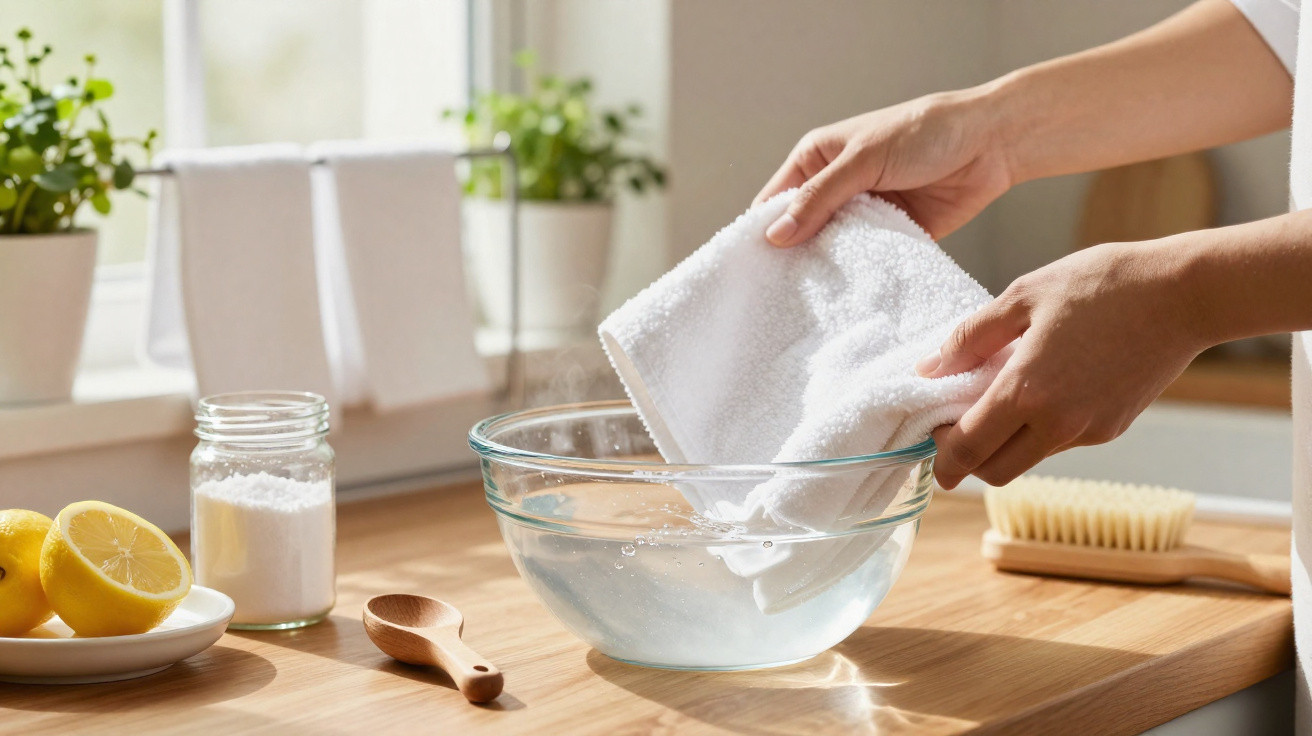
A small adjustment to your laundry routine can restore that crisp, hotel-style white.
Kitchen towels are put through a great deal and quickly show their age. They pick up stains, odours and far more besides lint. A more effective washing approach can remove grime, eliminate smells and revive whiteness without using chlorine bleach.
Why clean linens matter in a busy kitchen
Dishcloths and hand towels come into contact with plates, worktops, handles and hands. Through this repeated use, microbes can be transferred around the kitchen. A cloth used to wipe up meat juices at lunchtime may later be used to shine glasses for dinner if it goes back into rotation. This creates an unobtrusive pathway for gastrointestinal bugs to reach food.
Damp material allows bacteria to cling on and reproduce. Every wipe may distribute residues from raw food, skin oils and detergent. Using the same towel for hands, dishes and worktops increases that risk.
Swap towels often, separate tasks, and launder hot. Those three habits cut cross‑contamination far more than any single cleaner.
The quiet risk of cross-contamination
- Assign one towel to hands, another to dishes and a separate cloth to worktops.
- Replace towels every day in a home kitchen, or earlier after preparing raw meat.
- Let them dry completely between uses, as damp fabric encourages odours and bacterial growth.
- Wash higher-risk loads at 40–60°C (104–140°F) with an oxygen-based booster.
The powder that outperforms baking soda
Baking soda has a useful role in deodorising and light cleaning. It neutralises acids, slightly softens water and helps remove minor soiling. However, stubborn marks, yellowing and dulled whites require greater oxygen power.
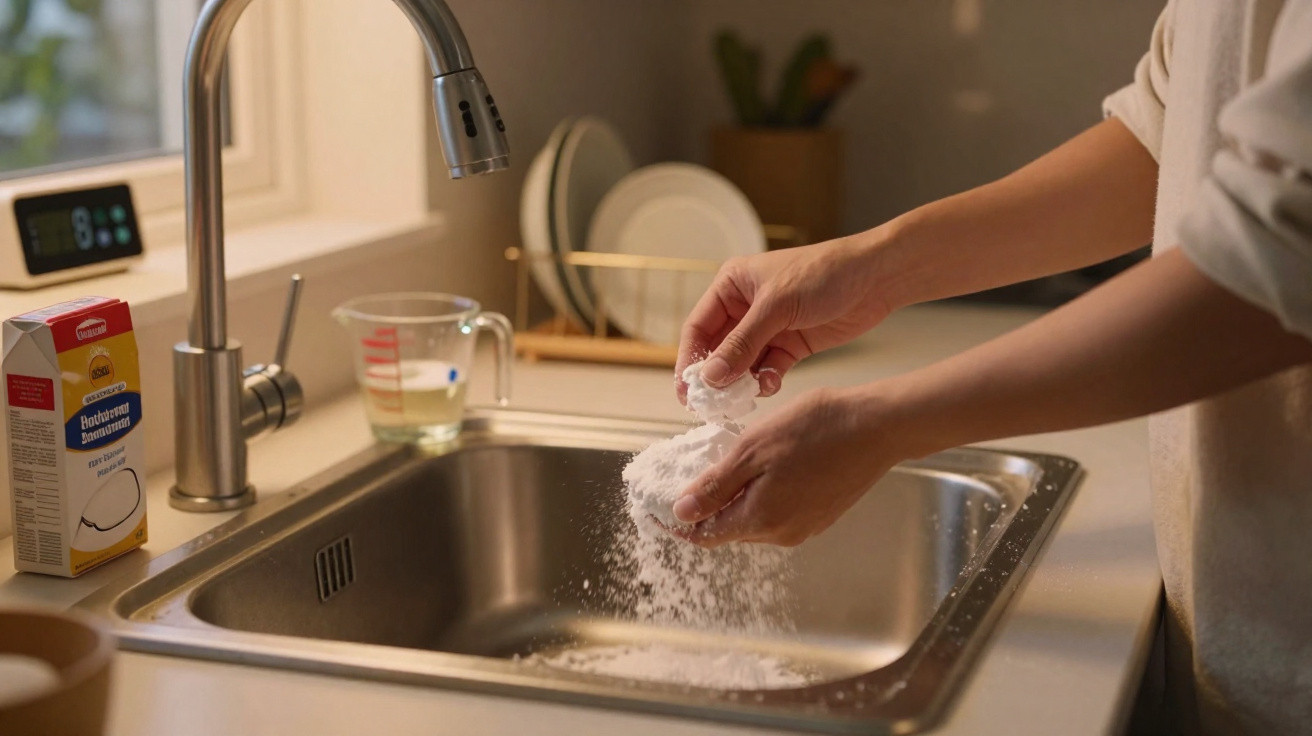
This is where sodium percarbonate is useful. It is a dry, solid adduct made from washing soda and hydrogen peroxide. Once dissolved in hot water, it releases active oxygen to break down coloured compounds, food residues and odour molecules.
What it is and how it works
When sodium percarbonate enters water, it separates into sodium carbonate, a washing alkali, and hydrogen peroxide. The peroxide subsequently produces oxygen that works on stains. Heat accelerates the process, which is why hot water is important. For white and durable cotton items, use water at a minimum of 40°C.
Heat unlocks oxygen. Sodium percarbonate brightens whites and disinfects fabrics when the soak is warm enough.
Baking soda vs. sodium percarbonate
| Product | Best for | Water temp | Whitening strength | Odour control | Notes |
|---|---|---|---|---|---|
| Baking soda (sodium bicarbonate) | Deodorising, gentle cleaning, surface degreasing | Cold to warm | Low | High for smells | Safe on most fabrics; mild on stains |
| Sodium percarbonate (oxygen bleach) | Whitening, stain removal, hygiene boost | 40–60°C for best results | High on whites | High | Avoid wool/silk; do a colourfast test on brights |
Step-by-step: revive towels and dishcloths
Apply this hot-soak method to white cotton or colourfast kitchen linens. Check each care label beforehand, and do not use it on wool, silk or items with flame-retardant finishes.
- Fill a bucket or sink with water heated to 40–60°C (104–140°F).
- Mix in 2 tablespoons of sodium percarbonate for every 4 litres of water, stirring until the solution is clear.
- For heavily soiled items, add your normal dose of liquid detergent.
- If desired, add 1 tablespoon of salt to help loosen greasy films from towels.
- Place the towels fully beneath the water and press out trapped air for even exposure.
- Leave them to soak for 60–120 minutes if there is deep yellowing or food staining.
- Move the items to the washing machine and select a hot cotton programme.
- Rinse thoroughly. For added brightening, dry them in sunlight, or tumble dry on hot until they are completely dry.
Do not mix oxygen bleach with chlorine bleach. Never seal active solutions in a closed container.
What about vinegar?
Acid can remove mineral film and add brightness following an alkaline wash. Use vinegar in a separate rinse rather than adding it to the same bucket as oxygen bleach. Pour 80 ml of plain white vinegar into the fabric-softener drawer so that it is dispensed during the final rinse. It helps balance the pH, makes towels feel less stiff and limits detergent residue.
Machine add-in for busy weeks
If there is no time to soak, add it directly to the machine instead. Put 1–2 tablespoons of sodium percarbonate into the detergent compartment for a standard towel load. For heavily soiled washing, increase this to 3–4 tablespoons and select a 60°C cycle where the care label permits it. Heat activates the oxygen and removes set-in stains more effectively than cold water.
Smart habits that keep whites white
- Keep cloths used with raw protein apart from other laundry, and wash them on the hottest safe programme.
- Treat new stains in advance with a paste of oxygen bleach and warm water, leaving it for 10 minutes.
- Do not use fabric softener on towels, as it may reduce absorbency and retain odours.
- Shake towels before laundering to dislodge crumbs that can hold odour.
- Dry them quickly, since slow drying promotes a lingering musty smell.
Safety, fabric care, and realistic limits
Keep sodium percarbonate in a sealed, dry container, as moisture may weaken it. Wear gloves if your skin is sensitive, and ventilate the room when using hot soaks. Test a concealed area of brightly printed or dyed linens first. Oxygen bleach is colour-safe for many fabrics, although some dyes can run at high temperatures.
Do not combine acids and oxidisers directly in a closed container. Keep oxygen bleach separate from chlorine bleach, and avoid using it on wool, silk, leather or cloths with metal trim.
When to retire a towel
Fraying edges, permanent greasy shadows or a sour smell that remains after a hot wash indicate that a towel has reached the end of its useful life. Turn worn towels into cleaning rags and begin a new rotation. Keeping six to eight kitchen towels in circulation and washing them hot twice weekly helps maintain hygiene and brightness.
Costs and small wins
Sodium percarbonate is commonly sold as “oxygen bleach” or “oxygen whitening powder.” One tablespoon costs only a few pence per load and can replace harsher products in most kitchens. Sunlight provides a free additional benefit: UV helps fade organic stains, while fresh air removes detergent odour.
Warm water, oxygen bleach, and a routine. That trio turns stained kitchen workhorses back into clean, bright helpers.



Comments
No comments yet. Be the first to comment!
Leave a Comment