
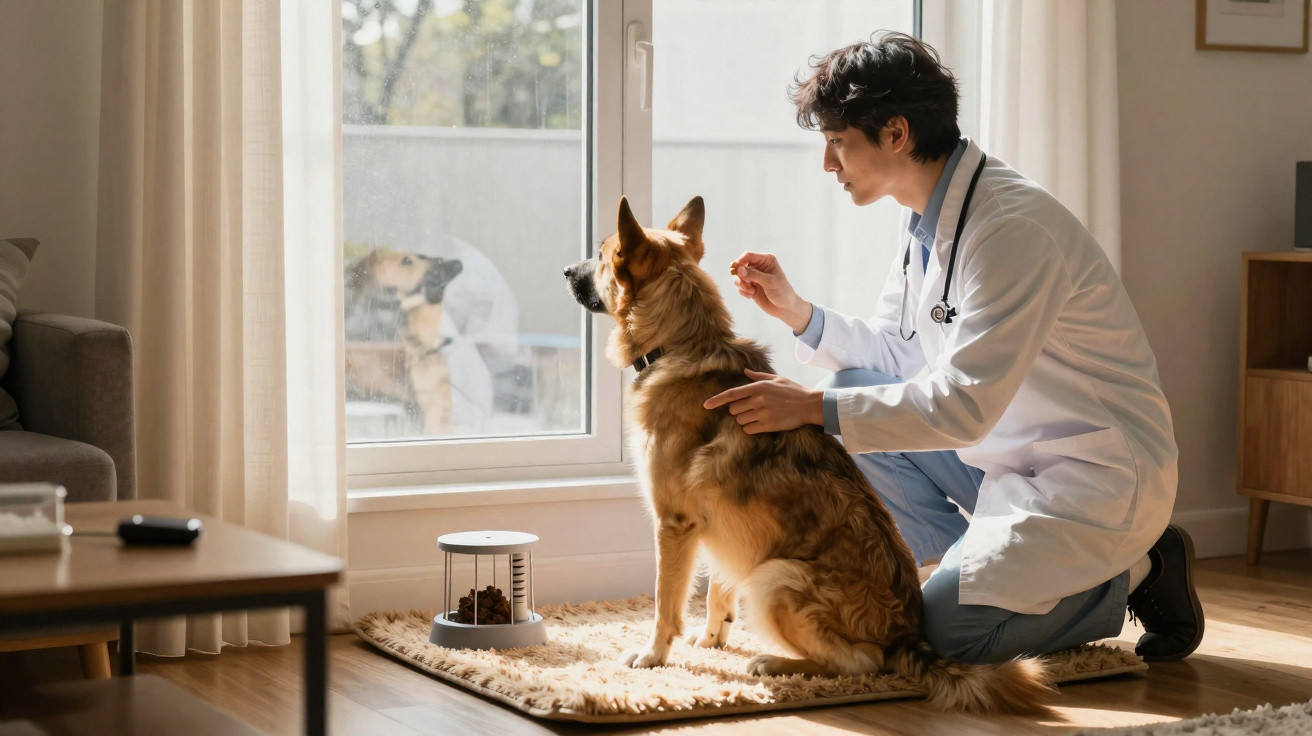
Peace at home can come back through routine, play and one kind habit.
Veterinary behaviour teams support a low-pressure method for changing barking without using fear or devices. This approach develops control, trust and straightforward cues your dog can understand, even when their surroundings become noisy.
Why dogs bark in the first place
Barking is communication rather than a flaw. Dogs vocalise to express needs, including wanting to go outside, eat or play. They may also bark because they feel happy, frustrated or anxious. Often, barking is an alert that something seems unusual, such as a sound in the corridor or a knock at the door.
Puppies commonly bark more while they are still developing social skills. They experiment with what gets results: if making noise prompts a response, they will make noise again. Adult dogs can fall into that pattern too when they have too little routine or enrichment in their day.
The home environment also influences how vocal a dog is. A new building, lift chimes or refurbishment work may make a dog more reactive. Many dogs settle once their routines become established. The aim is not permanent silence; it is to create a dependable “off switch” for times when you need quiet.
Reward quiet, not noise. Your dog repeats what pays.
Avoid blame or frightening methods. Your dog is not barking “on purpose” to irritate you. Punishment increases stress and can make barking louder. Current training methods focus on markers and rewards: identify the cause, make a plan and reinforce the calm behaviour you want to see more often.
The vet-backed approach that flips the script
Here is the seemingly unexpected technique trainers value: first teach a bark cue, then teach a cue for quiet. If you can ask for a behaviour, you can also ask for it to stop. That gives you control while giving your dog a clear task.
Name the bark, then name the quiet. Control creates calm.
This approach depends on good timing and consistency. Mark the behaviour you requested, then reward it with food, a toy or praise. Next, introduce a short, clear word and hand signal for silence. Your dog learns to change state when you signal, rather than simply reacting on impulse.
Step 1 - Put the bark on cue
Choose a cue such as “Speak.” Use a safe, minor trigger that encourages one bark, for example a gentle tap on an internal door or a quick, playful bounce with a toy. Say the cue as your dog begins barking. Mark the instant with “Yes!” or a click, then reward immediately.
Keep each session brief and allow excitement levels to drop between repetitions. If your dog becomes overexcited, stop the session and begin again later. The lesson is straightforward: barking is allowed when requested, and it then ends.
For dogs that seldom bark, complete just a few successful repetitions. The purpose is not to create a new pastime, only to establish a label you can manage.
Step 2 - Teach the quiet cue
Select a short word such as “Quiet,” “Hush” or “Stop.” Combine it with a relaxed hand signal, for instance a flat palm pointing downwards. Begin in a room with few distractions. Ask for a bark, then look for the first tiny break in sound. Say “Quiet,” mark the pause and drop the reward from your hand to the floor to reduce excitement.
Lengthen the pause gradually: request one second, then two, then three. Be exact with your timing and never reward while your dog is making noise. Reward silence instead. Your dog will learn that being still brings good things.
Step 3 - Generalise without rushing
Train at various times of day and in different rooms. Introduce gentle triggers, including a phone notification or a recorded doorbell. Increase the challenge in small increments; do not move from “bedroom practice” to a “crowded lobby” overnight.
Support training with appropriate daily care. Take walks that give your dog time to sniff. Provide enrichment through food puzzles, a snuffle mat or a stuffed chew. Guard their nap time. A dog that is rested and meaningfully occupied is less likely to bark.
What to avoid
- Do not use shock, spray or vibration collars. Such tools increase fear and may make reactivity worse.
- Do not shout. Your dog may assume that you are joining in.
- Do not reward demand barking. Wait for a moment of quiet before opening a door, throwing a ball or giving attention.
- Do not swap cue words. Using one word for each action keeps the message clear.
- Do not hold marathon training sessions. Five focused minutes is more effective than one long, disorganised drill.
Common barking triggers to plan around
- Needs: toilet breaks, hunger, thirst or pain
- Emotions: excitement, frustration or uncertainty
- Alerts: footsteps, lift chimes, deliveries or voices outdoors
- Under-stimulation: too little exercise, limited chewing opportunities or no time to sniff
- New environment: unfamiliar echoes, new neighbours or removal boxes
- Poor sleep: disrupted rest increases sensitivity to sound
Positive training vs quick fixes
| Approach | Typical outcome |
|---|---|
| Marker-and-reward with clear cues | Better control, lower arousal, stronger trust |
| Startle or pain-based tools | Quieter in the moment, higher stress, rebound barking |
| Ignoring without a plan | Random results, frustrated dog, slow learning |
How to measure progress
Record information so you can make early adjustments. On the first day, count the number of barks that follow a knock at the door. Repeat the same test on day five and day ten. Track how long it takes your dog to become quiet after the cue. Look for a consistent positive trend rather than perfection, as small improvements build over time.
Also note the context. Had your dog slept? Were builders working in the flat above? Did you use different treats? These patterns can reveal solutions beyond the training exercises themselves.
When to bring in help
Arrange a veterinary assessment if barking suddenly increases or changes. Pain can cause vocalisation, while altered hearing or vision may increase anxiety. Older dogs can experience cognitive decline that affects how they respond to noise and routine.
If your dog panics when you leave, or their behaviour escalates around doors or unfamiliar people, seek help from a qualified behaviour professional. An individual plan may involve trigger desensitisation, changes to home management and medication where a medical team advises it.
Extra tools that boost success
Set up the room for calm
Block views into corridors with window film or curtains. During busy periods, play white noise near the door. Set up a chewing area away from windows. Ask neighbours when deliveries usually arrive, allowing you to schedule a training session or a quiet walk.
Build a daily rhythm
Follow an uncomplicated routine: a morning sniff walk, a puzzle at midday, an afternoon nap and a short evening training session. Predictable days reduce stress, while brief and frequent repetitions keep learning clear.
Hand signals and body language
Many dogs understand gestures more quickly than spoken words. Use the same hand signal alongside your “Quiet” cue each time. Stay still when asking for calm and breathe slowly. Your dog will reflect your pace.
Calm is a skill. You can teach it like sit, down, or come.
One realistic training plan for the week
- Day 1–2: Teach “Speak” and mark one bark. Introduce “Quiet” during a half-second pause. Reward generously.
- Day 3: Request one second of silence. Train in two rooms, keeping sessions to five minutes.
- Day 4–5: Play a recorded doorbell quietly. Give the “Quiet” cue and extend silence to two seconds.
- Day 6: Work near the actual door while a friend taps gently. Take frequent resets.
- Day 7: Try a real knock. Record the number of barks and time to quiet, then adapt next week’s plan.
This method achieves more than simply quietening a dog. It gives your companion a clear role, enables you to manage alert barking when you need rest and retains the useful warning for genuine changes around you. With accurate timing, fair rewards and consistent cues, quiet becomes a learnt behaviour rather than a hope.




Comments
No comments yet. Be the first to comment!
Leave a Comment