
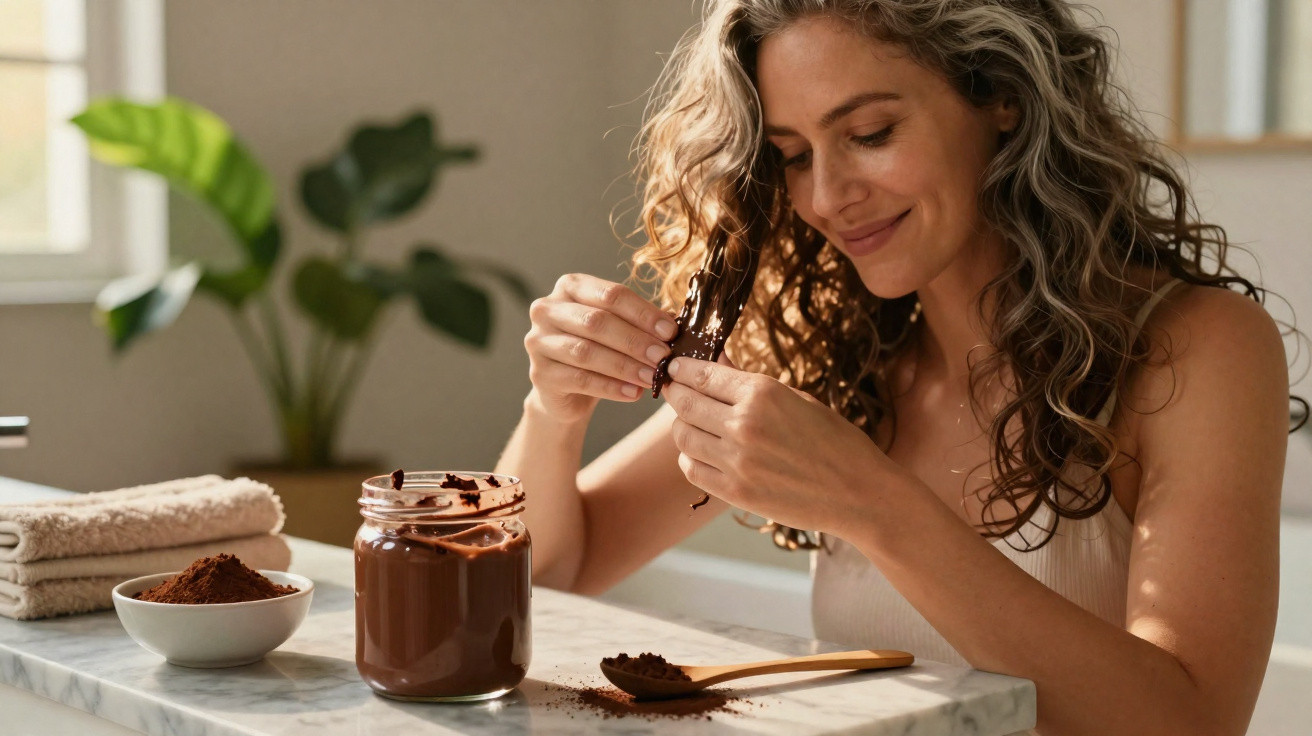
The habit of disguising silver strands does not always require a chemical solution. One cupboard trick adds warmth, softness and a discreet blur to greys - with the scent of a winter bakery.
A friend was mixing cocoa in a chipped bowl, not to make brownies but to use on her hair, laughing at the ridiculousness of it as the window steamed up. She spread the paste over her temples as carefully as if she were icing a cake: unhurried, almost ritualistic. Afterwards, in the hallway light, the grey along her parting appeared less pronounced, while her lengths had taken on a deeper, gentler brown that did not shout “dye” but simply looked… refreshed. The gloss gave it away, as though a satin ribbon had passed through every strand. An ordinary tin from the cupboard had done something modest yet generous.
The spoon was doing more than mixing.
Why cocoa is the sweet spot for greys
Grey hair is not the problem; the contrast is. Silver strands against dark roots can look especially stark in bright light, in photographs or beneath office LEDs. A cocoa gloss works like a warm Instagram filter for actual hair, laying down a delicate brown veil that softens the contrast. It feels more like “blended Sunday light” than a “Tuesday salon job”, which is precisely what many people want. It acknowledges the colour you used to have without acting as though time has stood still.
Consider Sam, 54, who used cocoa before a family gathering. She quickly whisked up a paste, applied it to her parting and front sections, then left it in while replying to messages. At the restaurant, her sister asked whether she had “done something” to her hair, without being able to say exactly what. That is the ideal result. The same mood appears online: understated videos featuring bowls and spoons, with comments focused on gloss rather than solid coverage. People are after natural, low-commitment results that help them leave the house feeling slightly more comfortable.
There is a straightforward reason behind the effect. Grey hair has no melanin and is often somewhat drier and more porous, so it readily takes hold of sheer pigments. Cocoa powder has extremely fine brown pigments which settle into the cuticle’s small gaps, creating a temporary tint. Combining it with something creamy and slightly acidic helps smooth the cuticle, allowing it to reflect more light. That is the shine you tend to notice first. There are no oxidisers or ammonia - only a light coating that fades gradually with washing and does not look heavy or flat.
The coffee–cocoa tint: a cupboard method for grey hair
This is the basic recipe for a coffee–cocoa tint to blend greys and enhance gloss. In a bowl, combine 2 tablespoons of unsweetened cocoa powder, 3 tablespoons of silicone-free conditioner, 1 teaspoon of honey and 2–3 tablespoons of cooled strong coffee or black tea, stirring until you have a yoghurt-like cream. Apply it to clean, towel-damp hair, covering the greys first before drawing it through the mid-lengths. Leave for 20–35 minutes, rinse with cool water and, if you enjoy extra slip, finish with a quick splash of diluted apple cider vinegar.
Everyone has experienced a moment when the bathroom mirror seems a little too truthful. Be gentle with yourself. Begin lightly: a shorter processing time gives a subtler result, while longer brings extra warmth. Avoid soaking the roots with a runny mixture - thin pastes drip and can mark towels. Realistically, no one wants to do that every day. Carry out a patch test behind the ear, put on an old T-shirt and keep a dark towel nearby. Repeat once a week for a gradual build-up, then refresh only the parting and hairline between full masks.
Treat cocoa as a blending tool rather than an eraser. It will not transform silver into chocolate brown, and that is part of its appeal: the finish is natural, convincing and distinctly your own.
“Cocoa won’t reverse greys. It softens the line where they meet darker hair, and the sheen makes everything read healthier - that’s what people actually notice,” says Marta, a Brighton colourist who keeps a jar by her basin.
- It works best on light brown to dark brown hair; red hair gains warmth, while blonde hair takes on a beige glaze.
- For grey temples, dab on the mixture, wait 10 minutes, then apply it to the lengths.
- Rinse with cool water to keep the cuticle compact and the shine strong.
- Once dry, apply a pea-sized amount of leave-in oil to retain the glow.
- Keep it enjoyable: missing a week changes nothing - the tint simply fades gently.
A gentler approach to hair colour
Choosing subtle blending over complete coverage has a quietly rebellious quality. The cocoa approach is not about concealing your age; it is about adjusting the contrast so that your hair feels more harmonious with your skin, clothing and day. It is the difference between using a dimmer switch and pulling down a blackout blind. You retain movement and multi-tonal character, only with a softer balance that suits both morning light and late-night selfies.
The sensory element matters as well. Cocoa’s scent, the simple act of stirring and a warm towel transform a quick fix into a ritual. Age lines don’t need loud fixes; they need kinder light. Practically, it saves your scalp from harsh treatments and your diary from three-hour salon appointments. Emotionally, it lets you choose glow over control. That is the change many of us are making: shine-first, cover-second.
Will cocoa replace hair colour for ever? Probably not, but it does not have to. You can soften greys for workdays, then wear bright lipstick and allow them to gleam at the weekend. Share the bowl with a friend, add a pinch of cinnamon for fragrance or use a tea bag when you have run out of coffee. Find out what your hair responds to. The enjoyment lies in experimenting - and in that small, genuine boost when the light catches your hair and you notice yourself smiling.
| Key point | Detail | Benefit for the reader |
|---|---|---|
| Who it suits | Best on light/dark brunettes; blends greys, adds warmth; blondes get a beige glaze | Sets realistic expectations and avoids disappointment |
| Core recipe | 2 tbsp cocoa + 3 tbsp conditioner + cooled coffee/tea + 1 tsp honey, 20–35 minutes | Clear, repeatable method using cupboard staples |
| What to expect | Soft blend, added shine, temporary tint that fades gently | Low-risk, natural-looking results without harsh regrowth lines |
FAQ
- Does cocoa really cover grey hair? It reduces contrast rather than providing complete coverage. Greys look warmer and less severe, while the overall shine is improved.
- Will it stain my scalp or pillow? Rinse thoroughly, then finish with cool water. Any slight residue generally disappears after the first wash; use a dark towel on the first day.
- Can blondes use this trick? Yes, although the result will be a delicate beige or tea-washed tone rather than brown. Test a small section first to assess the warmth.
- How often should I do it? Start weekly to build the effect, then use it every 10–14 days. Refresh the parting and temples between full applications if desired.
- Can I mix cocoa with henna or box dye? Keep them separate. Use cocoa on days when you are not colouring your hair, and patch-test every new combination on a small section before committing.





Comments
No comments yet. Be the first to comment!
Leave a Comment