
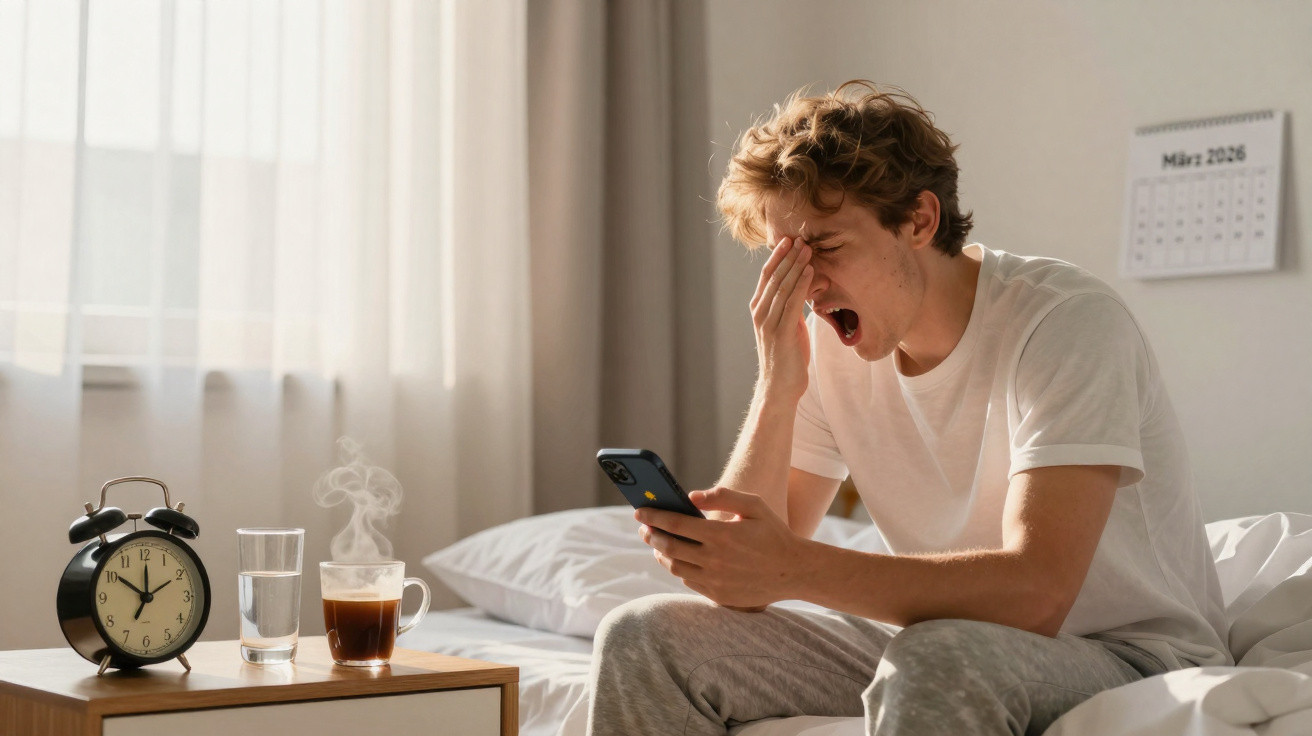
Spring is drawing closer, the days are getting longer – and another overnight clock change is set to disrupt our sleep.
Many people first notice it at the office coffee machine: at some point in March, the alarm suddenly feels brutally early, everyone is talking about the clock change, and they wonder precisely when that hour disappears. 2026 will be no different, so anyone wanting to be prepared should already keep the relevant weekend in mind.
When does Germany switch to Daylight Saving Time in 2026?
As in every European Union country, Germany follows a shared rule: Daylight Saving Time always begins on the final weekend of March. This arrangement will remain unchanged at least until 2026.
During the night from Saturday 28 March 2026 to Sunday 29 March 2026, the clock moves forward from 02:00 to 03:00 – and one hour of sleep is lost.
The key moment occurs in the middle of the night:
- Saturday 28 March 2026, 23:59: still standard Central European Time (CET)
- Sunday 29 March 2026, 01:59: the final minute of winter time
- Immediately afterwards: the display jumps to 03:00 – Central European Summer Time (CEST)
Anyone setting an alarm for 07:00 will get up at the same official time as usual. However, the body follows its internal clock more closely, so it feels as though it is only 06:00. This mismatch is exactly why so many people feel tired.
Why does the clock change always happen at night?
The clocks are deliberately changed in the early hours, when the fewest people are travelling. This means timetable changes for rail and air travel disrupt everyday life far less, while shift patterns are also easier to adjust overnight than in the middle of the day.
The fixed arrangement is based on an EU directive from the 2000s, which sets out a uniform process. As a result, every member state changes its clocks at the same time. In practical terms, this means no extra time differences within the Union and no confusion for travel or international trade.
What is the purpose of Daylight Saving Time?
Officially, Daylight Saving Time is intended to make better use of lighter evenings. The sun seems to stay in the sky for “longer” because darkness falls later in the evening. Anyone wanting to go jogging in daylight after work, tend the garden or sit with friends in a beer garden benefits from this.
Whether the measure genuinely saves energy remains disputed. Earlier expectations assumed that less electricity would be needed for lighting. Modern households, however, use different technologies, and air conditioning and entertainment electronics now play a greater role than they once did. Studies therefore reach differing conclusions.
How the clock change disrupts sleep
Even though it is “only” one hour, the impact on the body clock is noticeable. Most people follow a fairly stable sleep-wake cycle shaped by light, habits and hormones. When the clock suddenly moves forward, Monday can feel like a mini case of jet lag.
Many people complain of tiredness, poor concentration and a general feeling of being “out of sorts” in the week following the change.
Children, shift workers and people already dealing with sleep problems are particularly sensitive. For them, the half-week or full week after the time change can be more demanding.
Typical symptoms after the clock change
- Difficulty getting going in the morning and struggling to get up
- Reduced concentration at work or school
- Irritability and less patience
- Mild headaches or a feeling of pressure in the head
- Greater reliance on coffee or energy drinks
How to prepare for Daylight Saving Time 2026
The good news is that it is possible to prepare the body for the time change and soften its effects. Sleep researchers advise making small adjustments during the week before the relevant weekend.
Ease into it during the preceding week
Rather than radically shifting your sleep routine in one night, it helps to prepare gradually. Anyone who starts going to bed around 10 to 15 minutes earlier from Monday 23 March 2026 can reduce the shock to the body.
| Day | Recommended action |
|---|---|
| Monday | Bring bedtime forward by around 10–15 minutes |
| Tuesday | Go to sleep another 10–15 minutes earlier |
| Wednesday | Cut down evening screen time and dim the bedroom lighting |
| Thursday | Eat a light evening meal and avoid late coffee or energy drinks |
| Friday | Go to bed a further 10–15 minutes earlier |
| Saturday | Take an afternoon walk and start winding down in good time during the evening |
Following this plan brings you closer to the new time step by step. The actual change on Sunday night will then feel less abrupt.
Use light as a natural timekeeper
Light is considered the strongest influence on the body clock. Experts therefore recommend deliberately starting Sunday morning after the change in bright conditions:
- Open the curtains early and let plenty of daylight into the home
- Go for a walk in the morning, preferably without sunglasses
- Avoid long afternoon naps, so tiredness arrives in the evening
Anyone who does not retreat to bed again until midday on Sunday can adjust to Daylight Saving Time more quickly.
Most technology changes automatically – but not everything
Many devices spare you from reaching for the instruction manual: smartphones, tablets, laptops and modern routers generally use automatic time settings. They synchronise through the mobile network or the internet.
However, some familiar items are easily overlooked:
- Ovens and microwaves
- The car dashboard clock
- Radio-controlled alarm clocks with flat batteries or older radio alarm clocks
- Wall clocks and alarm clocks without a radio module
It is worth checking these devices on Saturday evening or first thing on Sunday morning. An incorrect time in the car can be especially irritating in everyday life – for instance, when you need to keep appointments or parking discs in mind.
Risks on the road and at work
A small amount of lost sleep can have more consequences than many people realise. Studies suggest that accident rates rise slightly in the days following the clock change. Overtired drivers react more slowly, brake later and are more easily distracted.
Tiredness and reduced concentration also affect working life. Mistakes become more likely, misunderstandings increase and performance declines. Anyone who knows they are strongly affected by the time change should avoid scheduling particularly risky projects or sensitive decisions for early morning during the first week after the switch.
How long does it take to adjust to Daylight Saving Time?
Most people adapt to the new time within a few days. The body gradually adjusts its rhythm to the altered light levels and new waking times. Even so, some people say they do not feel “fully present” again until after a week.
Regular sleeping hours, plenty of daylight and exercise are helpful during this period. Getting up at roughly the same time each day – including at weekends – stabilises the body clock. Late, heavy meals and stimulating drinks in the evening, by contrast, delay falling asleep.
Will the clock change eventually be abolished?
There is recurring debate over whether the twice-yearly turning of the clocks is still appropriate. Surveys often paint a clear picture: many people would be pleased to see the constant switching end. Opinions differ, however, over whether permanent Daylight Saving Time or winter time should apply.
Until a final decision is reached, the existing timetable remains in force. One thing is certain for 2026: Germany’s clocks will move forward again at the end of March. Those who prepare early will get through the first Monday of this “shortened” spring far more calmly.





Comments
No comments yet. Be the first to comment!
Leave a Comment