
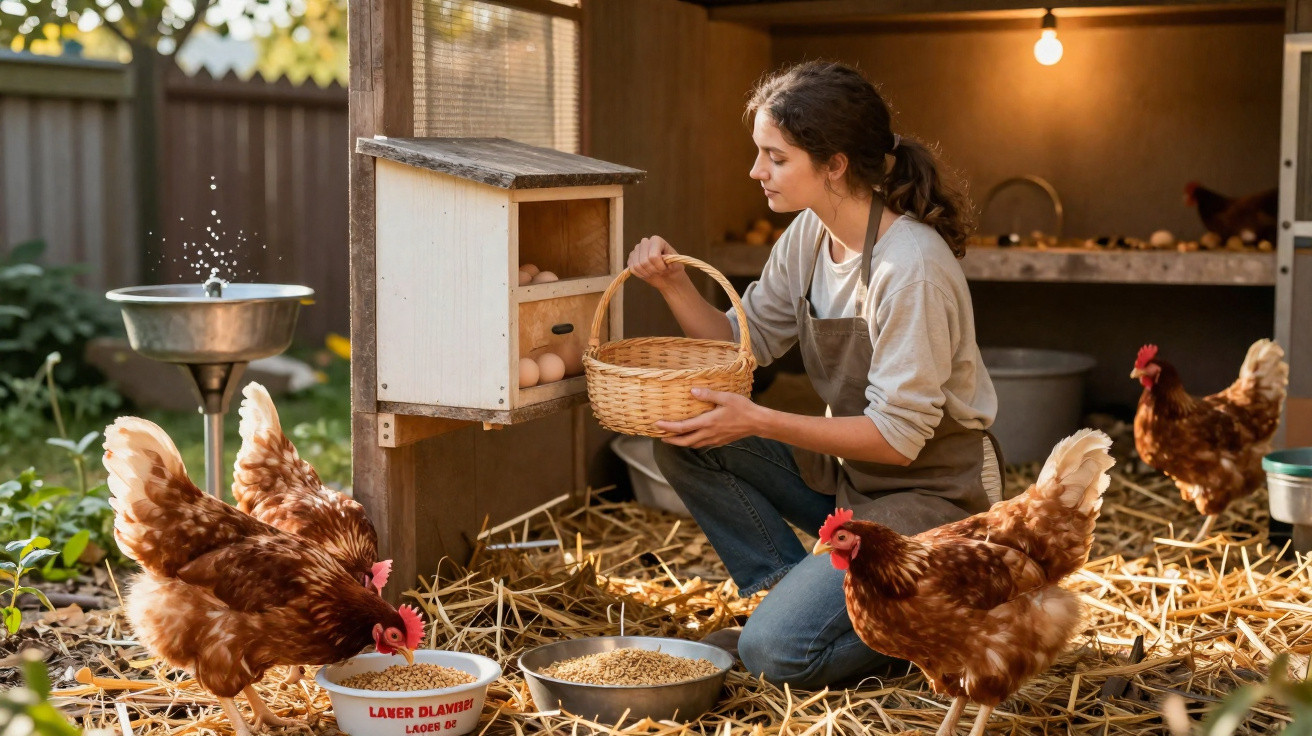
Anyone who has kept their own chickens in the garden knows how satisfying a freshly laid breakfast egg can be. All the more frustrating, then, when the birds suddenly lay very little, the nesting box stays empty and no one is quite sure why. Often, there is no major problem behind it, but rather a combination of seemingly harmless oversights that gradually hold the birds back.
Chickens do not lay all year round – their natural rhythm
One point is often underestimated in the home garden: chickens are not egg-laying machines. Their bodies follow a biological rhythm that is closely linked to light, age and state of health.
- Day length: When there are fewer than around ten hours of daylight each day, the body significantly reduces egg production.
- Season: In winter and during moulting (when feathers are replaced), the body redirects energy from reproduction to self-preservation.
- Age: Egg production gradually declines as chickens get older, even when they are well cared for.
Moulting in particular causes many keepers to panic. A hen may look scruffy, lose feathers and suddenly lay hardly at all. This is normal: she is replacing her plumage and needs protein and energy for the process, leaving none available for egg production.
“The body of a laying hen cannot perform at its peak, cope with moulting and withstand cold at the same time – nature has to draw the line somewhere.”
The beginning of a hen's laying life also makes a considerable difference. When assessing young hens, specialists look for sufficient body weight, dense plumage and a calm temperament. Very light, nervous birds often begin laying hesitantly and tire more quickly. For hobby keepers, this means it is better not to choose the smallest and thinnest pullets on offer simply because they look cute.
Incorrect feed – the classic everyday mistake
For many eggs, the most important factor is what goes into the feed trough. An egg is not made from merely “a bit of protein”. A chicken's body requires protein, minerals, trace elements and plenty of energy to produce one.
Why grain mixes alone are not enough
Colourful grain mixes from DIY shops, or combinations of cereals put together at home, are popular. They may look appealing, but they often do not fully meet the needs of a laying hen. Purpose-made layers' mash or layers' meal contains substantially more protein, alongside targeted additions such as calcium and vitamin D.
Common signs of a deficiency include:
- very thin or brittle shells
- misshapen or “soft” eggs
- sudden breaks in egg production
Without enough calcium, a hen cannot produce a robust shell. If necessary, the body stops production before it harms itself. For hobby keepers, a good layers' feed is usually sufficient, supplemented with a suitable calcium source such as oyster shell.
Treats with side effects
Vegetables, kitchen scraps and a little maize may seem harmless at first. The issue arises when kindness leads to overfeeding. Energy-rich foods in particular, such as maize or fatty leftovers, can make chickens overweight very quickly.
“Being overweight is among the most frequently overlooked reasons for declining egg production in hobby flocks.”
An overweight hen is more prone to fatty liver disease and metabolic problems, and may partly or completely stop laying. Scraps should always be an addition, never the foundation of the diet.
Water and light: small oversights with a big effect
Clean water – often neglected, extremely important
Even mild dehydration can be enough to slow egg production. Water is vital for digestion, nutrient absorption and circulation.
- Chickens drink considerably more in summer, and dirty or empty drinkers can quickly halt egg production.
- In winter, drinkers freeze if they are left outside without protection.
- Algae, droppings and feed residue in the water encourage germs and weaken the birds.
Anyone who briefly rinses the drinker daily, refills it with fresh water and protects it from frost in winter will remove one of the most common “silent brakes” in the chicken house.
Artificial light: useful, but in moderation
Light acts like a switch in a chicken's body: more brightness means greater readiness to lay. This is why commercial operations use precisely controlled lighting programmes. In a hobby flock, it can be tempting to bridge the darker months with permanent lighting.
Extending daylight too aggressively has consequences:
- The metabolism remains in permanent overdrive.
- The hen's lifespan is often noticeably shortened.
- Metabolic and bone problems become more common.
Anyone wishing to provide some support can extend the day length moderately to around ten hours in winter, using low-level lighting, fixed times and still allowing for a winter rest period. A hen that never gets the chance to rest pays for it later with her health and lifespan.
A stressful chicken house: when disturbance blocks egg laying
Chickens respond more strongly to stress than many people realise. A setting that is too cramped, stuffy or noisy disrupts hormone balance and reduces laying activity.
Too crowded, too noisy, too hectic
Typical sources of stress in a hobby chicken house include:
- overcrowding: too many birds in too little space
- dark, poorly ventilated houses with damp bedding
- constantly changing groups, with new chickens introduced without a settling-in period
- frequent catching and lifting, or noisy children directly beside the nesting boxes
- predators or dogs regularly passing along the enclosure
Hens need quiet areas: sheltered, darkened nesting boxes, dry bedding, some structure in their outdoor run and routines that are as predictable as possible. Straightforward measures such as fixed feeding times, calm movements in the chicken house and a stable flock group can significantly reduce stress levels.
“The calmer everyday life is in the chicken house, the more consistently the nesting boxes will fill.”
Parasites, illness and signs of ageing
Another hidden obstacle is parasites such as the red mite. It sucks blood at night, weakens the birds and prevents them from sleeping peacefully. Tiredness, weight loss and reduced egg production follow.
Bone strength and organ function also change with advancing age. By then, the body clearly shows that it has reached its limits. In a small flock, this is often only noticed when a hen repeatedly has trouble laying or loses a noticeable amount of weight.
Practical checklist: what to do when eggs stop appearing
Anyone who wants to look after their hens while still getting as many eggs as possible should systematically work through the usual sources of error.
| Area | Question | Possible measure |
|---|---|---|
| Feed | Is a complete layers' feed provided every day? | Change to layers' mash or meal if needed, and add calcium. |
| Water | Is the drinker always clean and full? | Clean daily and protect it from frost and heat. |
| Light | How long is the chicken house lit? | Manage daylight length moderately and accept natural breaks. |
| Space & chicken-house climate | Do all chickens have enough room and fresh air? | Avoid overcrowding, ventilate and provide dry bedding. |
| Health | Do the birds appear tired, pale or heavily dishevelled? | Check for parasites and contact a vet if there is any suspicion. |
| Age | How old are the hens actually? | Put performance into context according to age, and raise younger birds if needed. |
How long chickens can lay healthily – and when it is time to let go
Professionals report that targeted breeding, better feeding and careful rearing can extend the laying period. For hobby keepers, however, one factor is especially important: the quality of the young hen at the point of purchase.
Healthy, active, well-feathered birds with a normal weight generally lay more reliably and for longer. Those who choose carefully from the outset, rather than opting for the cheapest or most delicate bird, will save themselves many later worries about missing eggs.
Egg production declines with age despite the very best care. Some hens continue to be occasional “surprise layers” for a long time, while others almost stop altogether. Each keeper must then decide for themselves: are eggs the priority, or is the bond with the bird more important? Many garden owners allow their former top layers to remain in the run as retirees – and still benefit from their experience in scratching about, eating slugs and warning of birds of prey.
Why a relaxed view of egg production is worthwhile
Those who see chickens only as “egg machines” can quickly fall into the trap of trying to compensate for every dip in output with more feed, more light and more pressure. Over time, that is more likely to wear out the birds than create a stable flock.
A considered middle ground delivers the best results: appropriate feed, clean water, a sound chicken house, calm handling and a willingness to accept natural pauses. The flock will then be comfortable, stay healthy for much longer and fill the nesting box reasonably reliably for years, without quietly burning itself out.




Comments
No comments yet. Be the first to comment!
Leave a Comment