
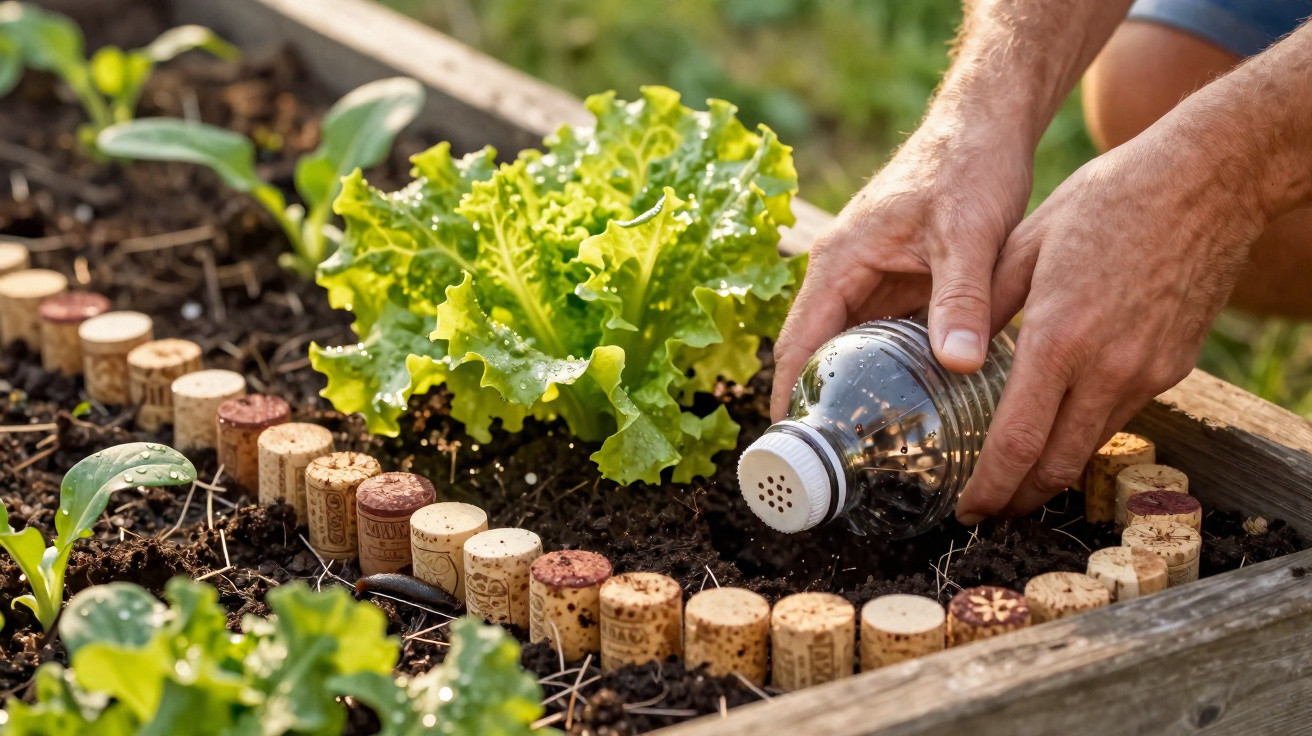
In many homes, bottle caps are thoughtlessly thrown into the bin or recycling container. Yet in the vegetable garden, they can help conserve water, protect plants and even slow down slugs. With just a few straightforward steps, this waste material can become a surprisingly effective system for irrigation and pest protection.
How bottle caps can become the vegetable garden’s best friend
The realisation often follows a frustrating spring: young plants scorched, lettuces eaten away and the water meter racing. Meanwhile, small plastic and cork cylinders from empty drinks bottles continue to collect in the kitchen.
What is normally seen as a worthless leftover proves to be a versatile gardening tool. Two particular properties are important:
- Plastic is watertight, keeps its shape and withstands the weather.
- Cork behaves like a small sponge and contains compounds that can disrupt insects.
“Simple bottle caps can become a system that delivers water straight to the roots, protects the soil and slows down slugs.”
A carefully made hole turns an ordinary plastic cap into a low-cost drip emitter. The bottle beneath acts as a water reservoir. Each drop therefore reaches the root zone directly instead of evaporating from the soil surface.
Cork caps have a different purpose: they retain moisture, shield plants from temperature changes and support plant health through the particular properties of the material.
Plastic cap drip irrigation: how the trick works
Creating a simple irrigation system from old bottles requires only a few items that are usually already available at home:
- A plastic bottle (0.5 litres for young plants, 1.5 litres for larger plants)
- The matching screw cap
- A needle or thin nail
- A flame (from a lighter or candle)
- A craft knife or sharp kitchen knife
Follow these steps:
- Briefly heat the needle over the flame.
- Push the hot point through the exact centre of the plastic cap.
- Screw the cap back onto the bottle and fill the bottle with water.
- Test it over the sink: roughly one drop every two to three seconds is ideal.
- If the flow is too fast, use a hot nail to shrink the hole very slightly; if it is too slow, enlarge it carefully.
It is important to match the flow rate to the soil type. In heavy clay soil, a very small hole is sufficient because water drains away more slowly. In loose, sandy or highly free-draining growing media, the opening may be larger, otherwise irrigation takes too long.
Placing the bottle in the soil
For the system to work properly, position the bottle close to the roots. The following approach is suitable:
- When planting a tomato, courgette or aubergine, dig a second hole 10–15 centimetres from the planting hole.
- Sink the prepared bottle into this hole with the neck facing downwards, to a depth of 5–10 centimetres.
- Firm the soil well around it so water cannot escape sideways.
- Cut the base off the bottle cleanly, allowing it to be refilled easily from above later on.
In spring, topping it up once a week is often enough. At the height of summer, refilling two or three times weekly may be necessary, depending on heat, wind and soil structure.
“The drops seep straight down to the roots, while the surface remains largely dry, making it less appealing to slugs and many fungal diseases.”
The system can also be used in seed trays: use small bottles with a very fine opening and bury them shallowly. This helps seedlings avoid drying out so quickly without leaving them sitting in water.
Cork in the vegetable bed: more than decoration
While plastic caps mainly serve as water dispensers, cork caps work more as small aids for managing the soil. The material is light, flexible and filled with tiny air pockets.
This structure absorbs surplus water and releases it gradually. It is particularly useful in containers, raised beds and very loose growing media, where moisture disappears quickly.
There is also a chemical effect: cork contains suberin, a natural protective substance found in cork oak. Its scent and composition can disturb some insects, including aphids and certain types of midge, while ants are also less keen on the surrounding area.
Cork as a natural barrier and mulch
Cut-up cork can be used flexibly around the vegetable bed. Typical uses include:
- A rough ring around plants: Cut into slices or coarse pieces and placed around lettuce, kohlrabi or squash. The uneven, dry surface creates an unpleasant route for slugs and slug larvae.
- A mulch layer: Spread chopped cork remnants between plants to prevent the soil drying out and to soften temperature fluctuations.
- Drainage in pots: Place several pieces at the bottom of a planter so excess water can drain away more readily and roots are less likely to suffer from waterlogging.
Cork’s low thermal conductivity prevents sharp changes in temperature around the roots. On hot days, the surface does not heat up as rapidly, while on cool nights the soil loses warmth more slowly.
Bottle caps in the fight against slugs and other pests
Anyone who enjoys growing lettuce knows the disappointment: healthy green heads in the evening, then little more than chewed stems by morning. A few simple bottle-cap methods can help without immediately resorting to chemical treatments.
Bait traps made from plastic caps
Plastic caps can quickly be turned into small traps. Proceed as follows:
- Cut the cap horizontally to make a shallow miniature dish.
- Fill it with beer, fruit syrup or a mixture of water, yeast and sugar.
- Place several of these small dishes around vulnerable beds, sinking them slightly into the soil.
The scents attract slugs, which then drown in the bait. Anyone uncomfortable with this can check the dishes in the morning and collect the animals by hand instead.
Visible post tops instead of hazardous trip points
Another use is more mundane but remarkably helpful in everyday gardening: push bottle caps onto the ends of canes and supports. This creates clearly visible tips that reduce the risk of injury when bending down or working among densely planted vegetables.
“A simple cap on a cane prevents painful encounters with sharp wooden or metal edges in the vegetable bed.”
How many caps can be used sensibly
Anyone who drinks wine, sparkling water or juice can easily accumulate several dozen, or well over a hundred, caps during a year. They are used up surprisingly quickly in the garden:
| Area of use | Typical requirement |
|---|---|
| Large row of tomatoes (10 plants) | 10 plastic caps + 10 bottles |
| Lettuce bed with slug pressure | 10–20 cork pieces as a barrier, 6–8 plastic dishes as traps |
| Raised bed with pots | 3–5 cork pieces per pot for drainage |
Those who collect them methodically can often cover their entire requirements from their own household. If more beds are added, extra supplies can quickly be arranged among friends or neighbours.
Practical advice, risks and limits of the method
Despite its benefits, the system is not entirely maintenance-free. In very hard water, for example, the small holes in the caps may become blocked over time. Occasionally piercing them again with a needle solves the issue. In areas with severe winters, it is worth removing the bottles in late autumn so ice does not split them.
There is another consideration: in exceptionally wet summers, additional irrigation may be unnecessary or even harmful. Anyone using the bottles should check the soil regularly rather than continuing to refill them automatically. Waterlogging encourages root rot and fungal diseases, particularly in heavy soils.
With cork, only untreated caps should be used. Varnished or heavily printed products may contain substances that do not belong in the soil. Small traces of wine or juice on cork may occasionally attract insects; a quick rinse under water is usually sufficient.
Why it is worth looking at the next bottle cap differently
Anyone looking to supply their beds with water more precisely can save not only watering time with bottle drip irrigation, but also improve root growth. Plants learn to search more deeply for moisture instead of merely “snacking” at the surface. This makes them more resilient during hot spells.
At the same time, a dry soil surface is less attractive to slugs and certain fungi. Combined with cork rings and a small number of bait traps, this can noticeably reduce pest pressure without scattering granular products.
Many amateur gardeners report that, after making the change, they spend considerably less time standing at the bed with a hose. Bottles can be topped up casually at quieter moments rather than requiring every bed to be watered in a rush during the evening.
Anyone who enjoys experimenting can even combine the principle with other leftover materials: larger containers as water reservoirs, several drip emitters in a row for long beds, or cork pieces mixed with wood chips as a blended mulch. In this way, the garden gradually develops into a system that needs little water while still allowing abundant harvests.


Comments
No comments yet. Be the first to comment!
Leave a Comment