
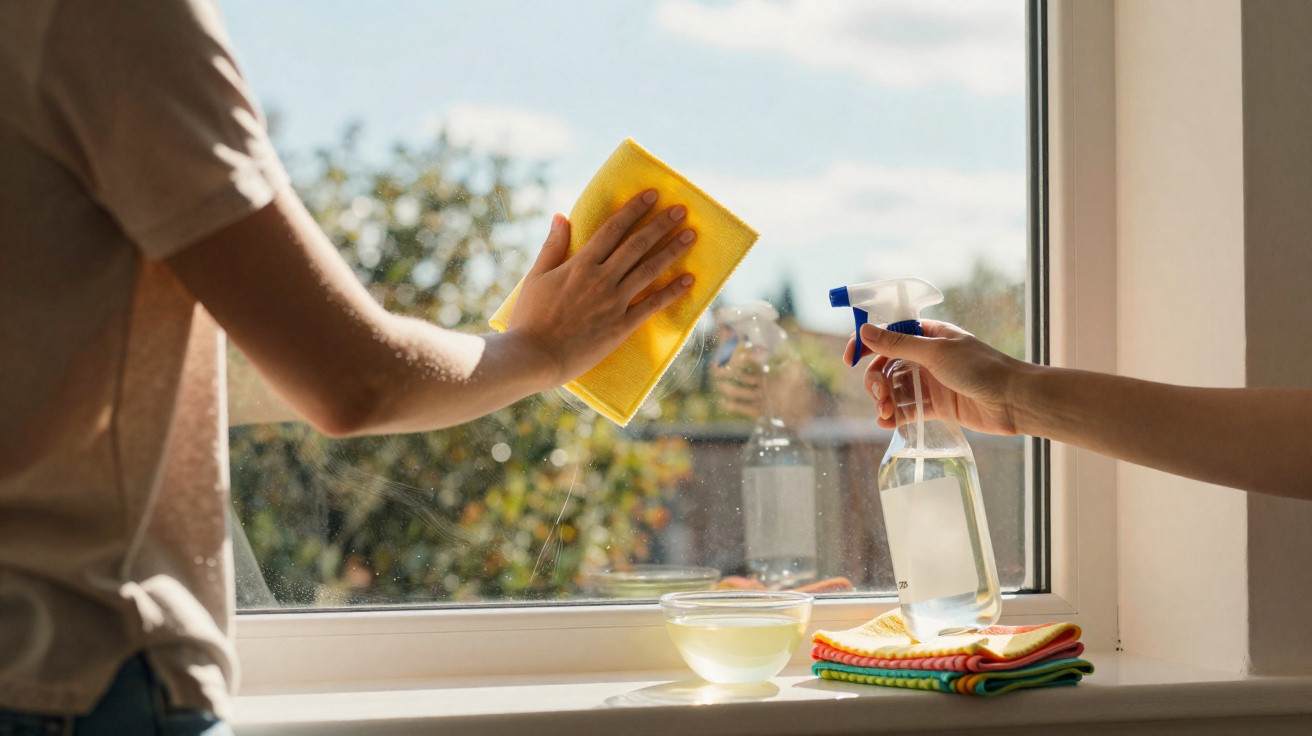
I was fed up with spraying, wiping, then wiping again, only to find streaks still there. So I tested an option so commonplace that it seemed almost defiant: a microfibre cloth and vinegar.
It began on a Saturday, when the sky at last seemed to recall that it was spring. The living room was gloomy, as though the day had been covered with a grey filter. I reached for an ageing bottle of glass cleaner but stopped. Beneath the sink sat a crumpled microfibre cloth alongside the white vinegar I use to descale the kettle. I poured warm water into a jug, added vinegar, squeezed the cloth until it was cool and merely damp, and started at the upper pane. One pass, then another. Rather than smearing, the glass became brighter. I moved across it in a relaxed S shape, turning the cloth over once it began to feel laden. For once, sunlight did not reveal my mistakes. There was no rainbow residue or lint. Instead, there was a crisp, clear view of the street - wheelie bins included. I stepped away and narrowed my eyes, expecting a downside. None appeared.
Why microfibre and vinegar work so well
Microfibre picks up dirt much as a compelling story catches attention: through the smallest details. Its fibres are divided into microscopic hooks that lift dust and grease rather than simply shifting them about. Vinegar helps by loosening mineral marks and greasy fingerprints, while the cloth holds on to what the liquid releases. There is something unexpectedly pleasing about seeing the pane clear. It is as if the window is taking a breath.
I tried it on the biggest culprit: an old sash window scattered with water spots and fingerprints at a toddler’s height. After three passes, the haze receded line by line. A neighbour passed by, took a second look and asked what spray I had discovered. No spray, I told them, only vinegar and a cloth. Fun fact: microfibre strands can be 100 times thinner than a human hair, explaining why they hold onto particles we cannot even see.
The chemistry behind it is straightforward. Vinegar contains acetic acid, which breaks down alkaline hard-water deposits and loosens everyday oils. Shop-bought glass cleaners contain fragrance and surfactants, which may leave a residue when used too generously. Kitchen roll releases lint and builds static, encouraging fresh dust to settle. Microfibre limits static and gives an even, close wipe. Follow with a second, dry cloth and the final moisture disappears before it has a chance to form streaks. There is nothing elaborate about the science. It is useful physics paired with a little patience.
The microfibre and vinegar method I will not give up
This is the routine that got it right for me. Combine one part white vinegar with one part warm water in a bowl or spray bottle. If the glass is greasy, add a tiny drop of washing-up liquid, but leave it out next time. Take two microfibre cloths: a damp one for cleaning and a dry one for buffing. Begin in the top corner, travel down the pane in an S pattern, and immediately polish with the dry cloth. End by running along the edges. That narrow seam is where streaks tend to form.
The usual problems are simple to avoid. Do not soak the glass; a lightly damp cloth is better than one that drips. Keep away from direct sunshine and hot glass, otherwise the mixture will dry too quickly. Where tap water is especially hard, use distilled water for the mixture and see the spots disappear. We have all stepped back proudly, only for the sunlight to uncover a faint, ghost-like line. Take a breath, turn the dry cloth to a clean section and gently blend it away. Honestly, no one cleans windows like this every day.
A straightforward solution that truly works tends to delight people. Two cloths, a bowl and five unhurried minutes can alter the feel of a room. I could have sworn the room looked lighter.
“Dry the borders like you’re drawing a picture frame. That’s where streaks are born,” said a pro cleaner I once shadowed on a rainy Tuesday.
- Mix: 1:1 white vinegar to warm water (2:1 water for light dust).
- Use two cloths: a damp one to clean and a dry one to buff.
- Work from top to bottom in an S pattern. Turn the cloth as soon as it begins to drag.
- Finish by lightly working over the edges and corners.
- Got hard water? Choose distilled water and bring back the sparkle.
- Wash microfibre cloths without fabric conditioner. Let them air dry.
What this changes at home
Windows set the mood. When they are dull, an entire room can seem weary. Since using this approach, I have stopped keeping half-empty bottles of spray. A bottle of vinegar and a pile of microfibre cloths are all that is needed. The scent disappears within minutes, the view becomes clearer and the evening light seems slightly softer. This is not about perfection; it is about reclaiming time. The fewer products I have to manage, the more likely I am to clean the glass before visitors come round. There is also a modest satisfaction in using something that costs pennies yet performs better than premium brands. Try it on one window - choose the worst one - and see whether the view alters your day. The secret is not brute force. It is the movement, the cloth, the mixture and the point at which you stop scrubbing and begin gliding. No streaks are not a miracle. They are the outcome of a method you can repeat without even thinking.
| Key point | Detail | Benefit for the reader |
|---|---|---|
| Microfibre + vinegar combination | 1:1 mixture, two-cloth routine, S pattern | Reliable, repeatable, streak-free finish |
| Tackle hard-water marks | Use distilled water; vinegar dissolves mineral residue | Clear panes with no white spotting or haze |
| Mistakes to avoid | Do not over-wet, avoid hot glass and sunshine, buff edges | Quicker cleaning, fewer repeat attempts, better shine |
FAQ
- What is the best vinegar-to-water ratio? Use 1:1 for normal everyday dirt. For light dust, use 2 parts water to 1 part vinegar. Only add a very small drop of washing-up liquid if the glass is oily.
- Will vinegar harm window seals or tinted film? White vinegar is suitable for standard glass and modern seals. With aftermarket tinting or specialist coatings, consult the manufacturer’s care instructions and test a tiny corner first.
- Can I use any vinegar, such as malt or apple cider vinegar? Choose clear white distilled vinegar. Dark or flavoured vinegars may leave residue and a lasting odour. White vinegar gives the cleanest finish.
- How should I wash microfibre cloths? Wash them cool with mild detergent and no fabric conditioner. Air dry them or use low heat. Keep them separate from cotton laundry so that they do not collect lint.
- What should I do with very dirty outdoor panes? Lift the dirt first using a bucket of warm soapy water and a soft brush, rinse it away, then finish with the vinegar mixture and a dry cloth or squeegee. Work in the shade where you can.





Comments
No comments yet. Be the first to comment!
Leave a Comment