
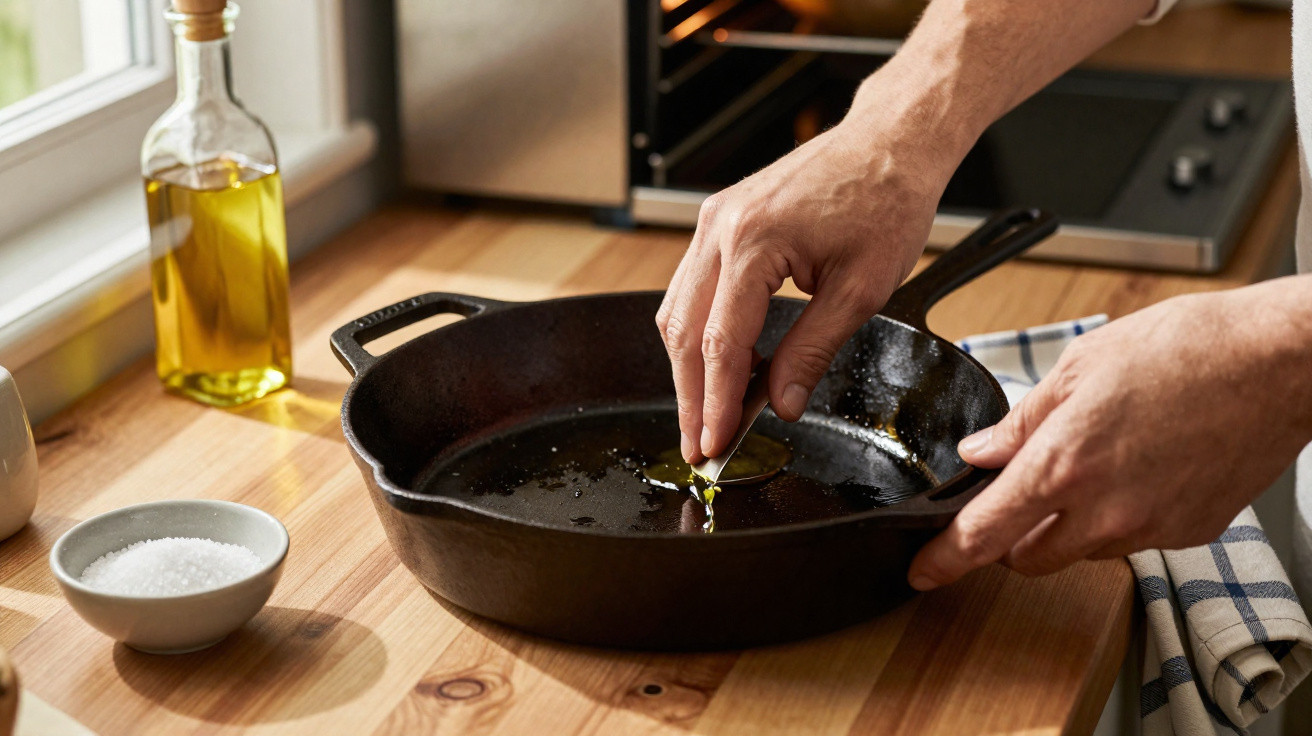
Many of us have a heavy, dark cast-iron pan tucked away somewhere in a cupboard. It seems too weighty, too old-fashioned and somehow impractical – above all because everything sticks to it. Yet these older pans have enormous potential. A simple, nearly forgotten method can make their rough surface so smooth that even delicate foods cook without sticking.
Why cast iron is making a comeback today
For a long time, cast iron was seen as a relic from another era. Modern pans with shiny coated surfaces appeared more convenient, lighter and cleaner. But many home cooks are now changing their minds: they are deliberately bringing out sturdy, heavy pans again, both for sustainability reasons and concerns about coatings, as well as for flavour.
Cast iron retains heat exceptionally well. Steaks develop crisp, browned flavours, vegetables cook evenly, and stews continue gently in steady warmth. Its apparent major drawback is obvious: food sticking. Eggs tear, fish catches, pancakes split – and afterwards, you scrub until your fingers ache.
"The difference between a frustrating pan and a favourite pan is not an expensive high-tech material, but an unobtrusive care technique."
The forgotten technique: seasoning makes cast iron naturally non-stick
The answer is a time-tested process: seasoning. In the past, every new cast-iron pan was prepared in this way before use. Today, this step has been forgotten in many kitchens because coated pans were ready to use immediately.
Seasoning creates a thin, hard layer of baked-on oil across the bare metal. It seals the metal's tiny pores, smooths the surface and protects it from rust. Each use improves this layer – the pan becomes darker, smoother and progressively less sticky.
Why unseasoned cast iron sticks so badly
Cast iron is porous rather than smooth like glass. When an untreated pan is heated, these pores open up. Fat and food residue enter them, carbonise and become firmly stuck. At the same time, iron reacts with water and oxygen: rust forms more quickly, particularly if the pan is left wet in the sink or allowed to dry in the open air.
The seasoned oil layer acts like a thin black shield: water beads off more easily, rust struggles to form and food can no longer get a grip. This turns a supposedly “difficult” material into an extremely dependable cooking tool.
Step by step: how to season your cast-iron pan correctly
The method is straightforward, although it requires care. Careless work produces sticky, patchy areas. Take a little time, however, and the result can last for decades.
Prepare the pan thoroughly
If the pan is new, wash it with hot water and a little washing-up liquid to remove any protective waxes. For older pans, remove rust and old baked-on residue using coarse salt, a steel brush or a scouring pad until the bare metal is exposed.Dry it completely
Any remaining moisture is the enemy. Place the pan on the hob for a few minutes or put it in an oven at around 100°C until it is completely dry. Not a single dark patch or droplet should remain.Apply a suitable oil in an extremely thin layer
Heat-stable oils with a high smoke point are ideal, such as linseed oil, rapeseed oil, refined sunflower oil or grapeseed oil. A few drops are enough. Use kitchen paper.



Comments
No comments yet. Be the first to comment!
Leave a Comment