
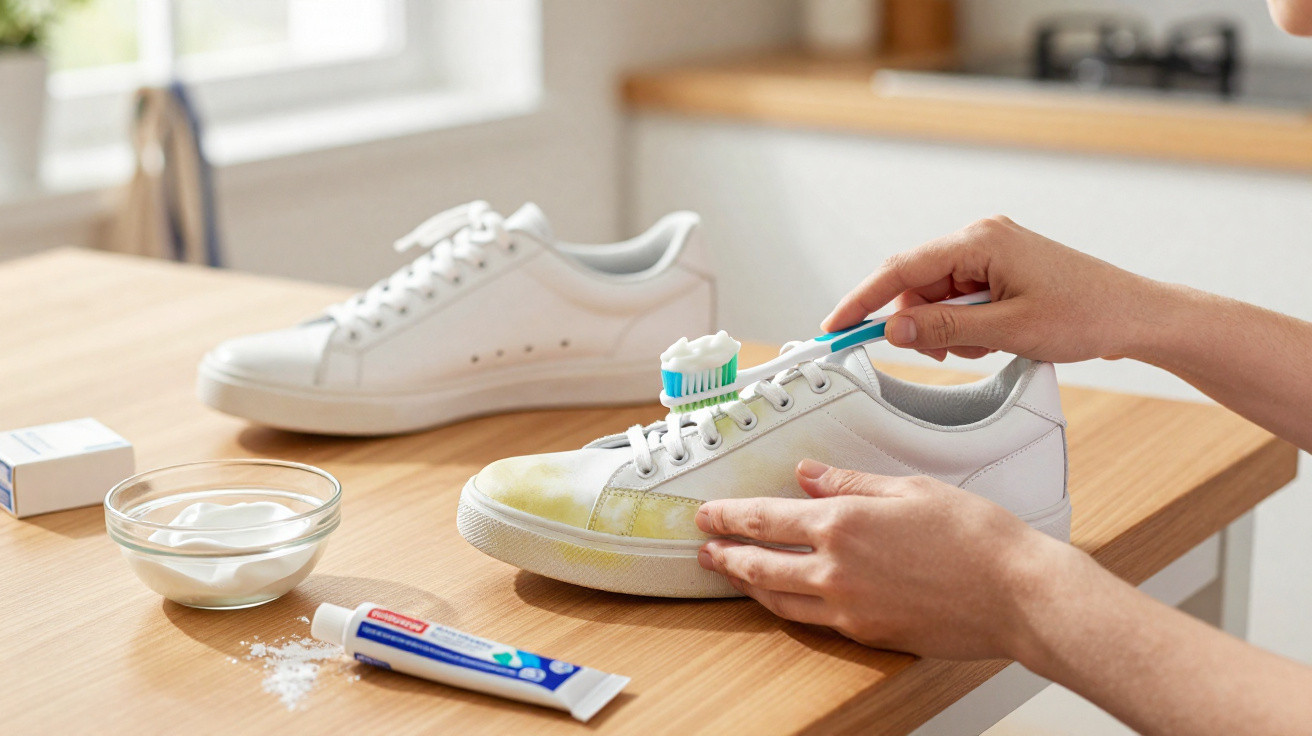
Social media feeds are packed with inexpensive tricks for reviving yellowed soles and dirty trainers, pushing back against the belief that specialist products are the only answer.
Why everyone is suddenly obsessed with whiter trainers
Spotless trainers have become more than a style preference: they now act as a visual signature. They are worn to work, on dates, at the gym and even at weddings. Once the rubber becomes grey or yellow, the entire outfit can look worn-out, however new everything else may be.
Meanwhile, supermarket cleaning aisles offer branded “sneaker care kits” claiming dramatic results, frequently at the cost of a budget pair of trainers. This leaves many shoppers feeling they must either overspend or live with permanently marked footwear.
For a growing number of people, the go-to cleaner is now a simple homemade mix built from the same things used in the bathroom sink.
The trend reflects modern priorities: people want noticeable results while keeping costs down, steering clear of harsh chemicals and making use of items already in the house.
The simple bathroom-cupboard recipe people swear by
The technique repeatedly shared online uses a surprisingly capable combination: ordinary white toothpaste and baking soda. Although it may appear makeshift, it reflects the known effects of mild abrasives and gentle alkalis.
What you actually need
- White toothpaste that is non-gel and uncoloured
- Baking soda (pure sodium bicarbonate)
- An old toothbrush or soft-bristled cleaning brush
- A small bowl or jar to make the mixture
- A clean, damp cloth or sponge for wiping
Its effectiveness comes down to texture. Toothpaste and baking soda both include fine particles that clean a surface without excessively damaging it, making the mixture suitable for rubber outsoles and certain synthetic uppers.
The goal is not to grind the shoe into submission, but to let a fine abrasive lift dirt and oxidation from the surface.
Step-by-step: from yellowed sole to brighter white
Although people make small adjustments to the formula, the basic process is usually as follows.
1. Prepare the trainers first
Take out the laces, then knock the soles together over a bin to dislodge dry mud and loose dust. Where the shoe is especially dirty, first wipe it quickly with a damp cloth so the paste does not become muddy.
2. Mix a light cleaning paste
Put a squeeze of white toothpaste into a small bowl and add approximately the same amount of baking soda. Use the toothbrush to combine them into an even paste. Add a very small drop of water if it is too dry or crumbly; if it becomes too thin, mix in extra baking soda.
3. Target the yellowed and stained areas
Concentrate on rubber sections, including the sidewalls, toe bumper and heel. Apply the paste using the toothbrush and scrub in controlled, small circular motions rather than brushing aggressively. This allows the abrasive particles to work into narrow grooves where dirt collects.
Dark scuffs that persist along the sides may require another minute of brushing. Take care around logos and painted sections, so that decorative finishes are not rubbed away.
4. Let chemistry have a moment
After coating the soles evenly, leave the mixture on the rubber for about five minutes. In that time, baking soda slightly increases the pH, helping to loosen the bonds linking dirt, sweat residue and the sole’s surface.
That short waiting time often makes the difference between a surface that looks “better” and one that feels close to brand new.
5. Rinse and check the result
Wipe away the paste with a damp sponge or cloth, cleaning one section at a time. Do not soak the full shoe, particularly where the upper is leather, suede or knit. Rinse the cloth in a small bowl of clean water as needed to avoid spreading old grime over freshly cleaned sections.
Where yellowing is still visible, a second gentle treatment generally produces better results than one intense scrubbing session. This also reduces the chance of damaging the material through over-scrubbing.
How toothpaste and baking soda actually work
Baking soda acts as a lightly alkaline cleaner. It helps release acidic deposits from sweat and urban pollution, both of which can contribute to discolouration. Its fine granules also provide a polishing action without the harshness of sandpaper or scouring powder.
Toothpaste commonly contains mild abrasive ingredients, including hydrated silica or calcium carbonate. As these particles are used to clean relatively delicate tooth enamel, they are generally suitable for rubber and many synthetics when applied with limited pressure and a soft brush.
Used together, they form a low-cost, low-tech alternative to specialist sneaker creams, with a texture that clings to ridged soles and textured rubber.
The pairing can also tackle the faint grey coating that develops on white soles after regular walks along dusty pavements or wet streets, particularly in city centres.
How does this compare with other cleaning methods?
Homemade formulas are not the only option available. Shoe retailers, sports brands and online marketplaces promote numerous products, from imported foam sprays to wipes aimed at commuters. The usual comparison between the most common choices is below.
| Method | Approximate cost | Effect on white rubber |
|---|---|---|
| Imported sneaker cleaners | High | Strong brightening, often quick |
| Warm water with mild soap | Low | Good on surface dirt, weaker on yellowing |
| Toothpaste and baking soda paste | Very low | Strong brightening on many rubber soles |
Branded products frequently contain solvents or optical brighteners, which can achieve striking results on deep marks but increase the cost of regular care. Soap and water are entirely adequate for general cleanliness and fabric uppers, though they seldom undo rubber oxidation.
The homemade paste falls between these approaches: it is affordable, uncomplicated and unexpectedly effective on discoloured soles, while remaining mild enough for routine use if applied carefully.
How to keep trainers cleaner for longer
Drying habits that make or break white soles
Direct, intense sunlight is an understated threat to white rubber. Extended exposure can accelerate oxidation, allowing yellowing to return sooner even after the shoes have been cleaned. Strong heat from radiators or tumble dryers may also distort glue and shrink some materials.
Shaded, ventilated drying preserves both colour and structure, even if it takes a little longer.
Following washing or a rainy journey, leave trainers in a cool space with good airflow. Remove the insoles to improve air circulation and fill the shoes with plain paper to draw out moisture. If the lining is pale, avoid printed newspaper because its ink may transfer.
Small rituals that prevent heavy cleaning sessions
A fast wipe after commuting can prevent the need for a tougher scrub later in the month. Pavement dust, coffee spills and damp patches from public transport can settle into rubber and fabric when left overnight.
Keeping a soft cloth by the door makes a thirty-second clean once you return home more likely. Every few wears, lightly wipe the soles with a damp cloth and a small amount of mild soap to prevent the grey-yellow layer from accumulating.
- Alternate between at least two pairs, allowing each pair to dry fully between wears.
- When possible, avoid muddy routes on days when you intend to wear bright white trainers.
- Keep shoes out of direct sunlight and away from powerful heat sources.
- Use a shoe tree or loosely filled paper to maintain their shape.
When homemade cleaning can backfire
A single method does not suit every material. Rubber soles will usually cope with a toothpaste–baking soda mixture, but delicate uppers require more care. Suede, nubuck and certain dyed leathers may become stained or rough if exposed to a gritty paste or excessive moisture.
It is sensible to test a small concealed area first, particularly on premium or limited-edition trainers. Should colour come away, the finish become rough, or a chalky mark develop, use a cleaner intended for that particular material rather than persisting with a DIY solution.
Gentle methods often work best when combined: paste on the soles, fabric cleaner on textile panels, and a specialist brush for suede details.
Health considerations matter too. Anyone with sensitive skin may choose to wear gloves while using cleaning mixtures, including mild ones. Highly scented toothpaste can leave a lasting smell, so thoroughly wiping the shoe afterwards can help lessen this indoors.
Beyond trainers: what this cleaning trend says about habits
The increasing appeal of affordable sneaker care points to broader changes in behaviour. Consumers are seeking ways to make possessions last longer, both to manage budgets and because making footwear has an evident environmental cost. Extending the usable life of one pair of trainers by a year cuts waste and manufacturing demand more than a single recycled box could.
This approach also reshapes attitudes to fashion. Rather than discarding shoes as soon as they lose their freshness, people treat them as items to be maintained, repaired and customised. The same outlook can extend to other wardrobe pieces: jackets are reproofed, bags are patched and soles are replaced rather than thrown away. A modest toothpaste-and-baking-soda paste for a scuffed trainer therefore represents one practical part of a wider move towards slower consumption.

Comments
No comments yet. Be the first to comment!
Leave a Comment