
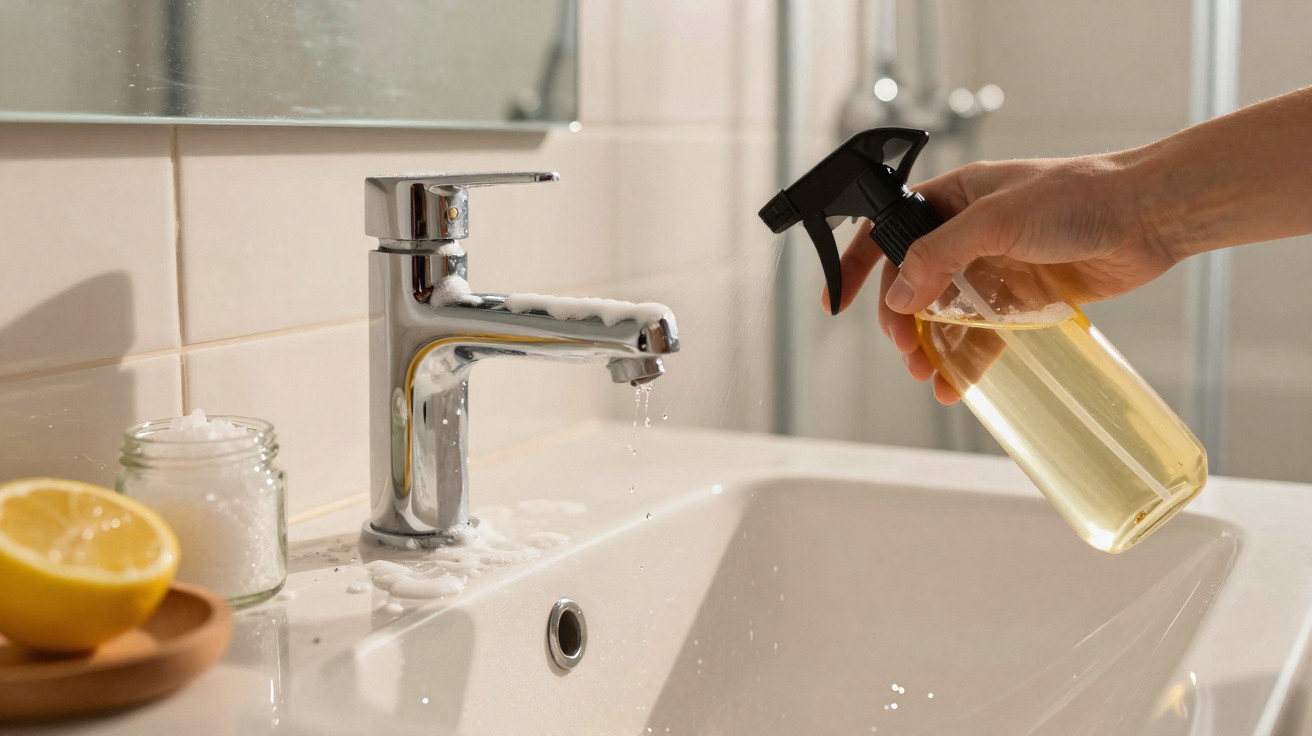
You want a clean home without a cloud of chemicals. We have all seen it: a kettle spitting out chalky flakes or a bathroom tap coated in a white, armour-like crust.
I first saw the difference in a neighbour’s kitchen one rainy Tuesday. She added a scoop of pale crystals to warm water, gave it a swirl and ran the clear liquid through a kettle whose walls were thick with chalk. Ten minutes later, the interior looked like stainless steel again and the spout had stopped hissing. She sprayed that same mixture onto the tap, wiped it once, and the scale ring came away as easily as soap. No gloves. No coughing. Only a mild citrus scent. Smiling, she said, “Old café trick.” I assumed it was a gimmick.
Discover citric acid, the natural household workhorse in plain sight
The answer is citric acid: a kitchen-safe acid with a slight lemon-like smell and a seriously scientific way of working. It removes limescale by binding to minerals, causing the crust to release. It also brings the pH down enough to reduce a range of everyday germs on hard surfaces. There is no bleach or fluorescent green gel involved, just a cupboard staple that does two jobs at once.
In a small London café, the espresso machine’s survival depends on controlling scale. Its owner stores a jar of citric acid below the counter, making a speedy 5% solution in a squeeze bottle. She backflushes the wand, cleans the drip tray and then tackles the sink. One bottle handles three tasks in five minutes. With no scale in the boiler, it heats more quickly, helping to reduce energy bills. Customers may not notice the chemistry, but they can taste the cleaner coffee.
The science is straightforward. Citric acid is a weak organic acid that chelates calcium and magnesium, which are responsible for limescale. When it touches scale, it disrupts the mineral bonds and removes the crust without scratching the surface. Given the appropriate concentration and contact time, it can also inactivate many common bacteria on non-porous surfaces. Bleach attacks; citric acid releases and neutralises.
How to use citric acid effectively
Make up a bottle and leave it within reach. To descale and lightly disinfect, dissolve 2 tablespoons (about 20 g) of citric acid powder in 300 ml of warm water, creating an approximately 6–7% solution. Spray it over taps, shower heads, drains and stainless-steel sinks. Leave it in place for 5–10 minutes before wiping and rinsing. For kettles, fill the kettle halfway with the mixture, add water to top it up, let it fizz gently, then rinse twice.
Realistically, this will not happen every day. Try to do taps and kettles once a week, with shower heads treated monthly. Where the water is especially hard, increase the mixture to 10% and leave it for 15 minutes. Do not cut short the waiting time: this is when the acid releases the mineral deposits. When a crust is old and persistent, repeat the application instead of scrubbing more aggressively.
Important rule: never apply citric acid to natural stone such as marble, travertine or limestone. It may etch the material and leave the finish dull. Use it carefully on chrome and rinse thoroughly, as extended soaking may cloud plated finishes. Keep it away from unsealed wood, and never combine it with chlorine-based products. On most days, a soft cloth is better than an abrasive sponge. It carries a faint scent of lemons and good intentions.
“Citric acid isn’t just ‘green’; it’s effective when you let it sit. Most failures are from wiping too soon.”
- Ideal scale ratio: 5–10% citric acid in warm water
- Germ reduction: maintain wet contact for 5–10 minutes on hard, non-porous surfaces
- Never use on marble or limestone; rinse metals and rubber gaskets thoroughly
- Keep the mixture in a labelled spray bottle for up to two weeks
- For high-risk messes, choose an approved disinfectant and follow its label
One citric acid mix, room-by-room results
Kitchen: Spray the sink edges, the base of the tap and the underside of its spout, where limescale tends to build up unnoticed. Let it work while you empty the dishwasher. Wipe once with a microfibre cloth, then rinse. Descale the kettle while replying to a message. Wash chopping boards with hot, soapy water first, then use a quick spray of citric acid for odours and mineral marks.
Bathroom: Soak a cloth in the solution and wrap it around the tap or shower hose like a scarf. After ten minutes, the scale ring should have disappeared. For a shower head, remove it and leave it in a bowl of solution for 20 minutes. Rinse it well, then enjoy the water pressure you had forgotten existed. On glass, spray, wait and use a squeegee. There is no chalky residue and no sharp vinegar smell.
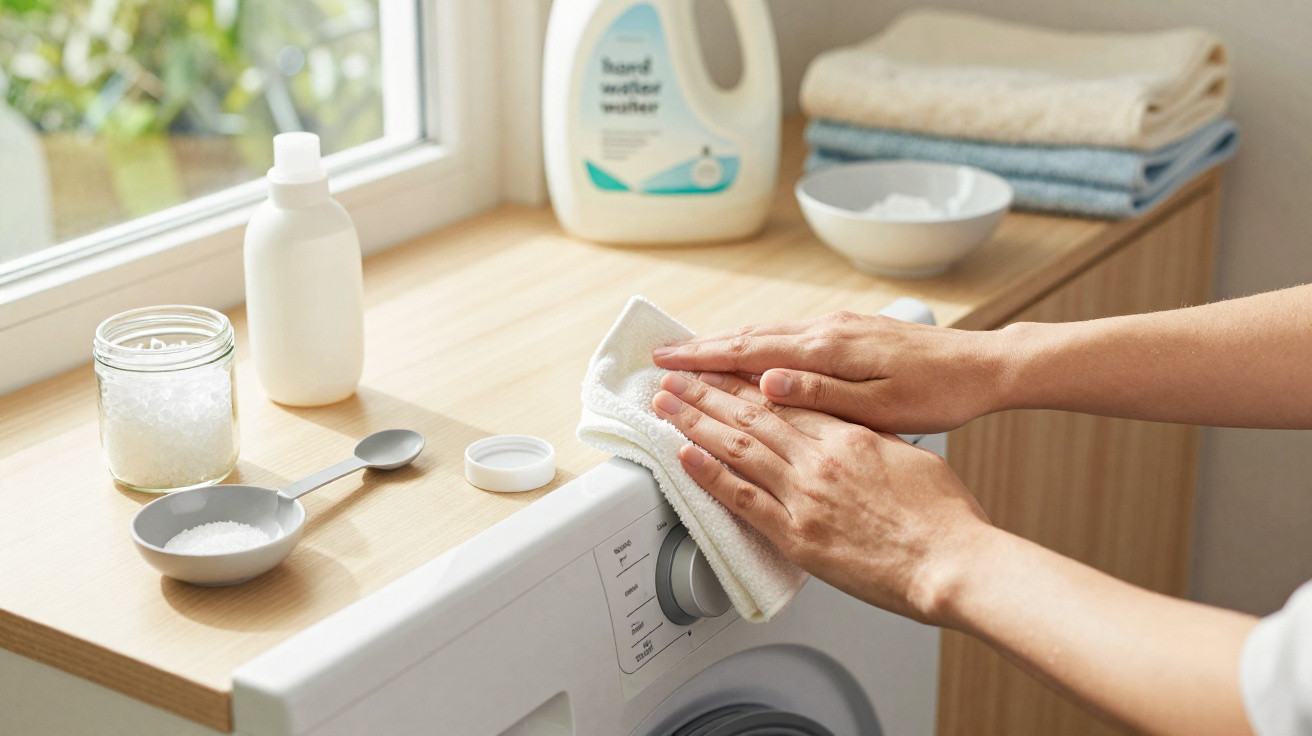
Laundry and small appliances: Put a tablespoon of citric acid into an empty hot washing-machine cycle to remove mineral build-up and musty odours. Afterwards, run a plain rinse. For a drip coffee maker, add the solution to the reservoir, brew halfway, pause for 15 minutes, then complete the cycle and run two water-only cycles. You will notice fewer streaks, fewer blockages and quieter humming from clean, scale-free components.
Why this small citric acid habit changes how your home feels
Citric acid offers a more relaxed approach to cleaning. It encourages small, regular jobs that stop problems from turning into major projects. You spend less time scrubbing and less money on single-purpose bottles in shouty neon packaging. Your home smells like home rather than a janitor’s cupboard.
There is some quiet arithmetic behind it, too. Limescale wastes heat, interferes with gaskets and reduces the lifespan of appliances. This is more than tidying: it reduces the pressure on the items you depend on every day. It is maintenance disguised as five-minute cleaning. Pass the tip on to a friend who dislikes bleach fumes but loves a gleaming tap.
A single bottle beside the sink can transform the routine without transforming your life. Keep it straightforward, safe and consistent. The result is a clean you can feel and breathe: the sort that does not fight back.
| Key point | Detail | Reader benefit |
|---|---|---|
| Cleans and descales in one | 5–10% citric acid dissolves limescale while reducing everyday germs | Saves time and replaces multiple products |
| Gentle but effective | No bleach fumes; it relies on contact time rather than brute force | Fresher air, less scrubbing and kinder treatment of surfaces |
| Sensible limits | Avoid natural stone and prolonged soaking of plated finishes; rinse metals | Protects fittings and keeps results glossy |
FAQ
- What exactly is citric acid? It is a food-grade organic acid found in citrus fruits and sold as a powder. It is widely used in preserving, sweet making and eco-cleaning.
- Will it kill all germs like bleach? No. With sufficient contact time, it reduces many everyday bacteria and some viruses on hard surfaces. For high-risk messes or particular pathogens, use an approved disinfectant according to its label.
- What ratio should I mix for home cleaning? Begin at roughly 6–7%: 2 tbsp (20 g) for every 300 ml of warm water. For heavy scale, increase it to 10%. Leave it to sit before wiping.
- Is it safe on everything? No. Avoid marble, travertine, limestone and other stones that are sensitive to acid. Rinse chrome, aluminium, rubber seals and grout after use. Test a small area of any delicate material first.
- Can I swap vinegar for citric acid? Vinegar is effective, but it is weaker and has a stronger smell. Citric acid is more powerful against limescale, less pungent and simpler to measure accurately.

Comments
No comments yet. Be the first to comment!
Leave a Comment