
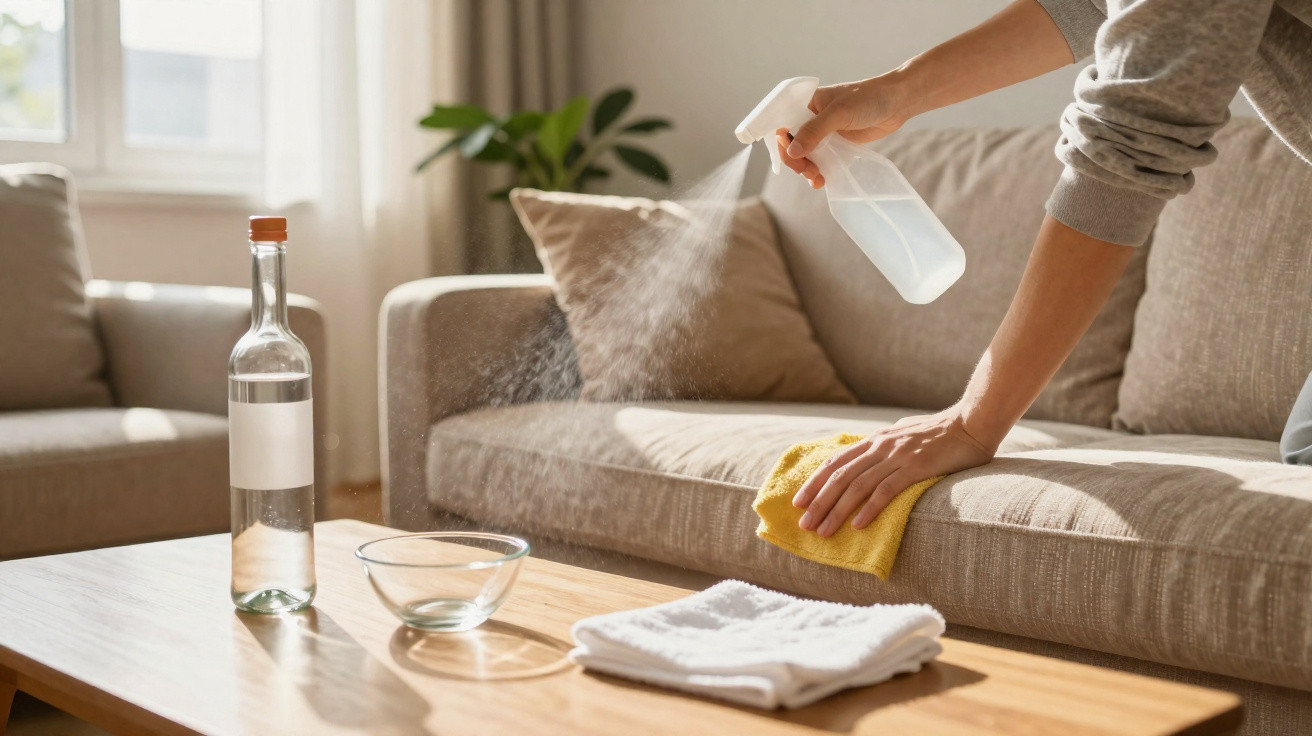
Your sofa may look perfectly presentable in daylight, yet the moment you sit down, a weary, stale smell can emerge. Upholstery holds on to everyday life: meals, pets and last year’s party. Washing an entire sofa is rarely practical, while shop-bought sprays often seem like perfume layered over the issue. Yet an ordinary liquid you probably already have can quickly freshen the smell and revive the pile. No foam. No fuss.
A friend of mine filled a plant mister, sprayed her living-room sofa lightly and opened the window while we carried on chatting about nothing in particular. Within ten minutes, the room seemed fresher, as though the air had been changed, and the corduroy appeared less tired. I bent closer, expecting a hint of lemon or lavender. There was no fragrance at all. It simply smelled clean. Then she showed me the bottle.
The budget-friendly liquid that quietly refreshes tired sofas
No need to drag this out: the inexpensive household liquid is plain, unflavoured vodka-preferably the basic bottle lurking at the back of the cupboard-or another high-proof, colourless ethanol suitable for cleaning. Applied as a light mist to upholstery, it evaporates fast, helps lift lingering odours and leaves virtually no residue. Yes-the trick is cheap, unflavoured vodka in a fine-mist spray.
Theatre wardrobe departments have relied on it for years to freshen costumes between performances. One dresser told me they would mist a line of garments, allow the alcohol to flash off, brush the material and return the pieces beneath the lights. I used it on a flea-market armchair carrying the smell of old smoke and damp wool: after a gentle spray, some patience and a soft brush, the mustiness eased enough for the chair to feel breathable again.
The reasoning is straightforward. Ethanol can dissolve many compounds responsible for odours and reduce the bacteria that feed on them. Since alcohol dries so rapidly, it takes those smells from the surface instead of sealing them beneath a scented coating. Plain water can bring stale odours back to life, and masking sprays may feel heavy or tacky. A clean mist of alcohol settles, works and disappears, allowing the fabric to feel like itself once more.
Step-by-step: revive upholstery without washing
Pour cheap, unflavoured vodka into a clean spray bottle-use it undiluted for stubborn smells, or mix it 1:1 with water for delicate materials. Vacuum the upholstery first to remove dust. Hold the bottle 20–30 cm from the fabric and apply the faintest veil of mist: aim for dew, not rain. Open a window, leave it for 10–15 minutes, then lift the fibres with a soft brush or dry cloth.
Begin cautiously. Test an unseen area first, checking for colour transfer or dullness as it dries. Avoid saturating foam or seams, and do not use it on leather, suede, silk, acetate or rayon, as these materials can mark or react. We all know that moment when guests message “on the way” and the house smells distinctly lived-in; this is preferable to panic-washing. Honestly, no one does this daily. It is the five-minute refresh your living room wants.
Patch-test first, keep flames far away, and use the finest mist you can.
“Cheap vodka is the backstage dry cleaner-fast, quiet, and gone before the curtain call,” a wardrobe manager told me with a shrug.
- Choose a fine-mist sprayer to prevent damp patches and water marks.
- Open windows to create airflow; alcohol vapour needs somewhere to go.
- Avoid leather, suede, silk, acetate and rayon; use it only on hard-wearing, colourfast fabrics.
- Keep it away from candles, pilot lights and smokers, as alcohol is flammable.
- To leave pile fabrics such as velvet and corduroy softer, brush them while they dry.
What this small ritual changes
This is not magic; it is momentum. Once your upholstery no longer smells tired, the room stops demanding attention, and you notice its colour rather than its mustiness. The routine feels easier: a quick vacuum, a brief mist, fresh air, and it is finished. You can take it further with cushions in sunlight, an unhurried Saturday deep-clean or a throw that finally feels right. Some people use white vinegar for the same task, and it works, but it brings its own kitchen-like smell; vodka remains neutral enough to suit the room. The aim is not perfection, but the sense that your home can be refreshed quickly without a washing machine, a van or an expense.
| Key point | Detail | Benefit for the reader |
|---|---|---|
| Cheap liquid | Plain, unflavoured vodka in a fine-mist spray | A low-cost, residue-free way to refresh upholstery |
| Method | Vacuum, mist lightly, air out, brush gently | A quick routine suited to real life and busy schedules |
| Safety | Patch-test, avoid delicate fabrics, keep away from flames | Helps protect furniture and prevent accidental damage |
FAQ:
- Can I use rubbing alcohol instead of vodka? Yes, 70% isopropyl alcohol works similarly for deodorising, but it often has a stronger scent and can be harsher on dyes. Test first, use a fine mist, and let it flash off with good airflow.
- Will vodka remove stains as well as smells? It can lighten fresh, water-based marks by lifting residue, but it’s not a full stain remover. Blot stains first, then mist if odour lingers. For set-in stains, use a fabric-safe cleaner.
- Is it safe around pets and kids? Keep them out of the room while you spray and until the fabric is fully dry. Alcohol vapour disperses quickly; don’t leave wet cushions within reach. Common sense beats panic every time.
- What fabrics should I avoid? Skip leather, suede, silk, acetate, and rayon. On wool or delicate blends, dilute 1:1 with water and test under a cushion or along the back seam.
- What if I can’t stand the idea of vodka? Try a 1:1 white vinegar and water mist, then air out well; the tang fades as it dries. For a neutral scent, you can add one drop of essential oil, but keep oils away from delicate fibers.



Comments
No comments yet. Be the first to comment!
Leave a Comment