
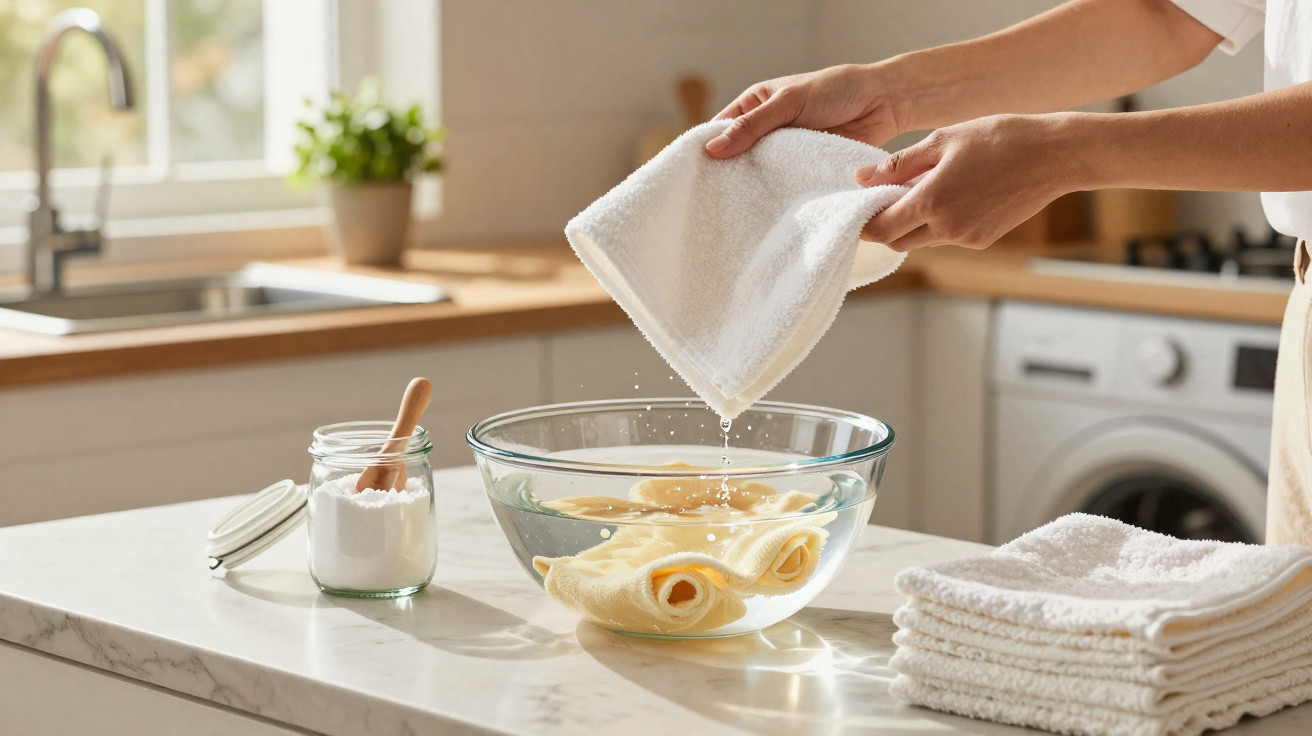
Everyone knows the drawer containing the “good old” tea towels that stopped looking good long ago: grey, stained, slightly sticky and carrying a faint greasy smell that persists even after hot washes. Many people then reach for chlorine bleach, only to find that the towels smell harsh but become neither truly white nor pleasantly soft. Yet there is a powder that often sits unused in the home – even though this is precisely where it excels.
Why kitchen towels become grey, stiff and smelly
In day-to-day use, a kitchen towel acts like a real vacuum cleaner for everything encountered in the kitchen. It absorbs grease, sauces, coffee, tea, red wine, tomato splashes and soap residue. All of this works its way deep into the cotton fibres.
Limescale in tap water adds to the problem. It builds up on and between the fibres, effectively trapping dirt particles. Over time, this creates the familiar grey cast that remains even after a 60 °C wash.
“Grey towels are not inevitable – they are often simply permanently overloaded with grease, limescale and colourants.”
Another common mistake is putting the towel straight into the hottest possible wash programme “just to be safe”. High temperatures can effectively bake stains into the fabric. Tannins from tea and coffee, along with colourants from tomato or red wine, can then behave almost like textile dye – bonding firmly to the fibre.
Laundry detergents with lots of fragrance merely mask the smell. The underlying issue remains in the fabric. Chlorine-based bleach may brighten the material, but it attacks the cotton threads, makes them brittle and can cause yellowing. Before long, the towels look older than they really are.
The overlooked miracle product: what makes sodium percarbonate so special
The answer is an inconspicuous white powder: sodium percarbonate, usually sold as “percarbonate” or “oxygen bleach”. It is often confused with bicarbonate of soda or ordinary baking soda, but it works differently.
When the powder is added to hot water, an interesting reaction takes place. It breaks down into two useful components:
- Sodium carbonate (washing soda): removes grease and loosens limescale deposits.
- Hydrogen peroxide: releases active oxygen, which breaks down organic stains and odours.
These oxygen bubbles work beneath grease, colourants and residual dirt, lifting them from the fibre. The effect begins at around 40 °C, while the mixture works particularly powerfully at roughly 60 °C – ideal for durable cotton or linen towels.
“Unlike chlorine bleach, sodium percarbonate brightens fabric without yellowing it or severely weakening the fibres.”
There is another advantage: once the reaction is complete, only water, oxygen and sodium carbonate remain in the water. This makes the product comparatively environmentally friendly when used at the correct dose. It is unsuitable for delicate materials such as wool, silk or heavily dyed textiles, as their colour may be affected.
Step-by-step guide: making grey towels white again
The key is to use a preparatory soak before the actual wash cycle. It takes a little time, but saves effort and frustration – while also being kinder to the towels.
1. Prepare a hot soak
Take a sufficiently large bowl or bucket and fill it with very hot water. Use water at a minimum of 40 °C, preferably closer to 60 °C if the fabric can tolerate it.
- Add around 1–2 tablespoons of sodium percarbonate per litre of water.
- Stir until the powder has dispersed evenly.
- Ideally, wear household gloves, as the powder can irritate the skin.
2. Pre-treat fresh stains
For very recent stains, an additional short step is worthwhile:
- Dampen the towel.
- Rub a little firm household soap or traditional laundry soap into the affected area.
- Rinse briefly with lukewarm water, then place the towel straight into the prepared soak.
3. Soak the towels and leave them to work
Next, place the kitchen towels fully into the solution. They should be completely covered with water, with no corner left sticking out.
- Soaking time: at least 2 hours; for heavily greyed towels, up to 6 hours.
- For extreme cases: leave the towels in the solution overnight.
After a while, the water will become slightly cloudy. This is exactly what shows that dirt, grease and remaining colour are being released from the fabric.
4. Washing machine: the crucial second step
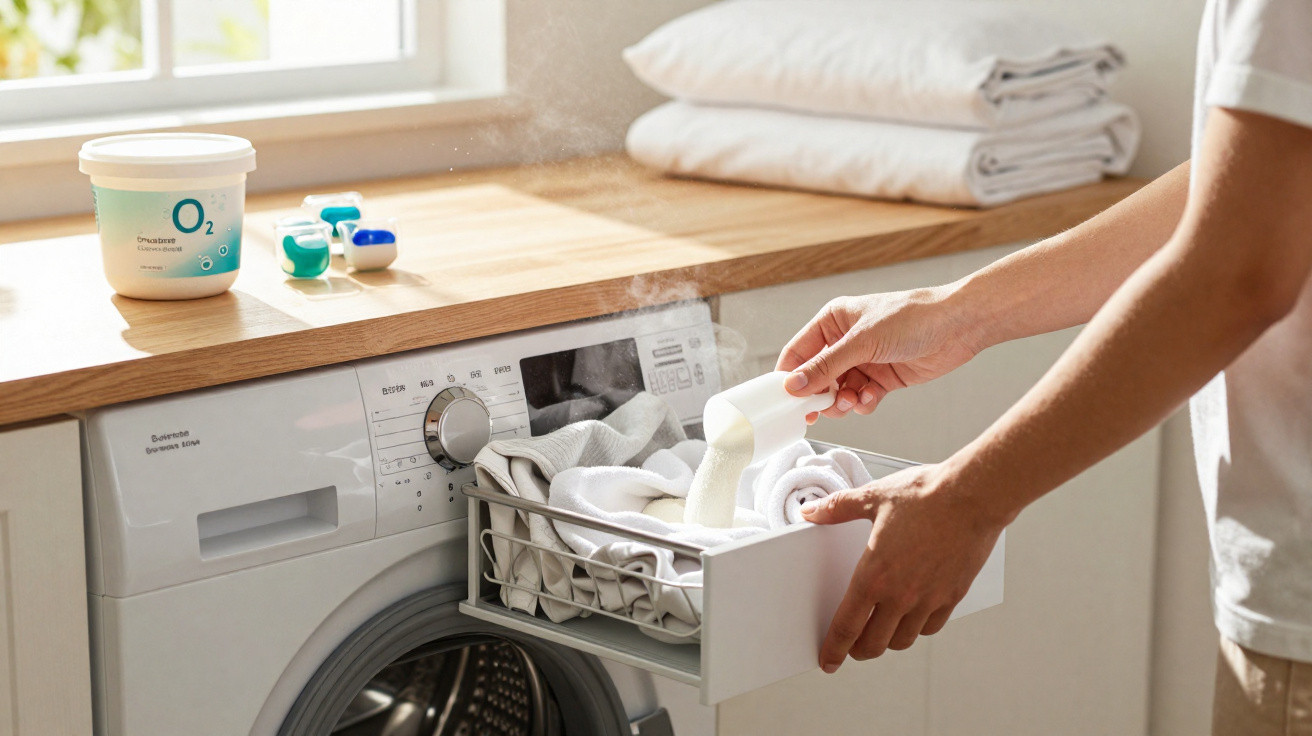
After soaking, squeeze the towels out only lightly before putting them directly into the washing machine.
- Choose a programme of at least 40 °C, or 60 °C for hard-wearing fabrics.
- Avoid fabric conditioner – it coats the fibres like a film and reduces absorbency.
- Use an ordinary laundry detergent; the sodium percarbonate has already done the preparatory work.
For drying, place the towels in the sun if possible, or hang them somewhere airy. Direct sunlight gives the bleaching effect a small extra boost, entirely without chemicals.
What to consider when using sodium percarbonate
This powder is powerful, so a few rules are needed to ensure it remains safe.
| Do | Don’t |
|---|---|
| Use with hot water (from 40 °C) | Do not add it to cold water – there will be almost no reaction |
| Use only on durable, light-coloured cotton and linen | Do not use on wool, silk or very delicate colours |
| Handle while wearing gloves | Do not mix with vinegar or citric acid in a sealed container |
| Store in a dry place out of children’s reach | Do not overdose – more does not necessarily mean cleaner |
Especially important: a mixture of sodium percarbonate and acidic household products such as vinegar or lemon juice must never be left in a sealed container. Gas can form, pressure can build up, and the container may burst.
How to keep your towels fresh for good
To stop the newly restored whiteness from disappearing again within a few weeks, a few simple everyday habits can help:
- Replace the kitchen towel every one to two days.
- Hang damp towels out flat immediately rather than leaving them scrunched up.
- Wash them regularly at 60 °C, provided the fabric can withstand that temperature.
- Use as little fabric conditioner as possible, or preferably none at all.
- Keep heavily soiled towels separate so grease does not transfer to other textiles.
Anyone who does a lot of frying or prepares large quantities of coffee and tea can schedule an “intensive soak” with sodium percarbonate once a month. This prevents grease and colourants from building up in the fabric for years in the first place.
Why not simply stick with chlorine bleach?
Chlorine-containing products are standard in many homes when it comes to getting things “properly clean”. They reliably kill germs, but have one major drawback: they are harsh on fibres, can damage the structure of cotton and easily create that well-known slightly yellowish cast.
Sodium percarbonate works differently. Its active oxygen gradually breaks down organic molecules. The fibres remain largely intact, and the towels feel noticeably softer and fresher after washing. The typical “swimming pool smell” is also avoided, which is particularly welcome for sensitive noses.
People who favour natural cleaning methods often combine traditional household soap, washing soda, bicarbonate of soda and occasional vinegar. Sodium percarbonate fits well into this set, but – unlike bicarbonate of soda, for example – should always be used with sufficiently hot water for its full effect to develop.
Practical combinations around the home
Sodium percarbonate is not only useful for kitchen towels. The same principle can be used to treat white cotton bed linen, cloths or tea towels with dried-on tea and coffee stains.
The following combination has proved effective in many households:
- Household soap for direct stain pre-treatment.
- Washing soda in the wash cycle to soften water and dissolve grease.
- Sodium percarbonate as an occasional addition for heavily greyed white or light-coloured fabric.
For coloured laundry, always test first on an inconspicuous area. Some textile dyes are sensitive to active oxygen and may fade over time.
Anyone who cares for kitchen towels using this method will quickly notice the difference: they dry faster, smell neutral and once again feel as a good tea towel should – clean, absorbent and ready for the next evening of cooking.



Comments
No comments yet. Be the first to comment!
Leave a Comment