
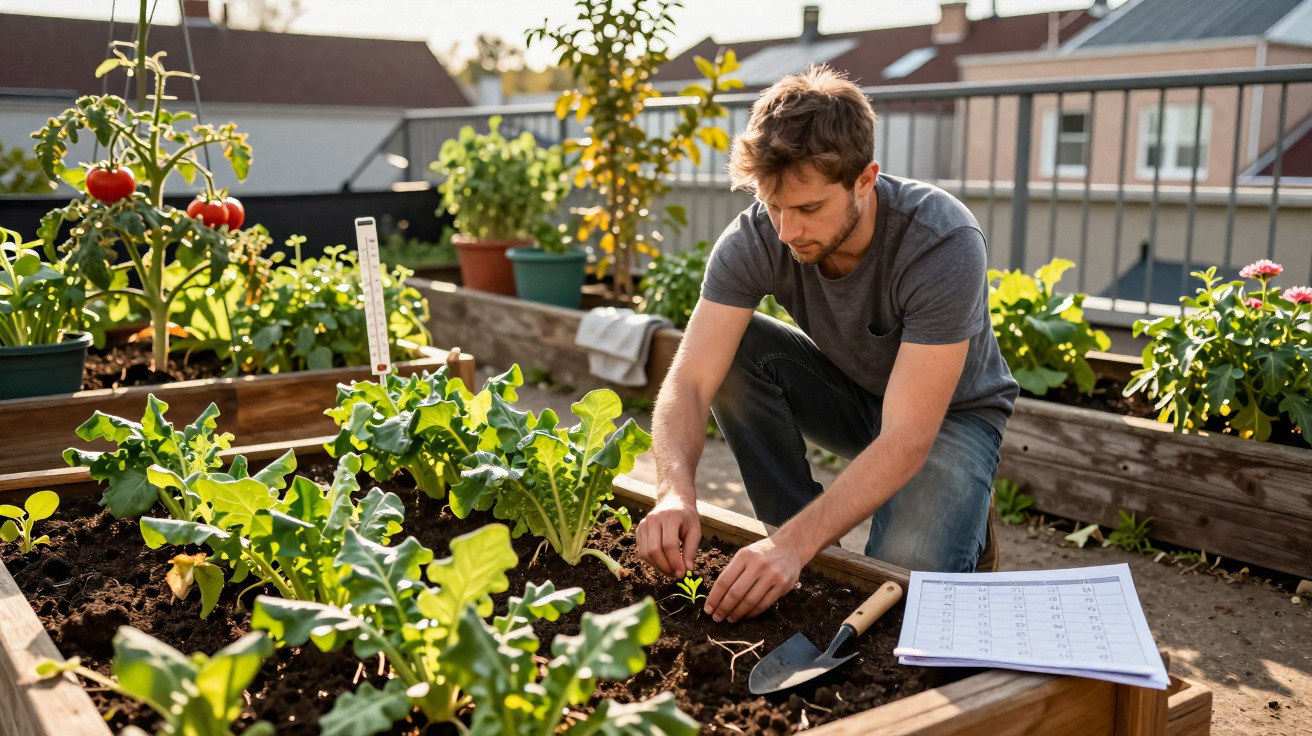
The first time I watched Léa toss her planting calendar into the recycling bin, I genuinely thought she had gone mad. It was late March, on one of those uncertain spring evenings when the sky cannot decide whether to bring rain or brightness. Her tidy vegetable beds stood ready in precise rows, and a pair of mud-caked boots had been left beside the shed.
She merely shrugged, took a handful of pea seeds and stepped into ground that every calendar insisted was “not ideal yet.”
Three months afterwards, bowl after bowl of peas was landing on her kitchen table, while her neighbour’s supposedly “perfectly timed” rows contained only empty spaces and struggling shoots.
It did not seem to make sense.
When the calendar no longer matches the garden
Browse any gardening aisle and they are impossible to miss: laminated lunar calendars, polished sowing guides and colourful wheels that promise “perfect timing.” They offer reassurance, as though somebody has at last made order from chaos.
But in ordinary gardens, the seasons are beginning to lose their rhythm. Spring may arrive early before retreating again. Summer can drown entire beds, then scorch young seedlings only a week afterwards. Plenty of home gardeners now privately concede that the calendars they once followed so carefully feel more like horoscopes for plants.
The ground gives one message, while the printed dates give a different one.
Consider Miguel, a novice gardener in northern Spain. Last year, he followed a well-known planting calendar exactly and sowed his tomatoes on the prescribed “ideal” date in mid-April. An unforeseen cold snap then arrived and froze half of his small plants in their biodegradable pots.
This year, he changed his approach. He checked the soil with an inexpensive thermometer, felt the earth with bare hands and held off until the ground had remained warm for several nights running. His tomatoes were planted two weeks “late” by the chart’s standards. The harvest began only slightly later than it had the year before, yet the fruit arrived steadily and abundantly, without the frustrating stretch of dead plants and replacement sowings.
The garden was the same. So were the seeds. The result was entirely different.
The simple reality is that printed calendars cannot feel the weather against your skin.
Conventional planting schedules rely on historical averages. They expect the seasons to behave themselves, moving from winter to spring according to something close to a timetable. Gardeners, however, are finding that their microclimates follow rules of their own. A breezy balcony, a shaded courtyard or a city wall that holds heat can each alter the “official” dates.
As the climate changes further, those neat charts are more likely to get things wrong. Gardeners achieving dependable harvests are often those willing to set aside the timetable and pay attention to the soil instead.
From rigid dates to living signals
Gardeners who abandon strict planting calendars are not working at random. They have simply replaced dates on paper with signals from living things.
Rather than following an instruction such as “plant carrots between March 15 and April 10”, they watch for three clues: earth that breaks up rather than sticking together, overnight temperatures that have lost their sharp edge, and weeds beginning to stir into growth. They notice dandelions coming into flower, the first blackbirds searching for worms and the point when their breath no longer clouds the early-morning air.
For them, planting day is not “the 3rd of April” so much as “the day the soil stopped clinging to my spade.”
An urban gardener I met in Lyon keeps a small notebook on her balcony table. At first sight, it contains no dates. Instead, there are short observations: “First lilac flowers opening – radishes went crazy last year after this.” Or, “Snails everywhere after rain – wait two days before sowing salad.”
She does not know the moon phase when she plants her bean seeds. What she does know is that, after three warm nights and one proper soaking of rain, her beans almost never let her down. Across five seasons, she has found that being “a bit off” the calendar has caused no harm whatsoever. If anything, the reverse is true. Her vegetables now come in a long, dependable succession rather than in a handful of fortunate surges followed by repeated disappointments.
Her neighbours still ask which calendar she uses. She smiles and gestures towards the sky.
In practice, these gardeners are lowering their risk. By waiting for real-world evidence - warm soil, settled nights and plant behaviour - they avoid late frosts, heavy rainfall and sudden bursts of heat that no printed chart can foresee.
They also deliberately spread their sowings. One small handful of lettuce seeds goes in one week, followed by another the next. Should a freak storm damage one batch, another remains. The outcome is not an overnight miracle harvest. It is a quiet, almost unremarkable reliability: fewer failures overall, more crops that are “good enough” and fewer emotional highs and lows.
That’s what many of them say they were really looking for all along.
How to plant without a calendar (and not lose your mind)
Giving up the calendar does not mean abandoning all structure. It means using living markers in place of immovable dates.
Begin with the soil. For most spring sowings, wait until a squeezed handful falls apart rather than holding as a damp clump. Being able to kneel without an icy sensation piercing your jeans is another positive sign. Then monitor the nights. When a bucket of water left outdoors no longer feels like thawed ice each morning, many hardy crops can be planted.
Give each crop one broad rule rather than a whole page of instructions. “Peas: early, as soon as soil workable. Tomatoes: late, when nights stay mild.” These are straightforward reference points, not prison bars.
Much of the anxiety comes from believing you are “behind” the calendar. Gardeners rush to sow everything during one draining weekend because the chart calls it the “right” window. Seeds are pushed into partly frozen soil, or seedlings are scorched by an unexpected hot spell on a windowsill.
When life is hectic, the pressure becomes even greater. You return home exhausted, look guiltily at the dates you have missed and either abandon the task or sow in a panic. Let’s be honest: nobody really does this every single day.
Paying attention to your garden creates a gentler pace. Peas one evening. Salad on another. Tomatoes on a Sunday. If the conditions feel completely wrong, you wait, without feeling that you have failed a schedule designed for someone else’s garden.
Many gardeners who have made this change describe it as a shift in outlook rather than simply a method.
“Once I stopped asking ‘What date is best?’ and started asking ‘What is my garden telling me?’, I stopped killing so many plants,” laughs Claire, who grows vegetables behind a row of old stone houses. “My harvests aren’t always spectacular, but they come. That steadiness changed everything for me.”
To develop this way of thinking, focus on a small number of simple signals:
- Soil feel: is it cold and sticky, or crumbly and kind to your hands?
- Night-time air: do you need layers and a hat, or no more than a light jumper?
- Local plants: are trees budding, weeds shooting ahead or everything still dormant?
- Water: does the soil drain properly after rain, or remain dense and boggy?
- Your time: choose one small job that can be repeated each week, rather than a monthly marathon.
These straightforward checks can gradually take the place of the calendar, with no agronomy qualification required.
The quiet confidence of gardeners who trust their patch
Spend enough time talking to gardeners who no longer worship planting calendars and a clear pattern appears. They seem more relaxed. They worry less about being “early” or “late” and concentrate more on what actually grows. Their photographs may not always look Instagram-perfect, but their late-summer baskets tell a different tale: beans arriving week after week rather than in one glut, carrots sown in gentle succession and tomatoes that may have begun later but barely missed a beat.
They still get things wrong, naturally. Late blight can strike, slugs can feast at midnight and a dry spell can arrive on precisely the day they forget to water. What differs is how they react. They do not blame a failed patch of beetroot on the wrong moon phase. Instead, they consider how the soil acted, when the rain fell and which clues they overlooked. They then alter the next sowing, rather than changing a date on a chart.
Today’s most consistent harvests may not come from gardeners with the finest calendars, but from those maintaining an ongoing conversation with a small patch of soil. That conversation is untidy, local and endlessly particular - yet strangely liberating. It does not transfer easily to posters or laminated charts, although it spreads quickly when neighbours exchange seeds across the fence.
Many say much the same thing in private: once they stopped pursuing the perfect planting day, they finally began growing food that truly seemed to belong where they lived.
| Key point | Detail | Value for the reader |
|---|---|---|
| Read signals, not dates | Rely on soil texture, night-time temperatures and local plant behaviour rather than fixed sowing periods | Fewer unsuccessful sowings and more even, dependable harvests |
| Stagger your plantings | Sow modest batches across several weeks instead of planting everything at once | Lowers the risk from abrupt weather changes and extends harvests over time |
| Adapt to your microclimate | Watch how your own balcony, garden or plot warms up, drains and protects plants | More realistic expectations and less worry about being “late” or “early” |
FAQ:
- Question 1 Can I really ignore planting calendars completely as a beginner?
- Answer 1 Treat them as a broad guide rather than a set of rules. Match the recommended months to real-life checks: crumbly soil, milder nights and local plants coming into bud. In time, your own notes will become more useful than the chart.
- Question 2 What’s one simple sign that it’s safe to start planting outside?
- Answer 2 In many regions, hardy seeds such as peas, spinach and broad beans can usually be planted when you can kneel on the ground without it feeling icy and a handful of soil breaks apart rather than smearing.
- Question 3 Won’t I get smaller harvests if I plant “late”?
- Answer 3 Your crops may begin a little later, but healthier plants under less stress often make up ground quickly. Many gardeners find they lose fewer plants overall and achieve steadier production by following conditions instead of early dates.
- Question 4 How do I track my own signals without spending hours on it?
- Answer 4 Use a small notebook or a notes app for brief entries such as: “First lilac flower,” “Tomatoes out today, nights finally mild.” Just a few words each week can reveal your own patterns over successive seasons.
- Question 5 Are moon-phase calendars completely useless?
- Answer 5 Some gardeners like them as a ritual or a way to create rhythm. Those getting consistent results generally use them alongside practical checks: soil temperature, the forecast and the way their particular plot responds as the season changes.




Comments
No comments yet. Be the first to comment!
Leave a Comment