
You scrub it away, it fades, and then, a week later, it returns more noticeably than before. The understated solution may already be sitting in your pantry.
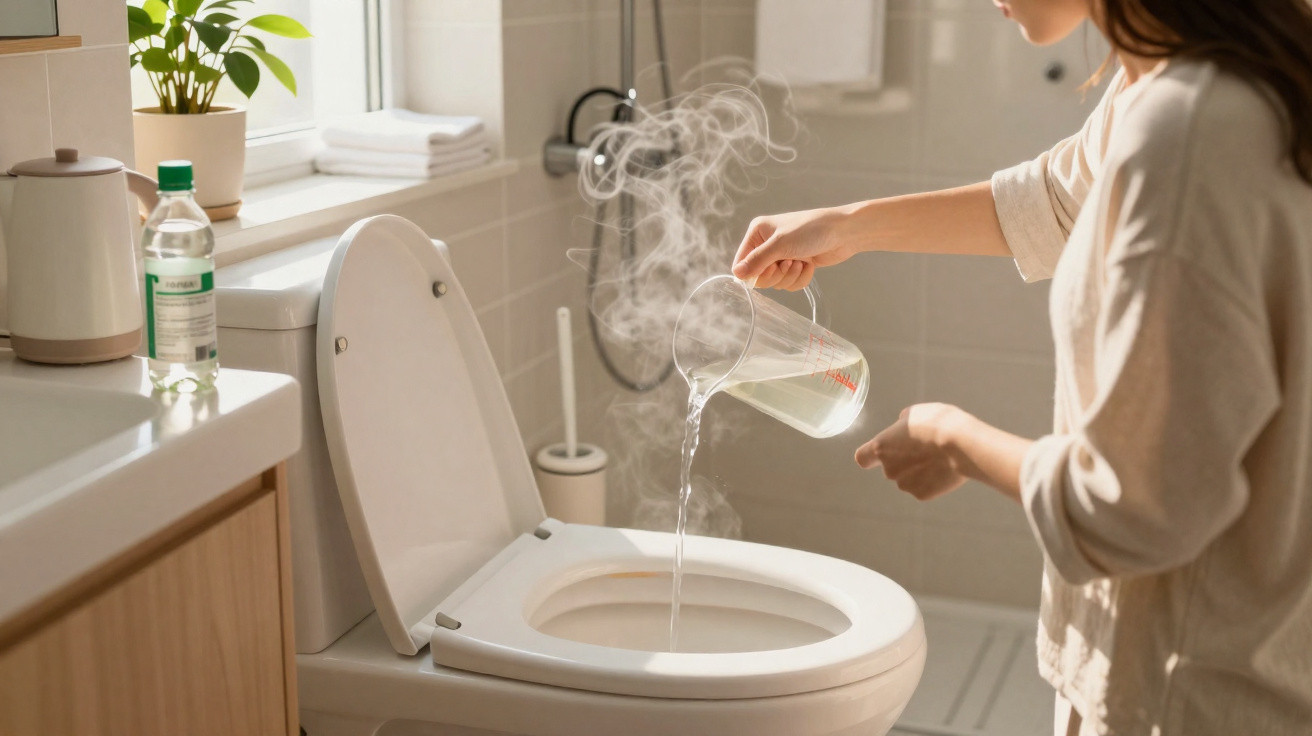
At 7:12 a.m., after a quick shower had steamed up the bathroom window, I spotted a pale deposit clinging in a half-moon to the porcelain bowl. It was the sort of limescale that can make an otherwise clean home feel slightly less cared for, slightly too exposed. I recalled an unusual suggestion from a neighbour: warm ordinary white vinegar before using it. So I heated a mug in the microwave until it was bath-warm rather than scalding, then slowly poured it beneath the rim in a circle. Its mild sharp scent was strangely encouraging. As coffee brewed in the kitchen, the vinegar was left to do its job in silence. Twenty minutes later, a toilet brush and several firm strokes lifted the ring away like damp chalk. The bowl looked clean again, but it somehow seemed relieved too.
The difference was the heat.
Why warm vinegar works better on stubborn limescale rings
Hard water contains dissolved minerals, chiefly calcium and magnesium. Once water dries on porcelain, those minerals remain as the recognisable crystalline rim. It tends to appear wherever water collects before evaporating: at the waterline, around the under-rim jets and along the bowl’s small ridges.
In the US, around 8 in 10 homes deal with hard water, and much of the UK has the same issue, particularly the South East. One renter told me that, after weeks of fighting unsuccessfully with blue toilet tablets and frantic scrubbing, she passed her landlord’s white-glove inspection with a single 30-minute vinegar soak and some patient brushing.
The chemistry behind it is remarkably straightforward. Limescale is calcium carbonate, while vinegar contains acetic acid. The acid dissolves the carbonate, creating harmless by-products and releasing the stubborn mineral deposit. Heating the vinegar to roughly 40–50°C - more hot bath than screaming kettle - accelerates the reaction and helps the liquid stay in place. That means less scrubbing effort and a brighter result. Never combine vinegar with bleach.
Step-by-step: the warm vinegar method that really works
You will need a mug or measuring jug, 2–3 cups of distilled white vinegar, a kettle or microwave, a toilet brush and rubber gloves. Flush the toilet once to bring down the waterline, then microwave or gently warm the vinegar. It should be warm rather than boiling - approximately the temperature you could briefly hold comfortably in your hands.
Pour it gradually beneath the rim so it flows through the jets, then work around the bowl with particular attention to the ring. Where scale is heavy, press several strips of toilet paper against the damp porcelain so the warm vinegar can remain attached to problem areas. Leave it for 20–60 minutes before brushing in deliberate arcs. For deposits beneath the rim, fold a paper towel soaked in vinegar and carefully tuck it under the lip for 15–20 minutes. Brush afterwards and flush.
Realistically, nobody follows this routine daily. Boiling water should be avoided: porcelain does not respond well to sudden temperature changes, and neither do pipes. On vinegar-cleaning days, do not use bleach or drop-in tablets; they either counteract the treatment or may create hazardous fumes. If marks remain, repeat the soak or make a final gentle pass with a pumice stick designed for porcelain. The smell is a little pungent, but it signals progress.
When professionals are asked about limescale, many return to the same advice:
“Acid does the dissolving; time does the heavy lifting. Heat just moves the clock in your favor.”
Give the vinegar a proper amount of time to act, then brush with purpose. Keep this short checklist near your cleaning caddy:
- Warm vinegar to hot-bath temperature, never boiling.
- Flush first to lower the waterline and reveal the ring.
- Soak the surfaces: pour beneath the rim and use vinegar-damp paper to hold it in place.
- Leave for 20–60 minutes, then brush; repeat for thick limescale.
- Finish persistent areas with porcelain-safe pumice.
A cleaner toilet bowl, fewer battles and calmer mornings
There is something reassuring about a cleaning ritual that works without fuss. Warm vinegar does not make a spectacle of itself; it simply dissolves the problem and gets on with it. The result is a visibly brighter bowl and water flowing more freely from the tiny jets you rarely notice until they become blocked.
Most of us know the sinking feeling when an unexpected visitor asks to use the bathroom and your thoughts immediately turn to “that ring”. A modest habit - warming the vinegar, allowing enough time and brushing properly - can make that worry disappear altogether. Warm vinegar, a brush and twenty unhurried minutes are all it takes.
Use it once a week in hard-water areas, or fortnightly where limescale is mild. To prolong the clean, keep a spray bottle of diluted vinegar close to the brush and lightly mist the bowl after the final flush each night. The shine remains, the scent disappears within minutes and the quiet satisfaction lasts. Goodbye to limescale becomes less of a promise and more of an everyday routine.
What happens when warm vinegar meets limescale
Picture limescale as a chalky barnacle fixed tightly to the bowl. Warming vinegar makes its molecules move more rapidly, helping the acetic acid work into the tiny pores in the mineral crust and break its bonds sooner. A warmer liquid also spreads into a thinner layer and adheres more effectively, especially below the rim.
That is why one simple adjustment - warming rather than boiling - can be as useful as a cleaning gadget. You are not trying to melt porcelain; you are encouraging a chemical reaction. Keep the heat moderate, allow generous soaking time and leave bleach out of the equation on vinegar day. No bleach required is not simply a boast: it makes the air safer and the routine easier.
If you feel tempted to add bicarbonate of soda, save it until after the soak and use it as a mild abrasive for the last scrub. Vinegar and bicarbonate of soda will fizz and neutralise each other, which may be entertaining in a science experiment but is less useful against limescale. Rinse, scrub with bicarbonate of soda, then rinse once more for a clear, crisp shine visible from the doorway.
Make space for simple limescale wins
You do not need to transform your whole life to keep limescale under control. A weekly warm-vinegar soak in hard-water regions, a quick Friday brush and a monthly deep clean beneath the rim will prevent a grey ring from turning into a crust solid enough to tap.
For a toilet that has been ignored for months, tackle it in stages: soak, brush, then soak again. Warm the vinegar, give it enough time and, for the worst patches, consider a careful pumice finish. Pass the tip on to a friend moving into their first home, or to the neighbour who has stopped using bleach tablets and is unsure what to do instead. The right routine saves time you would rather spend on almost anything else.
| Key point | Detail | Benefit for the reader |
|---|---|---|
| Warm vinegar dissolves limescale | Acetic acid breaks down calcium carbonate more quickly when warmed | Less scrubbing, better results |
| Soaking time matters | 20–60 minutes allows the acid to work beneath the rim and on the ring | A cleaner finish without brute force |
| Avoid bleach on vinegar days | Never mix them; alternate methods to stay safe | Healthier air, simpler routine |
Frequently asked questions
- Can I use apple cider vinegar instead of white? Yes, it works, but distilled white vinegar costs less, is colourless and is less likely to leave a faint tint.
- How warm is “warm” exactly? Aim for 40–50°C (104–122°F). Think hot bath, not boiling kettle. Excess heat can put stress on porcelain.
- Is vinegar safe for septic systems? In normal cleaning quantities, yes. It is biodegradable and breaks down rapidly in septic environments.
- What if stains remain after two rounds? Repeat the warm soak and use porcelain-safe pumice on the heaviest areas, then rinse and brush again.
- Should I pour vinegar into the tank? For this method, keep it in the bowl. Regular acidic soaking in the tank can make rubber components age faster.


Comments
No comments yet. Be the first to comment!
Leave a Comment