
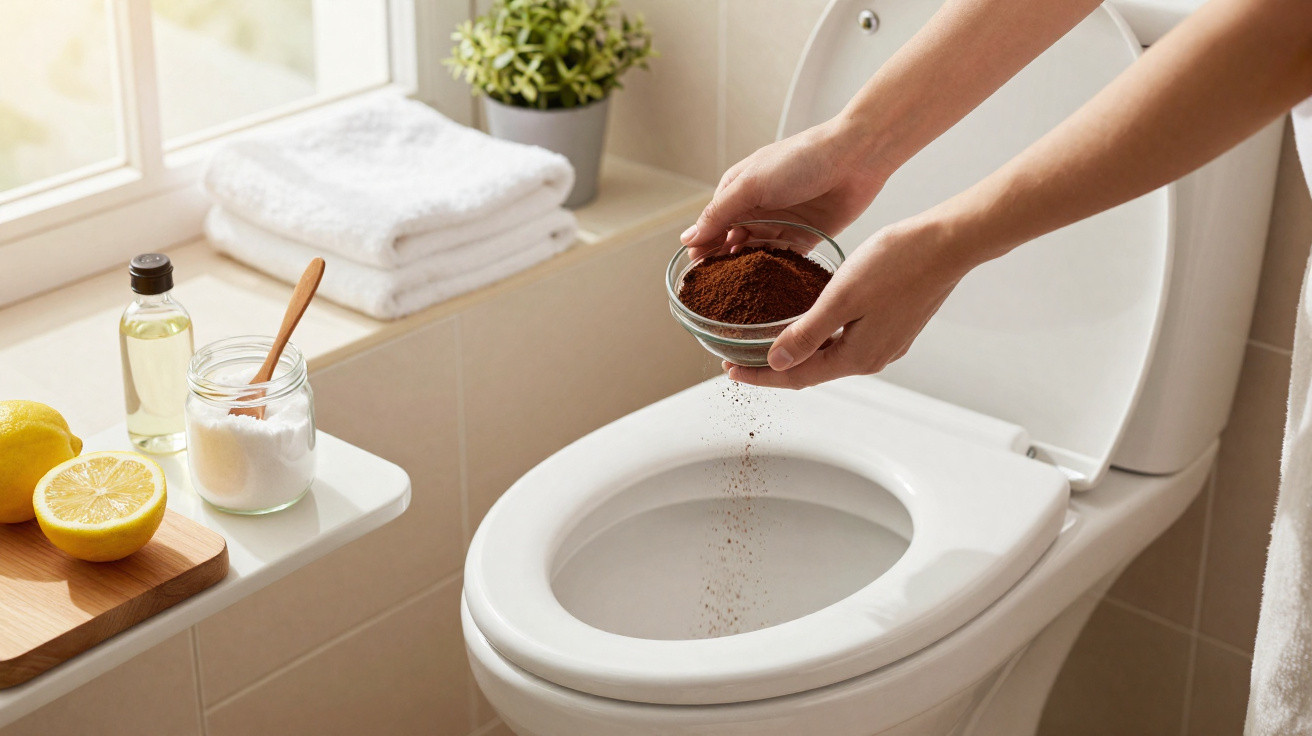
Many people clean regularly yet still notice a faint musty smell in the toilet. Before reaching for harsh chemicals from the supermarket cleaning aisle, it is worth checking the kitchen cupboards and pantry. They often contain surprisingly effective remedies that can freshen the bathroom air within minutes while also helping to keep it cleaner.
Why a toilet can smell despite regular cleaning
The toilet is both one of the cleanest and one of the most sensitive areas of the home. Even a minor cleaning oversight may allow unpleasant odours to linger. Common reasons include:
- deposits beneath the rim that cannot be seen from above
- urine scale and limescale, which make the porcelain surface more porous
- inadequate or ineffective bathroom ventilation
- infrequent cleaning of the cistern and seals
- drains where soap residue and hair have built up
When visitors are about to arrive, it is tempting to use an air freshener or toilet spray in a hurry. Usually, though, this merely masks the smell for a few minutes. It then returns – in the worst cases combined with artificial fragrance.
“A quick reach for the right ingredient can do more than cover up odours: it can neutralise them, without an aggressive chemical cocktail.”
The coffee trick: your bathroom can smell like a hotel in 15 minutes
Most households already have a packet of ground coffee in the kitchen. It can be particularly useful when unexpected visitors are on their way and the toilet needs a quick burst of freshness.
How to use the coffee trick step by step
- Remove the toilet brush holder and flush the toilet once.
- Sprinkle 2–3 teaspoons of dry ground coffee directly into the bowl.
- Close the lid and leave the coffee to work for around 15 minutes.
- Flush thoroughly afterwards and, if necessary, give the bowl another scrub with the brush.
Ground coffee traps odour molecules while replacing them with its own rich aroma. Its scent feels pleasantly warm, and many people associate it with hotel lobbies or breakfast rooms – which is why the bathroom can seem to smell like a good hotel.
It is important to use genuinely dry coffee, rather than damp leftovers from a French press or coffee machine. Wet coffee grounds can soon develop a musty smell themselves, producing the opposite of the intended result.
When coffee is especially useful
This trick is particularly suitable in the following circumstances:
- shortly before visitors arrive
- after using strongly scented cleaning products whose chemical smell is unpleasant
- in small bathrooms without a window
- in guest toilets that are used and aired only rarely
Coffee is not a substitute for thorough cleaning. However, it acts like a freshness filter when the bowl itself is clean but the air in the room still feels unpleasant.
Natural alternatives: what to do when there is no coffee at home
If there is no coffee available, other household staples that most people keep at home can help. As well as tackling odours, they loosen deposits inside the toilet bowl.
Bicarbonate of soda and vinegar: classic remedies for limescale and odours
Bicarbonate of soda and vinegar work particularly well together. A simple combination can shift stubborn residue and noticeably reduce stale toilet smells.
Here is how to do it:
- Scatter around half a cup of bicarbonate of soda into the toilet.
- Slowly pour in vinegar essence or household vinegar.
- The mixture will begin to fizz, helping to loosen deposits and dirt.
- Leave it for at least 30 minutes; for heavy limescale, leave it overnight.
- Scrub with the toilet brush, then flush thoroughly.
The reaction between bicarbonate of soda and vinegar removes the build-up where odours have settled. Once these deposits are gone, the characteristic ‘old toilet’ smell will usually disappear too.
Citric acid for gleaming porcelain
Powdered citric acid is another useful cupboard ingredient. It is highly effective against limescale, leaves a fresh scent and is especially suited to areas with hard water.
To use it:
- put 3 tablespoons of citric acid powder into the toilet bowl
- pour over a little warm, but not boiling, water
- allow it to work for 15–30 minutes, or longer if needed
- brush over the limescale marks and flush
The bowl will feel smoother afterwards, water will drain away more easily and odour molecules will be less able to cling to the surface. It also removes much of the grey film that can make toilets look dull over time.
Kitchen cupboard rather than chemical laboratory: the benefits of household remedies
Out of habit, many households choose powerful toilet gels and heavily perfumed tablets. Although they work quickly, they also have drawbacks, including aggressive ingredients, throat irritation during cleaning and higher costs.
“Coffee, bicarbonate of soda, vinegar and citric acid are inexpensive, already sitting in the cupboard and can leave the bathroom clean without a pungent chemical smell.”
| Household remedy | Main effect | Particular benefit |
|---|---|---|
| Coffee | Odour absorption and fragrance | Works within 15 minutes before visitors arrive |
| Bicarbonate of soda + vinegar | Loosens deposits, reduces odours | Ideal for overnight use on stubborn build-up |
| Citric acid | Limescale removal, fresh scent | Creates a smooth, shiny surface |
Bathroom odour traps that almost everyone overlooks
The bowl is only one possible source of smells. In many homes, the real issue lies elsewhere. To keep the toilet fresh in the long term, check these areas too:
- Toilet brush: Rinse it with clean water after use, let it drain and clean its holder regularly.
- Drain: Remove hair and soap residue from the floor drain and washbasin trap, then occasionally rinse through with hot water and a little bicarbonate of soda.
- Cistern: Older toilets can develop deposits inside the cistern, which may create a musty smell.
- Grout and silicone sealant: Damp corners encourage mould, often responsible for a ‘wet’ odour.
Keeping an eye on these spots and treating them occasionally with the same household remedies means you are less likely to have trouble with unpleasant bathroom air.
How often should these tricks be used?
The coffee trick is well suited as a fast measure just before guests arrive. Using it once or twice a month is generally enough to noticeably improve odour conditions, provided the toilet is cleaned normally on a regular basis.
Bicarbonate of soda, vinegar and citric acid are most worthwhile when visible deposits are present. Anyone living in an area with particularly hard water may benefit from planning a small overnight treatment around every two weeks.
Risks and points to keep in mind
Although these remedies are natural, there are still a few things to consider:
- Avoid leaving metal parts, such as old screws or decorative fittings, in prolonged contact with vinegar or citric acid, as they may rust.
- Do not mix different harsh products directly together, such as vinegar and chlorine cleaner. This can release toxic gases.
- With coloured toilet seats or delicate materials, test first in an inconspicuous area to check that discolouration does not occur.
If you are unsure, start with a smaller amount and increase it if necessary.
A practical combination before your next visitors arrive
Many readers ask: what exactly should I do if visitors are coming this evening and I want the bathroom to feel ‘hotel-ready’? This straightforward combination is enough:
- Quickly clean the bowl with your usual cleaner and flush.
- Add 2–3 teaspoons of ground coffee and wait 15 minutes.
- While it is working, rinse the toilet brush holder with hot water.
- Flush away the coffee grounds, open the lid and air the room briefly.
If you have more time, begin the previous evening with bicarbonate of soda and vinegar or citric acid. That removes both odours and the limescale ring – while the quick coffee trick on the day visitors arrive simply adds that extra hotel-like touch.



Comments
No comments yet. Be the first to comment!
Leave a Comment