
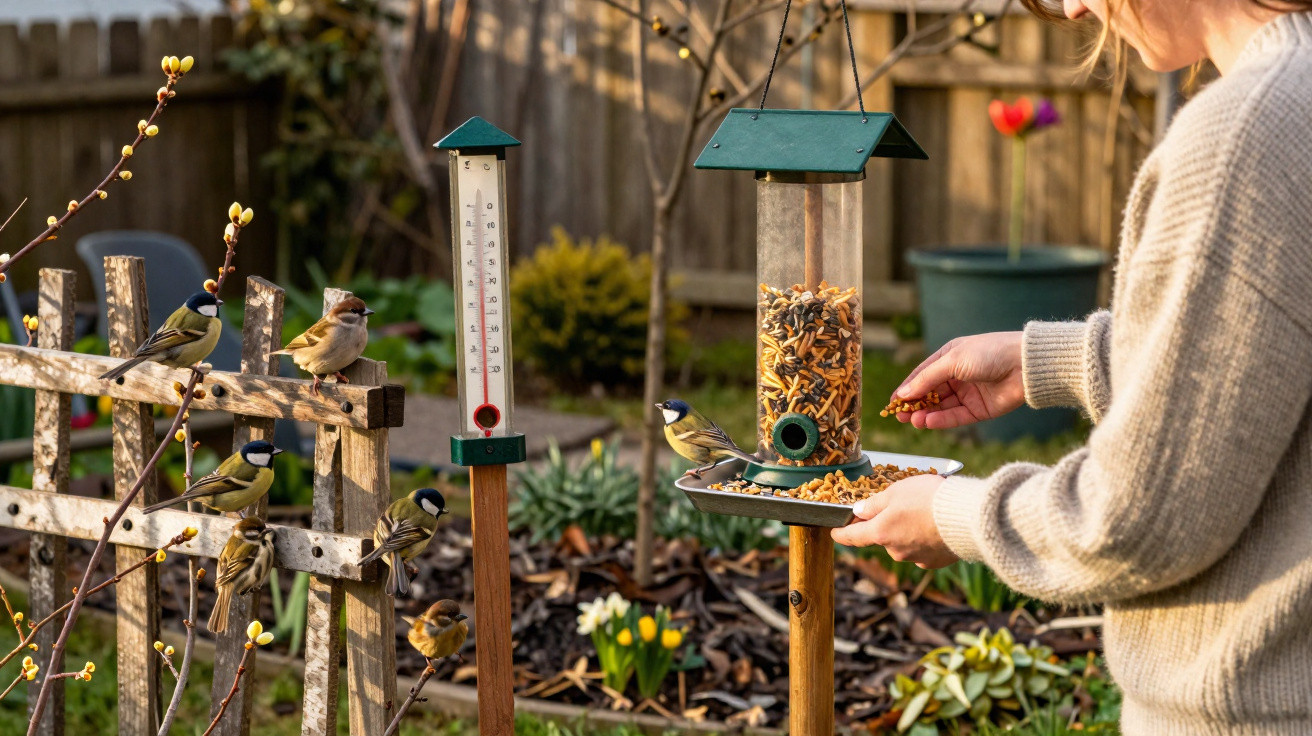
When the weather turns milder, gardens often remain unchanged: bird feeders stay full even though nature is already beginning to provide food of its own.
Many people have good intentions and continue feeding birds “until spring arrives”. For birds, however, that point is not set by a date on the calendar but by a distinct shift in temperature. Knowing when this happens allows you to support tits, sparrows and other garden birds far more effectively while avoiding unintended consequences.
The key moment: when the thermometer rises above 5 degrees
For feeding birds in the garden, 1 March or 1 April matters less than one straightforward measure: temperature. Specialists use an easy-to-remember threshold.
Reduce the amount of food once temperatures have remained consistently above 5 degrees for several consecutive days.
This range generally signals the start of a biological transition:
- the ground thaws and becomes more permeable again;
- insects, larvae and spiders become more active;
- earthworms and other small creatures move closer to the surface;
- plants begin growing, providing buds and leftover seeds.
As a result, birds can once again find substantially more natural food. They are no longer as dependent on sunflower seeds or fat blocks as they are during the depths of winter. Continuing to feed them as though there were still frosts deprives them of some of their independence.
Why less food makes sense in late winter
During genuinely cold spells, birds use huge amounts of energy simply to maintain their body temperature. High-calorie, fatty food helps ensure their survival. Once conditions become milder, their needs change for several reasons.
Birds need to practise their instincts
If a feeder is always full, wild birds can easily lose the incentive to search intensively for prey. This is particularly unhelpful before the breeding season. They need plenty of practice locating larvae, insects and other sources of protein in order to feed their young later on.
Reducing the amount of food at the right time supports this transition. Birds become more active again, use hedges, tree bark and ground cover as hunting territory, and refresh their foraging skills.
From winter food to a protein buffet
Familiar fat balls, peanuts and rich seed mixes primarily provide energy in winter. In spring, many species need more protein for building muscle, producing eggs and supporting the growth of young birds. These proteins are found chiefly in insects, caterpillars, spiders and worms - in other words, in the natural food available to them.
An overstocked feeding area can slow down this change. Birds may continue choosing the quick, easy snack rather than adjusting to the more varied spring menu.
How to reduce bird food without causing stress
Bird feeding should not stop overnight. A sudden cut-off can be risky, for instance if another frosty night unexpectedly arrives. A gradual approach is preferable.
The rule of thumb: taper feeding slowly rather than stopping abruptly - over one to two weeks.
The following method has proved effective:
- Cut the usual quantity of food by around half every three days.
- Change the schedule from daily feeding to every other day, then to every three days.
- Remove fat balls and especially fatty foods first, as soon as the weather remains reliably mild.
- Always leave out fresh water, particularly in dry or windy conditions.
This gradual adjustment allows birds to adapt without disruption. They will remain near the garden but recognise that it is once again worthwhile to search more widely.
What birds can now find in the garden themselves
Once you scatter less food, nature plays a greater role. Birds will then discover resources that may appear inconspicuous at first glance.
These include:
- old leaves beneath shrubs, where insects overwinter out of sight;
- dead perennials containing leftover seeds and small creatures in their stems;
- mossy areas inhabited by woodlice, spiders and crane fly larvae;
- vegetable beds that have not been completely cleared, with seeds and small wildlife.
This kind of “semi-wild” garden functions like a natural supermarket for birds. What can sometimes look untidy to people provides them with food, shelter and nesting sites.
Common mistakes towards the end of winter
People who feed birds usually mean well, which is precisely why a few pitfalls are easy to fall into. Three are especially common.
Food that is too fatty in mild weather
If fat balls and suet mixes are left out when the sun is already becoming stronger, they often no longer suit birds’ needs. They also spoil more quickly and become soft and sticky. This may soil plumage or lead to stomach problems.
Old seeds in the feeding station
During the transition between seasons, damp and dry days alternate. Food left in place for too long attracts mould and bacteria. Many birds will eat it nevertheless, creating a corresponding risk of infection. It is better to refill smaller quantities, check them more often and remove leftovers.
A garden that is too “perfectly” tidy
Neatly raked beds, bare lawns and the absence of a single dead perennial may look orderly, but they offer very little food. Clearing every corner immediately takes away nesting sites and feeding opportunities. Just a few wild areas can make a garden much more bird-friendly.
Cleaning the feeding station - the ideal time
Once you begin reducing quantities, it is also time for a thorough spring clean at the feeding area. Good hygiene helps prevent outbreaks of disease at busy feeding stations.
A clean feeding station is just as valuable as a full bird feeder in winter.
Take these practical steps:
- Remove all food remnants, including those in corners and crevices.
- Put spoiled or mouldy seeds in the household waste rather than tipping them into the garden.
- Clean bird tables and feeders with hot water and a little mild cleaning product, such as black soap.
- Rinse them well and allow them to dry completely.
- Clear husks and droppings from the ground beneath the feeding station.
This small amount of effort significantly reduces the risk of disease. Pathogens can otherwise spread quickly, particularly where many birds feed in a confined space.
How your garden supports birds after feeding is reduced
As you cut back on food, you can increase the natural resources available in the garden at the same time. A few simple measures can make the space permanently appealing to birds - without the need for continual refilling.
More structure instead of more food
The most important elements are:
- dense hedges of native shrubs for shelter and nesting;
- a few areas where fallen leaves can remain;
- flowers and perennials that retain seed heads into winter;
- herb beds that attract plenty of insects;
- a shallow water feature for drinking and bathing.
This creates a kind of self-renewing buffet. The more varied the garden’s structure, the easier it is for birds to find food - without constant human help.
Why it is worth watching the thermometer
At first glance, the 5-degree threshold may seem insignificant, yet it changes the entire rhythm of bird feeding. Following actual temperatures rather than the name of the month means responding more closely to birds’ needs.
The outcome is clear: food saves lives in winter, while reducing it in spring encourages independence again. This combination is what makes a garden truly bird-friendly - with less stress for the person feeding them and more freedom for the birds.


Comments
No comments yet. Be the first to comment!
Leave a Comment