
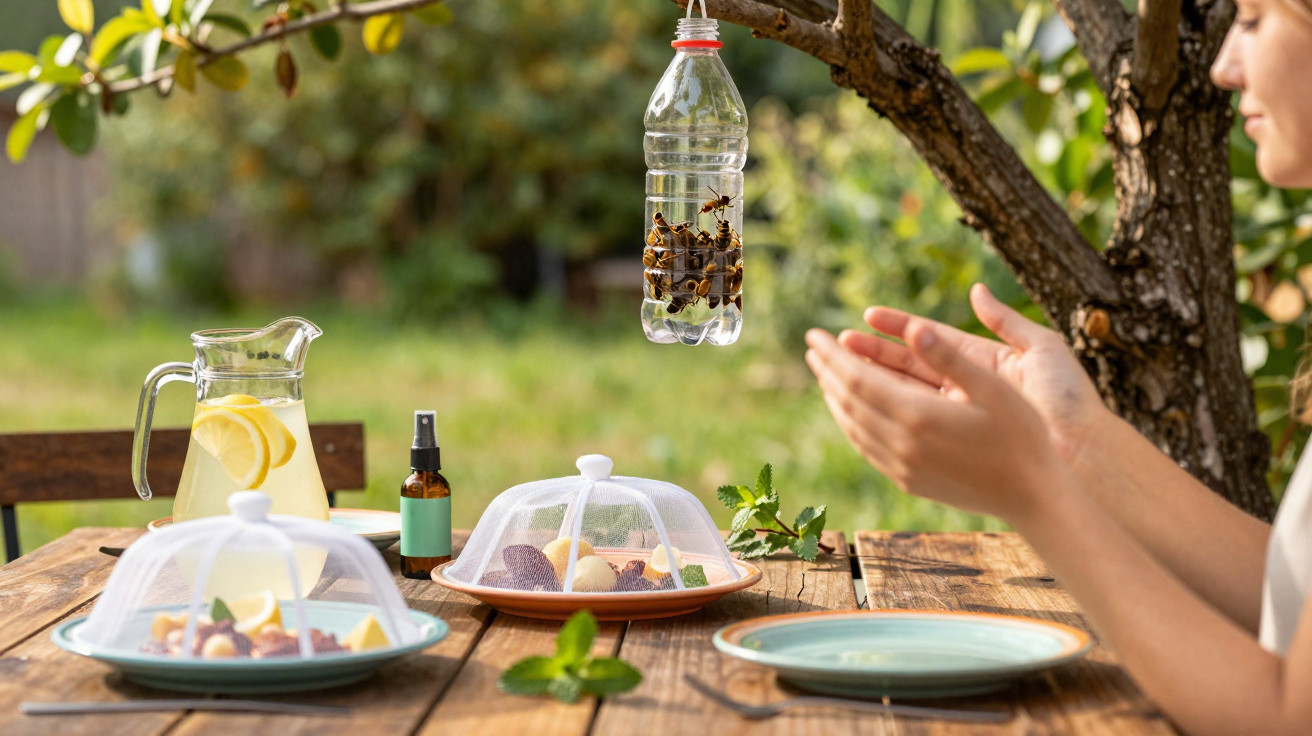
The striped visitors show up first. Sensible measures keep a picnic going; panic does not.
We assessed the most useful ways UK households can keep wasps away from tables, drinks and children. One straightforward change has a major effect, without using sprays near your meal or waving a tea towel wildly through the air.
Why wasps appear as soon as you sit down
From late July onwards, worker wasps no longer feed grubs and instead search for sugar. Fruit bowls, jam, lager and soft drinks attract them. Leftover barbecue food can still lure them on cooler days. They patrol boundaries, detect sweet liquids from a distance and recall reliable food sources.
On warm, windless evenings, smells linger around patios. Uncovered bins and recycling caddies become beacons for them. Colourful tableware and floral fragrances can sometimes make them mistake the area for flowers. Sudden movements prompt defensive behaviour, and this is when stings occur.
The simple tip: redirect wasps with a bait station
Offer wasps something more appealing a few metres away and they are more likely to ignore your table. This works because they favour the most concentrated and powerful smell first. You can enjoy the gathering while they gather at a decoy bar.
Set a sweet bait 10–15 metres from where you sit, slightly downwind. Most foragers divert within minutes and stay there.
How to create a safe, inexpensive bait station
- Take a broad glass jar or a plastic bottle cut and fitted with a funnel-shaped top.
- Combine 250 ml water, 2 tablespoons sugar or jam, 2 tablespoons apple cider vinegar and 2 drops washing-up liquid.
- During spring and early summer, replace the sugar with very small pieces of meat, as protein attracts wasps at that time.
- Put the jar on a secure surface, well away from walkways, pets and seating.
- Renew the mixture every 48 hours during warm weather. Close up and dispose of the old mixture responsibly.
The vinegar disguises the smell from bees, which are drawn to floral scents, while continuing to attract wasps. A small amount of washing-up liquid removes the water’s surface tension, preventing them from getting back out once they enter. Store it where children and pets cannot reach it.
Why this is more effective than shooing wasps away
Wasps that are foraging follow the strongest scent plume rather than the nearest item. A bait station forms a powerful scent route away from people. This means fewer flight paths above food and less temptation to swat. It also prevents the need to apply chemical sprays around places where people eat.
Make your garden space uninteresting to a wasp
Several minor adjustments can reduce what attracts them. Each takes little time, and together they greatly reduce visits.
- Keep recycling caddies covered and rinse sugary bottles before putting them in the bin.
- Put covers on outdoor jugs and glasses; cut fruit immediately before serving rather than an hour beforehand.
- Remove used plates promptly and clean tables with hot, soapy water to get rid of sugar residues.
- Avoid floral body sprays and strongly sweet fragrances on days spent on the patio.
- Keep children seated away from hedges and sheds that could contain nests.
A gentle repellent for use near people
Some households prefer a natural deterrent around the edge of the table. Small studies suggest peppermint oil has a mild repellent effect. It will not solve a nest issue, but may help discourage wasps from lingering near plates.
Recipe: mix 10–12 drops of peppermint essential oil with 150 ml water and 1 teaspoon vodka to help it combine. Shake the mixture, then spray a light mist on table legs, chair backs and the parasol pole, rather than on food.
Test oils on a small patch first. Keep sprays away from pets, especially cats, and avoid direct contact with skin and crockery.
Should you deal with a wasp nest yourself?
Start by checking: a constant flow of wasps entering and leaving a gap in a roofline, shed or the ground is likely to indicate a nest. If it is on your property but well away from people, it can often be left alone. Most wasps die when the first frosts arrive. Queens will not use the same nest again the following year.
Nests close to entrances, play spaces or lofts require action. Avoid blocking the opening in daylight, because trapped wasps may chew their way into rooms. Approved wasp powders for DIY use are available, but follow the label instructions and use suitable protective equipment. Many households opt for a professional, particularly where nests are high up or concealed.
Large, active nests and homes with allergy risk call for a licensed pest controller. Typical UK call‑outs range from £60 to £150, depending on access and region.
Timing and behaviour to keep stings at zero
- Deal with nests at dawn or dusk, when activity is lower and workers are inside.
- If working close to a nest, wear closed footwear, long sleeves, gloves and eye protection.
- Stay calm and move slowly. Swatting releases alarm pheromones into the air, attracting further wasps.
- Keep children and pets indoors throughout any treatment and for several hours afterwards.
Quick comparison of wasp-control options
| Method | Best for | Pros | Limits |
|---|---|---|---|
| Bait station (sweet mix) | Late summer picnics | Cheap, fast, keeps table clear | Kills wasps; needs placement away from people |
| Peppermint spray | Short meals, light pressure | Low odour, food-safe surfaces if sprayed around not on | Modest effect; reapply after an hour or rain |
| Bin discipline | Homes with open caddies | Reduces daily traffic | Doesn’t help if a nest is close by |
| DIY insecticidal powder | Accessible small nests | One-off treatment | Safety gear needed; read the label; not for high roofs |
| Professional removal | Large or high nests; allergy risk | Fast, insured, correct products | Cost |
What to avoid
- Never tip petrol, bleach or boiling water into openings. They damage soil, create a fire risk and breach pesticide-use law.
- Never seal an active nest entrance during daylight. Wasps will seek alternative routes, sometimes into lofts and bedrooms.
- Do not mistake bees for wasps. Bees have pollen on their legs and appear hairier. For swarms, contact a beekeeper.
Further advice for families and gardeners
Arrange seating carefully. Position the barbecue upwind from the table, allowing smoke and meat smells to drift away. Bring out sweet puddings last, then clear them away first. Give children cups with lids outdoors and teach them to remain still if a wasp lands on their clothes. In most cases, it will fly away after a few seconds.
Gardeners can grow nectar-rich plants away from patio areas. Lavender, buddleia and sedum attract pollinators to borders rather than eating spaces. In autumn, pick up fallen fruit every day because decaying apples are highly attractive to wasps.
If somebody is stung
Only remove a stinger if the sting came from a bee, because wasps do not leave one behind. Clean the affected area and use a cold pack for 10 minutes. Oral antihistamines ease itching for most adults; check children’s age guidance first. Ring 999 if there is difficulty breathing, swelling of the tongue or throat, dizziness, or widespread hives, particularly for anyone with known allergies.
The bait-station approach quickly reduces the pressure and works especially well alongside tidy bins and calm behaviour. Put it in place before food is served, sit slightly upwind and allow the wasps to queue somewhere else.



Comments
No comments yet. Be the first to comment!
Leave a Comment