
Patience is often in short supply.
Anyone hoping to serve fresh greens from their own garden as early as spring needs a genuine speedster in the veg patch. This is where an Asian vegetable comes in: it grows at record pace, requires little room and thrives equally well in a garden or on a balcony. This unassuming cabbage is currently surprising vegetable lovers and puts an end to the long wait for the first harvest.
The fast starter from Asia: why everyone is suddenly growing pak choi
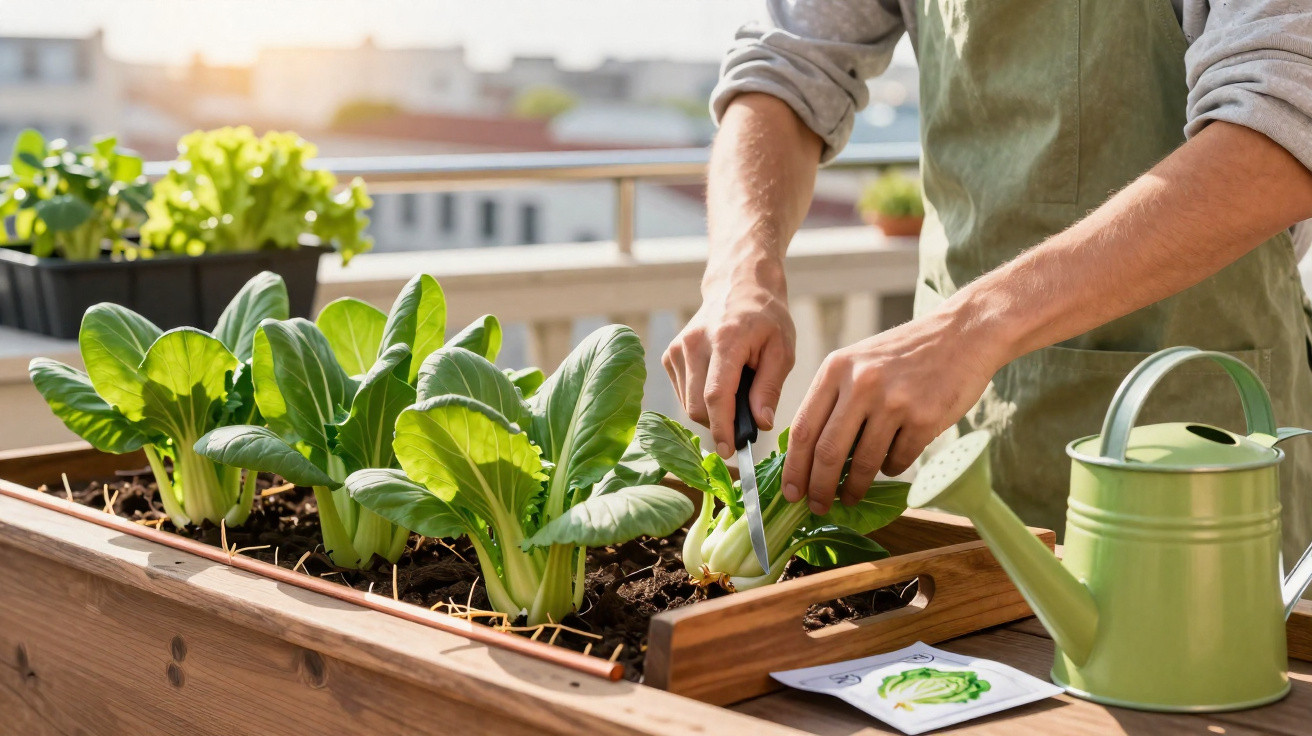
Pak choi, often called Chinese mustard cabbage, is botanically part of the cabbage family, although it has a far more elegant appearance: crisp white stems topped with dark green, gently glossy leaves. Its greatest advantage is its speed.
In good conditions, pak choi can be on the plate just 30 to 50 days after sowing – far sooner than traditional cabbage varieties.
While white cabbage or Brussels sprouts occupy space for almost the entire growing season, pak choi is ideal for impatient gardeners. The plants get going straight away once the soil has retained a little warmth in spring. This makes it an excellent choice for anyone wanting to use their beds as efficiently as possible.
Ideal for compact spaces and balconies
Pak choi does not need a huge bed. A raised bed, a large container or a long balcony planter is enough to accommodate several plants. Its root system remains relatively compact, provided the soil is nutrient-rich and kept sufficiently moist.
- Suitable for beds, raised beds, containers and balcony planters
- Can be planted fairly closely together, at around 20–25 cm
- Quick harvesting means space is used efficiently
- Very suitable for beginners gaining their first vegetable-growing experience
Many garden centres now stock its seeds throughout the year. Anyone trying to grow it for the first time therefore needs neither specialist equipment nor extensive expert knowledge – a few simple rules are enough.
Getting started with pak choi: the right timing and position
Spring demonstrates just how hardy pak choi can be. The plants prefer cool to mild conditions and cope with typical April weather far better than heat-loving vegetables such as tomatoes or peppers.
Sowing in the bed or under cover
Sowing can begin as soon as the soil is no longer icy cold and severe frost seems unlikely. Those who prefer to play safe can start with light protection:
- Early start: beneath a polytunnel, in a cold frame or under horticultural fleece
- From the frost-free period onwards: sow directly into the bed
- Leave around 30–40 cm between rows, then thin plants to roughly 20–25 cm apart within each row
The benefit of sowing directly is that plants do not need pricking out or transplanting. That reduces stress for young plants and saves the gardener time.
The ideal soil mix for a flying start
Pak choi favours loose, humus-rich soil with a good nutrient supply. Chemical fertiliser is unnecessary; in fact, the vegetable often grows more reliably and healthily with straightforward organic ingredients.
For a typical bed, it is sufficient to loosen the top layer thoroughly before sowing and enrich it with a natural mix:
- 2 spadefuls of well-rotted compost
- 1 handful of ground horn meal as a nitrogen source
- A thin finishing layer of multipurpose compost to give seedlings a gentle growing medium
This combination creates a loose, nutrient-rich area for the roots. The plants can establish themselves quickly instead of spending time “searching” for nutrients.
Water, water, water: tender cabbage needs regular watering
Anyone growing pak choi should keep a watering can close at hand. This cabbage is among the thirstier vegetables. Insufficient moisture causes it to bolt early and become tough and bitter.
The soil should always remain lightly moist – never allowed to dry out completely, but never waterlogged either.
Retaining moisture with mulch
A simple measure helps avoid constant watering: mulching. A thin layer of organic matter over the soil limits evaporation and keeps the ground cooler for longer.
Suitable materials include:
- dried grass clippings
- straw or chopped straw
- finely shredded leaves collected in autumn
The mulch should not sit directly against the stems, as this can cause rot. Leaving a gap of a few centimetres is sufficient.
Keeping pests under control: protecting turbo cabbage from damage
Wherever tender young leaves are growing, unwanted diners are usually close by. In spring especially, certain insects and slugs are drawn to pak choi’s fresh foliage.
Tiny beetles, major holes: protecting leaves from pests
Fine feeding holes in the leaves often indicate tiny beetles, which are particularly active during dry, warm spells. A simple but highly effective solution is fine insect mesh.
Place it over the growing area immediately after sowing and secure it well around the edges. This prevents pests from reaching the plants in the first place. At the same time, air can still circulate and moisture does not build up excessively.
Setting a boundary for slugs
At the beginning of the season, slugs readily make their way into newly prepared beds. Anyone wishing to avoid poisons can use straightforward barriers instead:
- rings of wood ash around the plants
- finely crushed eggshells as a sharp-edged boundary
- checking the bed in the morning and collecting slugs by hand
Such methods do not offer one hundred per cent protection, but they significantly reduce damage without placing unnecessary strain on garden soil.
From germination to harvest in record time
The most exciting stage arrives when the first leaves form a proper rosette and the stems begin to thicken. By this point, it becomes clear just how quickly this type of cabbage develops.
Harvest window: tender baby leaves or substantial heads
From around day 30, it is worth taking a closer look. Those who prefer tender baby leaves can start harvesting then. For larger, fully developed plants, allow 40 to 50 days after sowing.
- For baby leaves: pick individual outer leaves
- For whole plants: cut them just above the soil with a sharp knife
When cutting, avoid damaging the plant’s central growing point as much as possible. With a little luck, the base will grow again and provide a second, smaller harvest.
The best time of day to harvest
Harvesting in the morning gives the leaves a high water content and an especially crisp texture. As the day progresses, sun and warmth make them lose some of their firmness. Freshly harvested pak choi stores well in the fridge for several days, ideally wrapped in a slightly damp cloth.
How turbo cabbage tastes in the kitchen
Pak choi shows why it is so popular in Asia when cooked in a frying pan. Its stems remain pleasantly firm after brief frying, while the leaves soften without turning soggy. Its flavour is reminiscent of mild mustard or very gentle cabbage, without any heavy notes.
A quick fry with a little oil, garlic and soy sauce is enough to turn pak choi into a complete vegetable dish.
It works particularly well with:
- wok dishes with rice or noodles
- light fish dishes
- tofu or other plant-based protein
- curries made with coconut milk
The leaves can also be eaten raw in mixed salads. They add a gently peppery note, similar to young rocket but milder.
Smart growing plans: making the most of the rapid cycle
The short growing period offers a major opportunity for anyone aiming to get the most from their available space. Rather than making one large sowing, a staggered approach is worthwhile.
Sow a new batch every two weeks
Sowing smaller quantities roughly every 14 days spreads the harvest over a longer period. That way, you do not suddenly have a whole mountain of cabbage in the kitchen at once.
A rough plan could look like this:
| Period | Action |
|---|---|
| Early April | First sowing beneath horticultural fleece or in a cold frame |
| Late April | Second sowing directly into the bed |
| Mid-May | Third sowing for an early summer harvest |
| Late August | Sow once more to fill gaps in autumn |
Particularly useful: after early potatoes, salads or harvested peas, pak choi can be grown as a quick follow-on crop. This means the soil is not left unused.
Why growing pak choi is worthwhile right now
People who garden thoughtfully are increasingly looking for short growing periods, low fertiliser costs and flexible ways to use small spaces. Pak choi meets all these requirements remarkably well. The plants grow quickly, need no specialist fertiliser and even cope well in densely built-up urban areas.
There is another advantage: this vegetable is excellent for showing children or beginners how exciting home growing can be. So little time passes between sowing and the first harvest that motivation remains high. Anyone who has seen a row of tiny seeds turn so quickly into a dense, edible patch of green is unlikely to plan their next season without this Asian speedster.


Comments
No comments yet. Be the first to comment!
Leave a Comment