
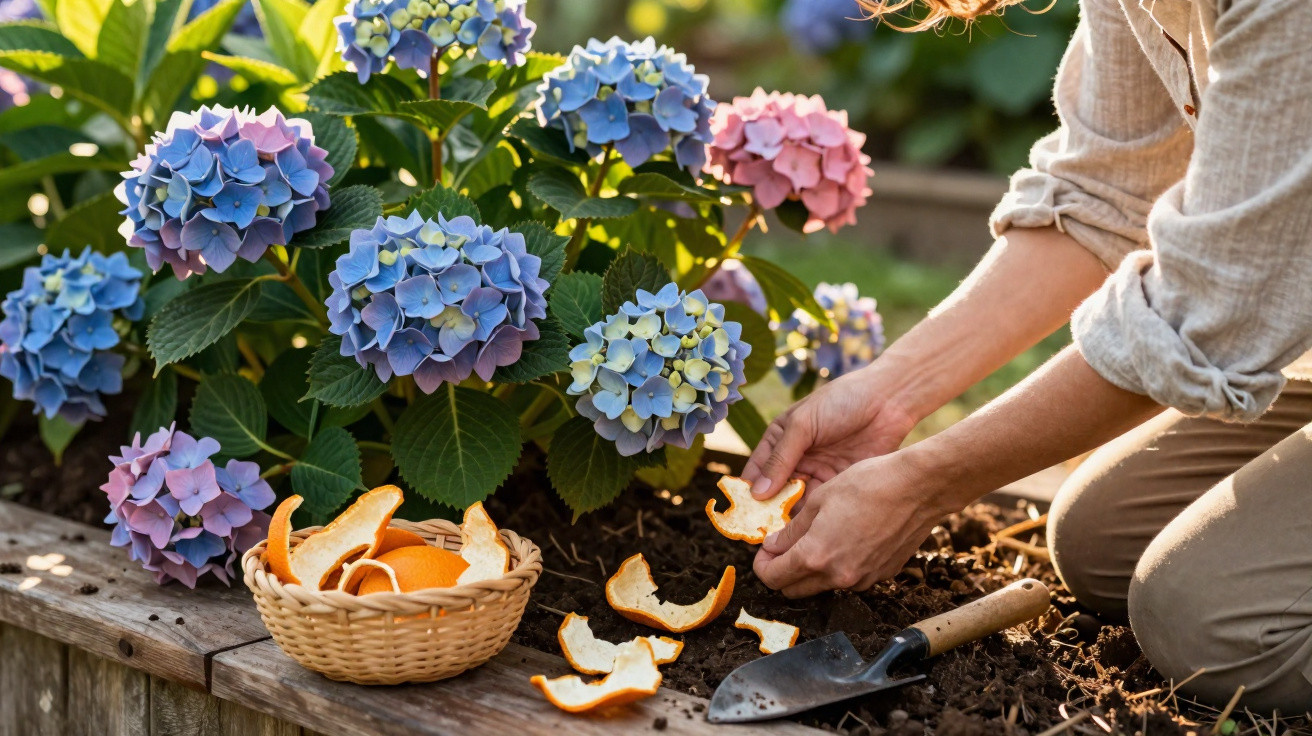
On patios and in borders, many hydrangeas begin to look worn out by midsummer, but the answer could be sitting in yesterday’s fruit bowl.
Gardeners often put drooping leaves and fading blooms down to unpredictable weather or missed watering. For hydrangeas, however, an often-discarded piece of kitchen waste may gradually improve the soil, nourish the shrub and even discourage some pests.
Why hydrangeas often fail to thrive
Hydrangeas are known for being demanding, yet the issue frequently lies below ground. These shrubs favour acidic soil, usually with a pH of 5 to 6. In plenty of gardens, particularly those with hard tap water or naturally chalky ground, the soil is considerably more alkaline.
As pH increases, essential nutrients become “locked up” in the soil. Although the minerals are present, the plant cannot take them up effectively. Many gardeners will recognise the consequences: foliage that turns pale or yellow, weak stems and reduced flower clusters.
Yellow leaves with green veins and shrinking flower heads are classic signs that your hydrangea is struggling with a soil imbalance, not just thirst.
In alkaline ground, this nutrient imbalance is commonly associated with shortages of iron and potassium. Hydrangeas also require magnesium and calcium in suitable amounts. They may remain alive without these nutrients, but they are unlikely to flourish.
Dried orange peels: an unexpected aid for hydrangeas
The useful surprise is that one form of kitchen waste can both feed hydrangeas and help rebalance the soil: orange peels.
Orange skins are mildly acidic by nature and contain several nutrients that hydrangeas can use. They provide potassium, which supports sturdy stems and plentiful flowers, along with nitrogen for leafy growth and smaller quantities of magnesium and calcium.
Used correctly, orange peel turns from leftover rubbish into a slow-release, acidifying tonic for hydrangeas and other ericaceous plants.
Their mild acidity can gently lower soil pH, which is especially useful where the ground is slightly too chalky. Dried orange peel acts more slowly than strong commercial acidifiers, so it is less likely to shock the shrub.
How orange peel affects the soil
As soil microorganisms break it down, orange peel:
- releases gentle organic acids that modestly reduce pH
- contributes organic matter to improve soil structure and moisture retention
- provides potassium to support flower development and richer colour
- adds small yet helpful quantities of nitrogen, magnesium and calcium
It will not transform unsuitable soil into an ideal growing medium overnight. Used routinely alongside sound watering and mulching, though, it can give hydrangeas a noticeable boost.
Preparing orange peels without causing problems
It may seem convenient to place fresh orange skins directly beneath a shrub, but this can attract fruit flies, rodents and mould. Proper preparation makes the difference.
Step-by-step method
| Step | What to do | Why it matters |
|---|---|---|
| 1. Collect | Save peels from untreated oranges and rinse away any sticky juice. | This removes surface sugar that may attract insects. |
| 2. Dry | Spread the peels in one layer in sunshine or dry them in an oven set very low. | It prevents mould and helps deter flies and mice. |
| 3. Grind | When fully crisp, crush them into a coarse powder or very small pieces. | Small pieces decompose more quickly and reach the roots sooner. |
| 4. Apply | Scatter them around the hydrangea’s base and lightly mix them into the top layer of soil. | This places nutrients where the feeder roots are most active. |
| 5. Water | Water the shrub deeply after applying the peel. | This helps carry nutrients into the root zone. |
Gardeners following this approach generally apply a small handful of dried peel to each mature shrub once a month, from early spring until late summer.
A monthly sprinkling of dried orange peel during the growing season is usually enough; piling it on will not speed things up.
A natural fertiliser that may deter pests
Citrus skins contain d-limonene, the compound behind their sharp, distinctive orange fragrance. Most people find the scent pleasant, but the molecule can interfere with the behaviour of certain insects.
A thin circle of dried, crushed peel around hydrangeas may deter ants and some aphids by creating a mild barrier. It cannot replace targeted pest control, but it provides a little additional chemical-free protection.
This method may also benefit other acid-loving shrubs. Camellias, rhododendrons, azaleas and blueberries can all respond positively to small, regular additions of dried citrus peel, particularly in gardens with soil that is close to alkaline.
Making orange peel part of hydrangea care
Orange peel is most effective within a wider care routine rather than as a miracle cure. Hydrangeas still require reliable moisture, partial shade in warmer climates and mulch to keep their roots cool.
For gardeners seeking deep blue flowers from suitable hydrangea varieties, soil acidity matters particularly greatly. Acidic soil enables the plant to absorb aluminium, intensifying blue shades. Orange peel by itself will not change pink flowers to royal blue, but it can support the slightly lower pH preferred by blue-flowering cultivars.
Two straightforward garden examples
Consider a hydrangea growing in a container on a balcony in a city with hard water. Regular watering with alkaline tap water raises the compost’s pH and the plant starts to yellow. Replacing some tap water with collected rainwater, adding a light layer of ericaceous compost and applying dried orange peel monthly can help rebalance conditions over a season.
In a chalky-ground border, a gardener may have incorporated ericaceous compost but find that its effect does not last. In this case, winter mulching with pine needles or leaf mould, combined with regular orange peel during active growth, can retain sufficient acidity for the shrub to establish itself and flower dependably.
Risks, limits and sensible precautions
Although orange peel is mild, it has limitations. A heavy layer of peel, particularly when it has not been thoroughly dried and crushed, can create a mat on the soil surface that slows water absorption and promotes mould.
Peels from heavily waxed or treated fruit may leave residues in the soil. Where possible, choose organic or unwaxed oranges, especially when hydrangeas are close to areas used for growing food.
Think of orange peel as a helpful amendment, not a complete fertiliser. Hydrangeas still benefit from balanced feeds and organic mulch.
Those with already highly acidic soil should proceed cautiously. A soil-testing kit can show whether the pH is sufficiently low; if it falls below 5, further acidifying materials, including mild options such as citrus peel, should be used sparingly.
Making garden use of everyday waste
As households search for practical, small-scale ways to reduce waste, this idea gives a useful purpose to something that normally goes straight into the bin. A jar of dried orange peel kept in the shed can become a discreet helper for hydrangeas throughout the growing season.
Alongside attentive watering, occasional pruning and a suitable planting spot, this simple piece of kitchen waste can help pale, underwhelming flower heads develop into the large, vivid spheres that have made hydrangeas a summer-garden favourite.




Comments
No comments yet. Be the first to comment!
Leave a Comment