
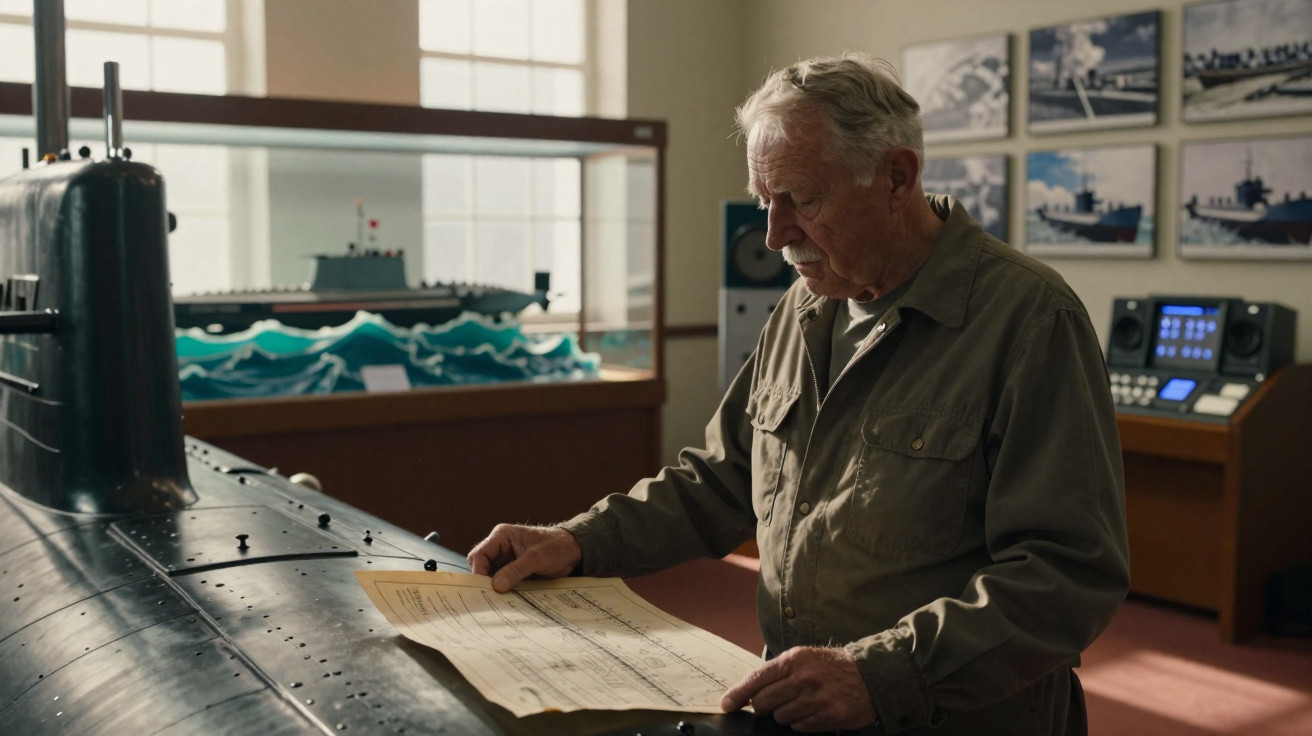
On a bleak morning in 1970, a Soviet submarine slipped into the Barents Sea, its bronze-coloured hull catching a faint glimmer beneath the water. Above, the sea appeared smooth and unconcerned. Far below, however, young sailors crowded into a tight control room alive with anxious tension as the reactor team drove the vessel ever nearer to its limits. Gauges rose. Steel trembled. Once the speed passed 40 knots, cups began to clatter, teeth shook and experienced hands quietly counted the seconds. Nobody aboard realised that they were about to establish a record that continues to unsettle naval engineers and veterans.
It was K-222: the fastest submarine ever built, and perhaps the most disputed.
The day the ocean discovered the force of 44.7 knots
Former Soviet submariners often speak of K-222 with an unusual combination of admiration and discomfort. They describe a vessel capable of outrunning torpedoes, surging up from the deep like an underwater missile. But they also recall noise so fierce that the hull felt as if it might come apart, while handling the controls became a question of staying alive rather than simply navigating. K-222 was more than fast; it seemed to challenge the laws of physics.
A speed record may look heroic in writing. Inside a steel cylinder, hundreds of metres beneath the surface, it feels much more like a gamble with fate.
Official Soviet sea trials put K-222’s submerged top speed at roughly 44.7 knots, or about 82 km/h. By contrast, modern attack submarines generally travel at nearer 25–30 knots, and sometimes slower when silence is essential. That figure-44.7-became a prize as well as a burden. Accounts circulated that NATO sonar operators could detect K-222 from extraordinary ranges, well before they could determine her exact position.
Some veterans say that tools and small components came loose from their mountings during high-speed trials. One recalled standing in a passageway as the entire boat shook “like a nervous animal trying to break its own skin.” The speed appeared remarkable in the logbook; living through it on board was entirely different.
There was no mystery behind it: the answer was metal. K-222 had a titanium hull, a material regarded in the Soviet Union of the 1960s as extraordinary-lightweight, durable, corrosion-resistant and exceptionally costly to use. It enabled Rubin bureau designers to create a more streamlined, lighter submarine able to dive deeper and travel at blistering speeds. Yet the bold material choice brought compromises that engineers still debate: extreme manufacturing costs, difficult welding and uncertain fatigue behaviour.
Its hydrodynamic form prioritised outright speed rather than quiet operation or crew comfort. That is the source of the divide: supporters regard it as a daring technological advance, while detractors see a loud, impractical prototype that delivered difficult lessons at a severe cost.
The harsh, elegant logic of pursuing underwater speed
Look beyond the gleaming record, and K-222 seems less like a monster than a question made of metal: what results when a submarine wins the speed contest but gives up almost everything else? During the Cold War, Soviet planners feared above all that NATO carrier strike groups might approach closely enough to launch nuclear attacks. A submarine able to dash in, fire its missiles and race away again appeared ideal. Speed was meant to provide survival.
The logic was neat on paper. At sea, it proved loud, punishing and complicated for those serving aboard.
Former officers have recounted one well-known incident from the trials: K-222 allegedly approached an American carrier group at such speed that NATO vessels reacted urgently, bewildered by the abrupt and thunderous acoustic signature. They detected “something huge and angry” below the surface but found it difficult to track with accuracy. K-222’s designers cherished the account. In their view, it showed that a fast and intimidating submarine could disrupt Western doctrine.
But the story has another, bleaker interpretation. The crew understood that, although precise tracking was difficult, ignoring them was impossible. Like slamming a door in a quiet room, the submarine announced its presence long before that presence could matter tactically.
Experts remain divided on this point. One side calls K-222 a magnificent dead end: too expensive, too noisy and too demanding to maintain-an underwater drag racer unsurpassed in straight-line speed but of little use in nearly every other role. The other considers it a harsh yet essential experiment that advanced Soviet metallurgy, hydrodynamics and reactor engineering.
The simple reality is that each judgement is valid, depending on what one believes submarines should do. If sheer velocity and intimidation are the aim, K-222 appears exceptional. If the requirement is covert, long-duration patrols within a constrained budget, it resembles an extravagant titanium error.
Why veterans still dispute a submarine with such limited service
Among retired Soviet and Russian naval personnel, K-222 is often discussed like a family secret: all remember it, but none agree on its significance. Some who served in other submarines alongside her remember an almost legendary presence within the fleet. Others dismiss her as a one-off display piece that spent excessive time alongside. The fact is that K-222’s active career was strikingly brief for a vessel of such renown.
Her reactors delivered immense power but required constant attention. Although tough, the titanium hull made every repair and refit exceptionally expensive and complex.
Most people know the feeling of looking back at a bold idea once admired and seeing it as somewhat reckless. Submariners understand that reaction particularly well. Many trained on more conventional boats, where quiet running and reliability mattered above everything else. From that viewpoint, devoting vast resources to a single fast but delicate prototype could feel like a betrayal of the principles that kept crews alive.
Some younger officers, however, privately admired the ambition. To them, K-222 proved that the Soviet navy could swing for the fences, rather than merely replicate Western ideas after a delay.
One former officer summed it up bluntly years later: “She was the fastest corpse in the ocean. We were proud of her and afraid of her at the same time.”
- The titanium hull: impressive in theory, but a nightmare for the shipyard.
- The twin-reactor arrangement: enormous power, continual vigilance and little tolerance for errors.
- The acoustic signature: a warning alarm for anyone listening across half an ocean.
- The maintenance burden: heavy costs for a system already under strain.
- The symbolism: a prestige project in a navy that still needed dependable workhorses.
What K-222 truly left beneath the waves
K-222 no longer exists. She was dismantled for scrap, with her titanium structure quietly sold off during the 2010s. Her peak speed remains unbeaten on paper. In reality, no navy has made a serious effort to exceed it. That is not solely due to expense or changed strategy; it is also an unspoken acknowledgement that the pursuit of underwater speed was an alluring mirage. Today’s leading submarines focus on stealth, automation and low acoustic signatures rather than pure pace.
Even so, K-222’s shadow persists in discussions of unmanned underwater vehicles and high-speed torpedoes. The dream of outrunning danger never really dies; it just changes shape.
| Key point | Detail | Value for the reader |
|---|---|---|
| Record speed | Approx. 44.7 knots submerged, still unmatched | Helps explain why K-222 became both a legend and a controversy |
| Titanium hull | Light, strong, exceptionally expensive and difficult to repair | Demonstrates how advanced materials can both propel and constrain a project |
| Strategic lesson | Raw speed gave way to stealth, reliability and cost control | Provides a clear perspective on why some “world firsts” do not shape the future |
FAQ:
- Was the K-222 really the fastest submarine ever built? As far as open sources and declassified data indicate, yes. No confirmed submarine has surpassed its recorded submerged speed of about 44.7 knots.
- Why didn’t the Soviet Union build more submarines like it? The expense and difficulty of using titanium, together with the boat’s extreme noise and maintenance demands, made mass production unrealistic.
- Could modern technology build a better, faster version today? Technically, yes, but navies place greater value on stealth and endurance than maximum speed, leaving little reason to pursue such a record.
- Was the K-222 considered a success inside the Soviet navy? Views were divided. Some leaders regarded it as a technological landmark, while others saw an over-engineered prototype unsuited to operational requirements.
- Why does the K-222 still fascinate experts and fans? Because it stands at the limits of what was possible: a rare instance of engineering bravado collided head-on with harsh reality beneath thousands of tonnes of water.






Comments
No comments yet. Be the first to comment!
Leave a Comment