
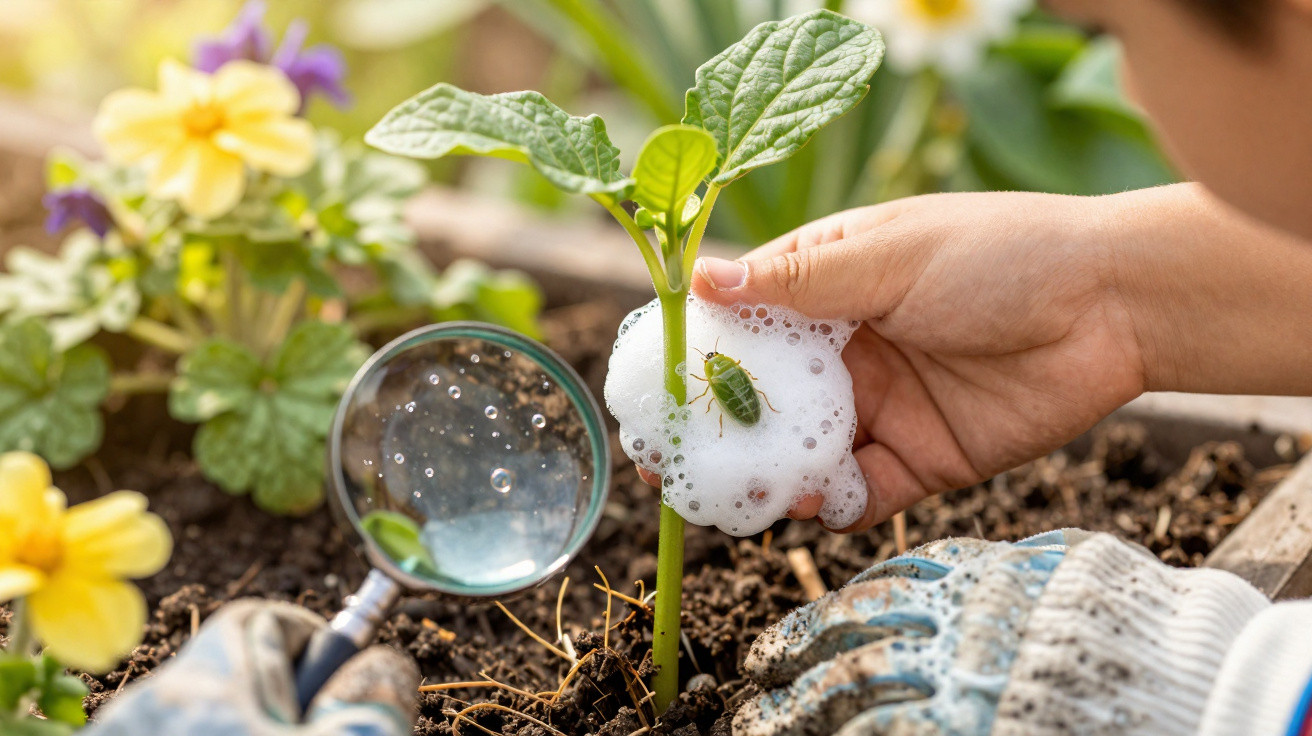
That white foam clinging to stems and leaves may look like saliva, fungus or a fluid released by the plant itself. Yet, if you gently part the bubbles, the real explanation becomes clear: a tiny insect is living inside it, sheltered in a hiding place it has made for itself.
Which insect hides inside this foam?
The culprits are the nymphs of leafhoppers known in English as spittlebugs or froghoppers. During this juvenile stage, the insect stays attached to the plant and feeds on its sap. At the same time, it produces a large volume of fluid, which is turned into bubbles around its body.
This distinctive appearance is why common names referring to saliva or spit are used in various countries. However, the foam is a structure made by the insect itself. Nymphs may be only a few millimetres long, so they are easy to miss even when their conspicuous “bubble home” is clearly visible.
How do spittlebugs produce so many bubbles?
After drawing fluids from the plant, the nymph expels some of them and mixes them with air, creating a foamy mass that surrounds its body. Compounds in this secretion help keep the bubbles intact, producing a damp space where the small creature can remain as it develops.
- The nymph feeds on fluids found in the plant’s tissues while staying concealed.
- Some of the fluid expelled by the insect is combined with air to create the protective foam.
- The bubbles help preserve a moist environment around its body during the juvenile stage.
- Once development is complete, the insect leaves this protection behind and enters adulthood.
Research published in the journal Scientific Reports in 2018 examined spittlebug foam and found evidence that it also provides thermal protection. In the experiments, conditions inside the foam remained more stable even as the surrounding temperature changed throughout the day.
What is this foam home for?
One of its key roles is preventing the nymph from losing water too quickly while it remains exposed on vegetation. Studies of these insects also indicate that the foam can lessen exposure to intense light and form a favourable microenvironment, acting as physical protection during a vulnerable stage of life.
It also makes life harder for enemies approaching the nymph. Research into the properties of this biofoam found that predators struggled to move after coming into contact with the material. Parasitoid wasps likewise face barriers when trying to reach the nymph and lay their eggs, giving the shelter an additional defensive purpose.
Watch the video shared by the YouTube channel The New York Times showing how insects survive inside bubbles on plants.
How can such a small insect jump so far?
Once they reach adulthood, spittlebugs display another remarkable ability. Although some are only a few millimetres long, they can leap several tens of centimetres. Their hind legs, together with a mechanism that stores energy before releasing it rapidly at take-off, are the secret behind this performance.
A study of froghopper performance, published in the Journal of Experimental Biology, recorded members of the genus Philaenus reaching approximately 70 centimetres in height-a distance equal to roughly 115 times their own body length.
What should you do if you find this foam in the garden?
Finding a few clusters of foam does not automatically mean a plant is doomed. Many species live alongside these spittlebugs without suffering serious damage, although heavy infestations may need attention. The best approach is to assess the amount present, identify the affected plant and avoid applying products indiscriminately when they are not needed.
The next time you spot those mysterious bubbles among the leaves, take a closer look before simply removing them. A minute animal is concealed within that small world of foam, protected by a strategy that regulates moisture, hinders attacks and prepares one of the most surprising jumpers in the insect world.






Comments
No comments yet. Be the first to comment!
Leave a Comment