
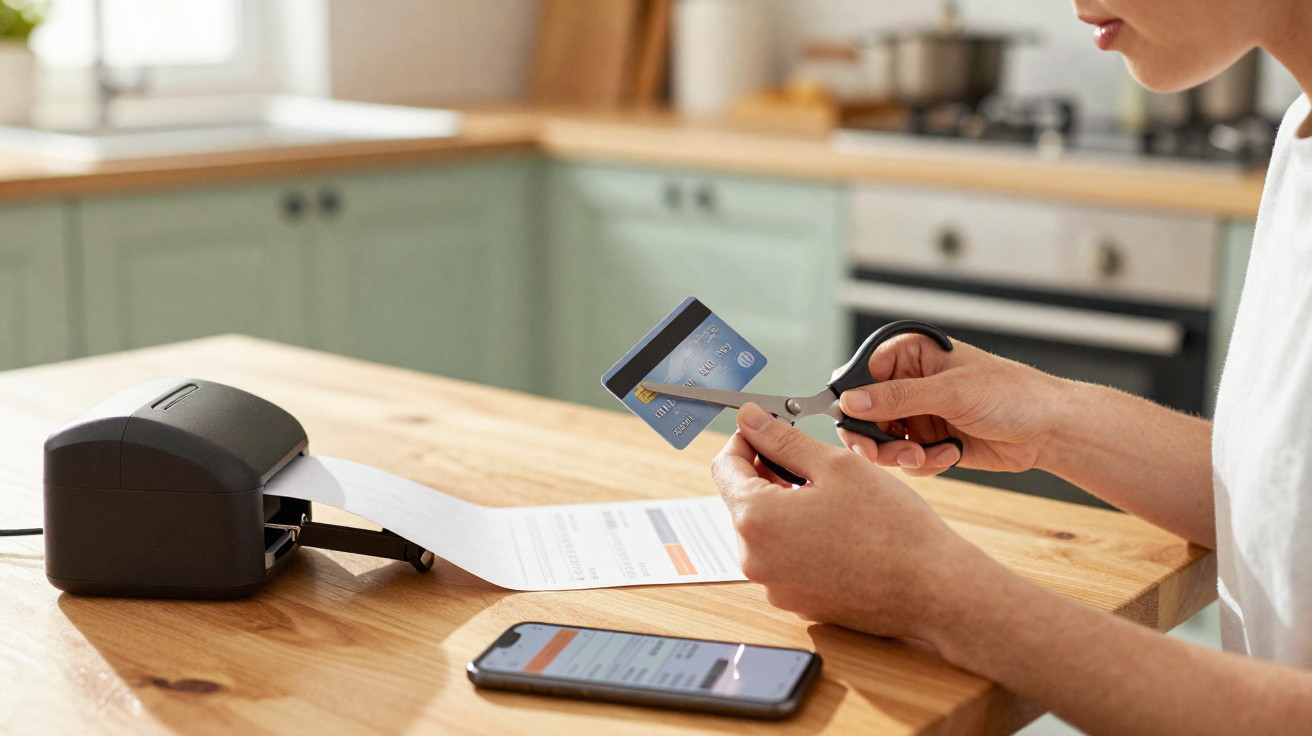
Avoid this particular habit.
Why you should not cut an expired bank card
Since bank cards were introduced, millions of consumers have adopted a risky routine. Once a card reaches its expiry date, many people destroy it-sometimes with scissors-before throwing it away.
However, as the technology publication Journal du Geek recently pointed out, this is not without danger. Some customers now have bank cards fitted with dynamic security codes and electronic components. Instead of using the CVV-the three-digit code on the back-they generate a new random code every hour.
These cards contain an e-paper display, an NFC antenna and a tiny lithium battery. That is precisely why they should no longer be destroyed. Like smartphones, tablets and other electronic devices, they are classified as waste electrical and electronic equipment (WEEE).
Recycling an expired bank card safely
In their documentation-which unfortunately is rarely read-banks make clear that these cards must not be bent, cut, pierced, burnt or placed in household rubbish. Cutting one could accidentally puncture its battery. As our colleague explains:
“A chemical short circuit may occur, releasing hydrogen fluoride, which is particularly harmful to the respiratory system and skin. You are unlikely to face a spectacular explosion, but you could at least suffer a burn and quite a fright.”
There is also an environmental consideration. Bank cards contain small quantities of metals, including gold, copper, nickel, silver and palladium. This may seem negligible for one person, but with tens of millions of cards in circulation in France alone, recycling them matters so they do not end up buried underground.
When a bank card has expired, the right thing to do is return it to a branch or send it back using the return envelope supplied by the bank.
The overlooked effect of bank card use
For context, a study published in The Journal of Retailing in 2024 saw Australian researchers examine 71 studies conducted across 17 countries, involving 11,000 participants.
Their findings confirmed a “cashless effect”: cashless payments lead to higher spending than cash transactions. The authors described the effect as “small” but “significant”.
How can this be explained? Richard Whittle, an economist at Salford Business School, notes: “The ease of paying by card can lead consumers to spend without thinking and buy things they do not really need.” To find out more, you can read our previous article here.






Comments
No comments yet. Be the first to comment!
Leave a Comment