
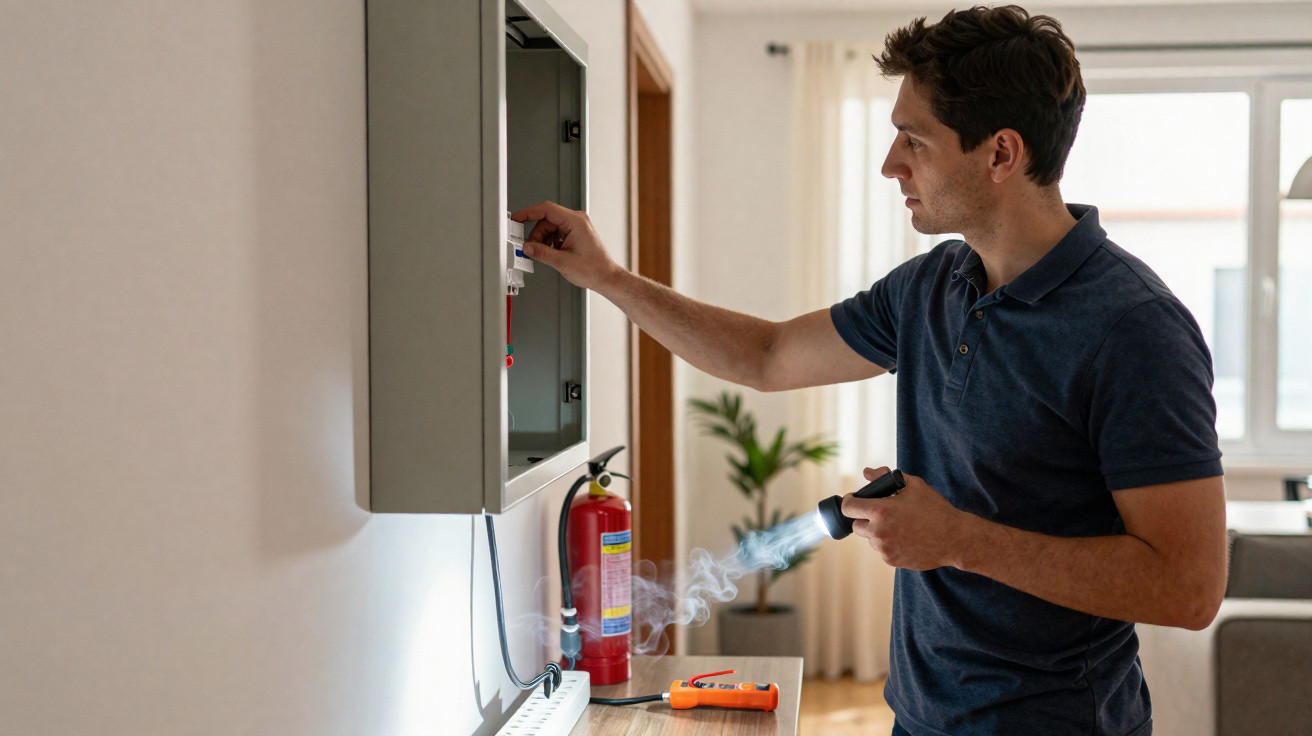
Electrical emergencies in the home can create considerable anxiety for unprepared residents. Spotting sudden faults in the wiring helps prevent serious harm to people and protects the entire household property with speed and complete safety every day.
How can you recognise the first signs of a short circuit?
Quickly noticing irregularities in a domestic electrical system stops minor defects from escalating into disasters. Smoke coming from switches or small sparks suggests that resistance has dropped abruptly, producing excessive heat and serious danger for everyone in the household.
A smell resembling burnt plastic is another critical warning of abnormal heating in internal conductors. If lights flicker for no apparent reason, switch off nearby appliances to prevent immediate damage and retain the protection of household equipment.
Why do sockets in the home often become hot?
Unusual heat at sockets generally points to overloaded conductors or loose connections, which build up high temperatures and… Read more
Why does the electrical current rise so sharply during the fault?
When a direct connection forms between conductors without a consuming load, resistance falls dramatically to almost zero. This sudden reduction causes the energy intensity to surge instantly, creating severe overload and the potential for fire in cables concealed within the wall.
Without an element to use the energy supplied by the source, all accumulated heat must be dissipated by the conducting wire itself. With no resistive limit, extremely high peaks occur, requiring correctly rated circuit breakers to ensure the supply is cut off.
Below is a video from the Mundo da Elétrica YouTube channel that explores the points discussed in this topic in more depth:
What precautions prevent serious damage to the consumer unit?
Keeping the distribution board properly up to date is the first measure for protecting installations from sudden short circuits. Modern devices disconnect the supply when they detect thermal irregularities, preventing fatal accidents and lessening the impact of domestic electrical failures.
Avoiding the overload of a single socket with several high-power appliances reduces the accelerated deterioration of electrical cables. Preserved thermal insulation prevents accidental contact between conducting wires, ensuring network stability and system durability.
Protection items
Equipment and safe habits
Essential measures for safeguarding all household wiring:
- Installation of circuit breakers rated for each room;
- Regular replacement of old or dried-out wiring;
- Exclusive use of certified sockets and conductors.
How should you act safely when there are sparks or smoke?
The first step when you see sparks or thick smoke is to remain calm and switch off the main electrical supply. Never touch exposed conductors without suitable protection, as this could result in a dangerous electric shock that immediately puts your life at risk.
Never use water on fires caused by electricity, because the liquid conducts current and worsens the hazard. Move flammable materials away from the affected area and leave the space quickly to protect physical wellbeing and retain control of the situation.
Follow these priority actions during electrical emergencies in the property:
- Immediately turn off the main circuit breaker at the home’s incoming electrical supply.
- Leave the room carefully, keeping all flammable items well away.
- Use only fire extinguishers suitable for electrical fires in an emergency.
When should you call a qualified professional for repairs?
Any work on wiring requires technical knowledge and insulated tools to prevent further dangerous incidents in the property. Attempting to repair damaged cables without the right preparation can lead to serious errors, increasing the risk of further short circuits in the home.
Qualified electricians take measurements with specialist equipment to locate breaks and worn connections. This detailed assessment restores the correct electrical flow throughout the house, providing ongoing peace of mind and lasting efficiency for the home.





Comments
No comments yet. Be the first to comment!
Leave a Comment