
Finding wilted leaves in the fridge drawer can be frustrating in the kitchen, yet throwing them away straight away is not always the best option. A straightforward rehydration method can restore the vegetable’s original freshness, preventing unnecessary day-to-day waste.
Why do rocket leaves lose their firmness in the fridge?
The low-humidity conditions inside a fridge speed up the ongoing evaporation of water from plant tissues. As the vegetable loses moisture, its cell walls wilt, leaving the structure less firm by the time of the meal.
This common physical change does not mean the food has gone off, provided its original characteristics remain and there are no unpleasant smells. The temporary loss of firmness is simply caused by reduced water content, so a quick intervention can restore the desired crispness.
Why put kitchen paper in a salad container?
Kitchen paper absorbs excess moisture, preventing pooled water from speeding up the loss of… Read more
How does iced water restore turgidity to vegetables?
The temperature shock created by chilled liquid encourages immediate osmotic absorption through the pores of wilted leaves. On contact, each plant cell fills with liquid again, restoring its internal pressure and natural texture.
In Korea, this physical principle is widely used in traditional cuisine to revive green leaves before serving any dish. The low temperature of the water protects sensitive nutrients and restores the ideal consistency of rocket in just a few minutes.
Below is a video from the Marisa Sanchez Perez YouTube channel that explores the points discussed in this topic in greater depth:
What are the essential steps for reviving vegetables?
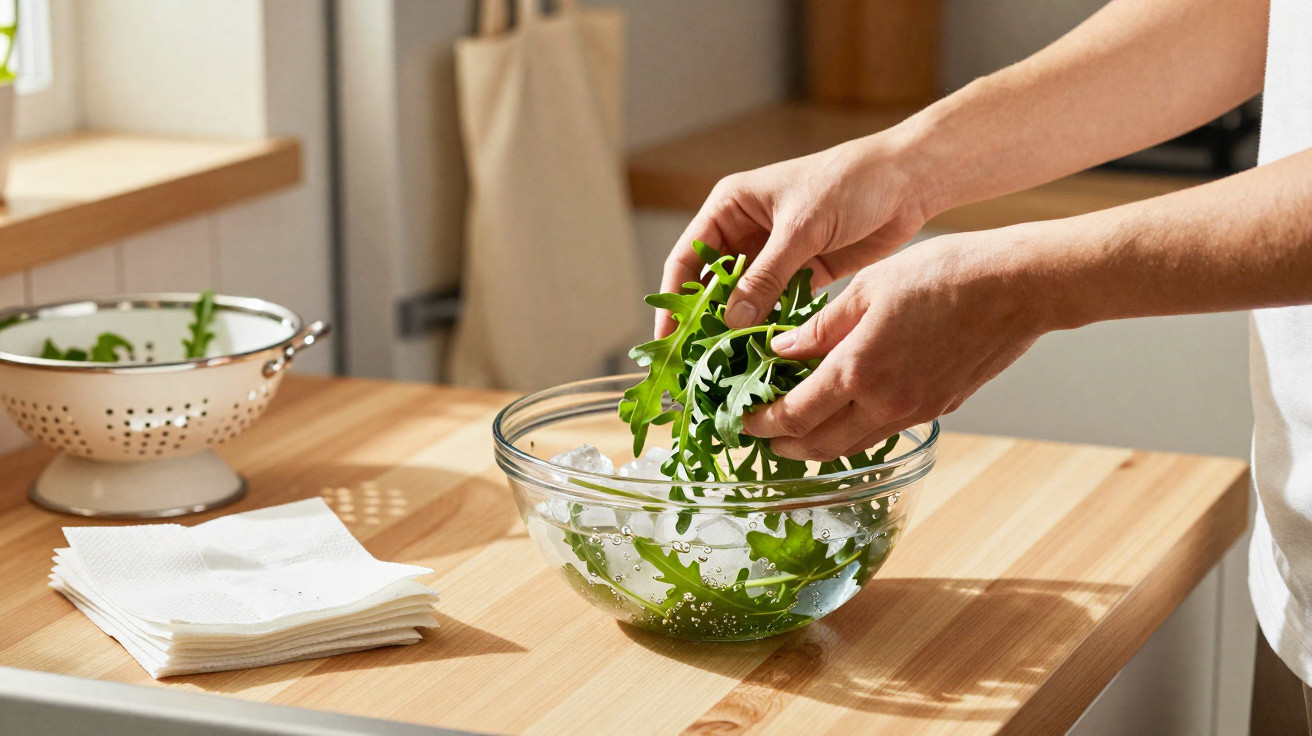
To carry out the process properly, immerse the whole leaves in a deep bowl containing plenty of water and ice cubes. This soaking enables even cellular recovery, ensuring the entire leafy volume takes in the moisture it needs.
After resting for around fifteen minutes, remove the leaves and dry them gently to prevent liquid building up on the surface. Using a manual salad spinner helps preserve the salad’s quality and fresh appearance.
Essential rehydration kit
Basic items for the process
Gather these simple materials before beginning to revive your vegetables:
- A deep container filled with very cold filtered water;
- Ice cubes to keep the temperature low;
- A salad spinner or clean cloth for drying.
How can you tell whether the vegetable can still be revived?
Before using the rehydration technique, it is essential to check whether the food has merely lost water or shows genuine signs of decomposition. Leaves with dark marks, a sticky texture or changes in smell should be discarded for food safety reasons.
If a leaf is only soft, with no dark spots or slime, it is entirely suitable for this restorative treatment. Careful sorting supports healthy eating and preserves the full integrity of the nutrients during food preparation.
Before applying the technique, check the following signs to ensure it is safe to eat:
- No dark spots or deterioration marks on the surface;
- A texture free from stickiness or slime on the leaves;
- The fresh, characteristic aroma of the vegetable remains intact.
How does this method reduce household waste?
Making full use of leafy vegetables is a valuable practice that saves money at home and supports sustainable everyday consumption. Small preventive actions cut the amount of organic waste produced in kitchens and make better use of the weekly family budget.
Learning to restore viable vegetables can transform kitchen routines and encourage more nutritious meals without extra spending at the supermarket. Incorporating this Eastern wisdom keeps dishes colourful, promoting more health on the plate and making the most of every purchased ingredient.




Comments
No comments yet. Be the first to comment!
Leave a Comment