
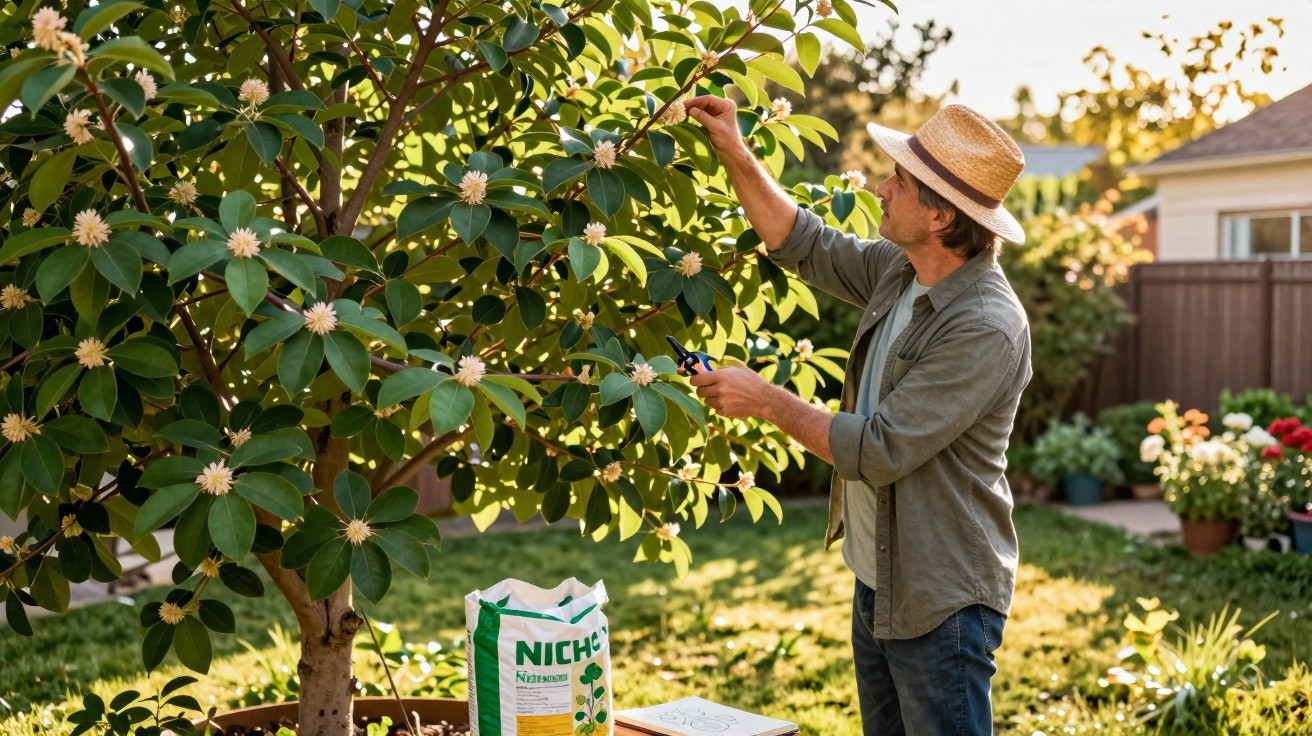
A tree that does not flower despite having plenty of branches and leaves may be allocating a large share of its resources to vegetative growth. Although this may seem contradictory, abundant green growth does not always indicate that the plant is in the best condition to produce flowers. Light, pruning, age and nutrition should all be considered together.
Why can a tree grow vigorously yet produce few flowers?
Leaf and branch growth, along with flower production, rely on separate physiological processes. If conditions chiefly encourage vegetative development, the tree may keep expanding its canopy without producing a matching level of flowering.
Light availability is another significant factor. An overly dense canopy can shade areas of the tree itself, limiting the light reaching branches capable of producing flowers. As a result, a tree that appears healthy and vigorous may flower only sparsely in certain parts.
Which fertiliser detail can affect flowering?
Excess nitrogen is one issue worth considering when a plant develops many leaves but few buds. This nutrient supports vegetative growth and, when supplied in excessive amounts, may encourage more branches and foliage at the expense of the balance needed for other stages of development.
This does not mean that simply adding more phosphorus or potassium is the answer. Nutritional requirements differ according to the species, soil and growing conditions. Before applying further fertiliser, it is safer to assess the plant’s overall condition and follow guidance specific to that species.
How can pruning and light help a tree that does not flower?
Pruning should be carried out according to the species and the purpose for which it is being grown. Removing dead, diseased or heavily crossing branches can improve the canopy’s structure and allow more light to enter. However, excessively severe pruning may trigger fresh vegetative shoots and remove parts of the plant that would otherwise produce flowers.
It is equally important to check whether the tree receives enough light for its species. If the canopy is too closed or the site remains shaded for much of the day, insufficient light can restrict flowering. Any adjustment should be gradual and take the plant’s characteristics into account.
Who should adapt these measures, and in which situations?
Young trees may naturally need several years to reach reproductive maturity, while mature species can have particular flowering seasons. The plant’s age should therefore be considered before a lack of flowers is treated as evidence of a problem.
Trees grown in pots, in heavily shaded places or in excessively fertile soil may also respond differently. Watching growth through the seasons, the amount of light received and the fertilising history can help determine whether intervention is genuinely needed. Rather than pruning or fertilising indiscriminately, care should be adapted to the needs of the species.






Comments
No comments yet. Be the first to comment!
Leave a Comment