
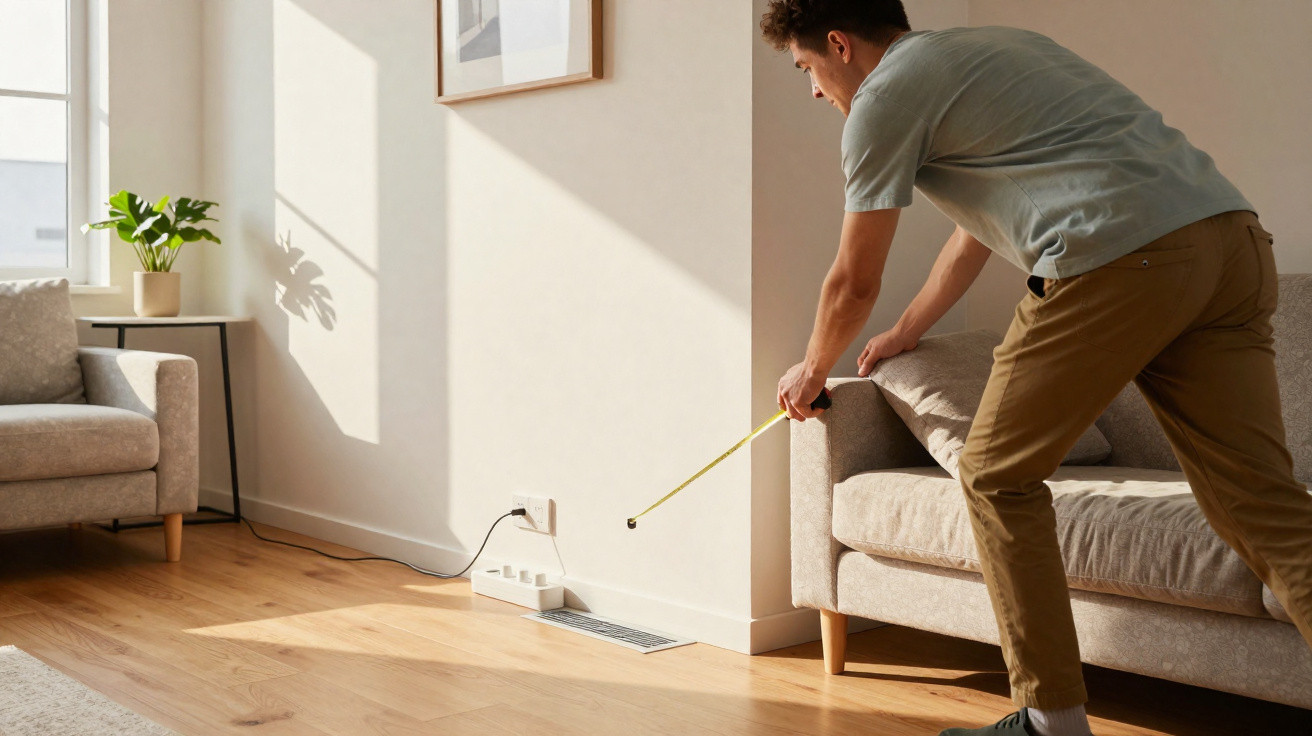
A space between the wall and furniture may seem like nothing more than a result of installation, yet in certain circumstances it helps air to circulate and prevents moisture from becoming trapped. The required gap depends on the item of furniture, its material and, above all, what is installed in that area.
Why leave a space between the wall and certain furniture?
A small gap can encourage airflow behind furniture, making it less likely that a fully enclosed area will form. This matters particularly in damp locations, where constant direct contact between different surfaces can make drying more difficult.
With cupboards and other furniture, leaving a gap also makes cleaning easier and helps reveal signs of damp, mould or wall deterioration. However, not every item needs a set distance from the wall: this depends on its design and the manufacturer's guidance.
What changes when an appliance is in that space?
Appliances that generate or release heat may require specific clearances to ensure proper ventilation. Refrigerators, for instance, need to disperse the heat removed from their interior, while other appliances may have ventilation openings that must not be obstructed.
For this reason, there is no universal measurement suitable for every appliance. The manufacturer's manual should state the necessary side, rear and top clearances. Reducing that gap simply to gain a few centimetres may impair performance and cause the appliance to overheat.
How should you arrange the space between the wall and furniture?
Before placing furniture against a wall, check whether there are any instructions for that particular model. Where a clearance is recommended, maintain the stated distance and do not fill it with boxes, fabrics or objects that could prevent air from passing through.
It is also worth checking the wall regularly. If there are stains, a musty smell or signs of condensation, the issue may be linked to moisture in the room or within the wall itself, and moving the furniture away will not address the underlying cause. In this situation, it is important to investigate where the moisture is coming from.
Who should pay closer attention to this detail, and when?
Extra care is needed in kitchens, utility rooms, bathrooms and on external walls, where moisture levels may be higher. Wooden furniture and wood-based products also need suitable protection when positioned close to areas exposed to splashes or condensation.
For appliances, the rule is even more specific: always follow the manufacturer's instructions. This means that the space between the wall and furniture is not merely an aesthetic gap; it serves a practical purpose when the design or appliance requires airflow and appropriate clearance.




Comments
No comments yet. Be the first to comment!
Leave a Comment