
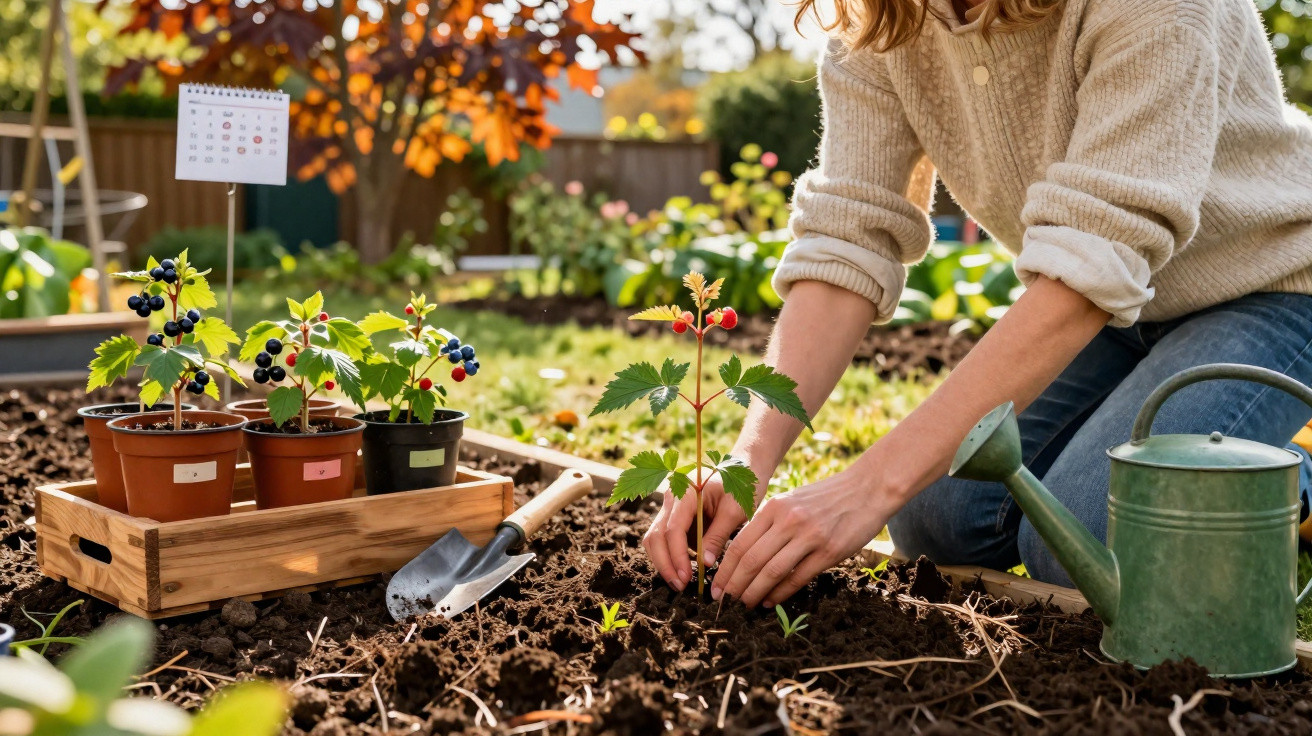
Autumn can quietly lay the groundwork for a bumper spring crop, provided you get the timing right.
The answer is hiding in plain view. Put the right fruit plants in while they are dormant, and their roots can make quiet progress throughout winter. A practical, inexpensive approach is to choose small fruits that establish quickly and start growing early.
Why autumn planting transforms your spring
When you plant as the garden above ground slows down, roots gain valuable time to establish. Across many areas, soil remains relatively warm during November and December. It retains moisture, while soil microbes remain active. This peaceful work beneath the surface allows berry bushes to develop fine roots and anchor themselves into the soil profile.
Plant while plants are leafless and dormant. Winter roots prime spring shoots, which means earlier flowers and earlier bowls of fruit.
There is a financial benefit as well. Nurseries commonly offer bare-root plants at reduced prices towards the end of the year. They are lightweight, straightforward to transport and quick to settle in. Choosing them also reduces packaging, avoids heated glasshouses and limits long-distance transport.
For UK gardeners, late November to early December is usually the target period, provided conditions allow. In the northern US, plant after the leaves have fallen but before the soil freezes. In milder climates, planting can continue into January. The straightforward rule is to plant when the plants are dormant and the ground can still be worked.
Which “fruit” to plant now
The heading refers to small fruits: blackcurrants, redcurrants, raspberries, gooseberries and, where the soil is suitable, blueberries. These bushes cope well with cold weather, tolerate unpredictable springs and repay simple care with plentiful bowls of berries.
| Fruit | Soil/pH | Sun | Spacing | Planting form | First harvest |
|---|---|---|---|---|---|
| Blackcurrant | Fertile, slightly acidic to neutral (pH 6–7) | Sun to light shade | 1.5 m / 5 ft | Bare-root or potted | Year 1–2, peak from year 2 |
| Redcurrant | Moist, well-drained, neutral | Full sun best | 1.5 m / 5 ft | Bare-root or potted | Year 2 |
| Raspberry (summer-bearing) | Rich, well-drained, pH 5.6–6.5 | Full sun | 45–60 cm / 18–24 in between canes | Bare-root canes | Year 2 on second-year canes |
| Raspberry (autumn-bearing) | As above | Full sun | 45–60 cm / 18–24 in | Bare-root canes | Year 1 on new canes (late summer–autumn) |
| Gooseberry | Moist, fertile, pH 6–7 | Sun; tolerates light shade | 1–1.5 m / 3–5 ft | Bare-root or potted | Year 2 |
| Blueberry | Acidic (pH 4.5–5.5), ericaceous mix | Full sun | 1–1.2 m / 3–4 ft | Potted often best | Year 2, better with cross-pollination |
Step-by-step planting that actually works
- Choose a position with morning sunshine, protection from strong winds and soil that drains following rain.
- Check the pH where possible. Currants prefer neutral soil, blueberries require acidic conditions, and raspberries fall between the two.
- Dig wide rather than deep: make the planting hole twice as broad as the roots, but no deeper than the root mass.
- Mix compost through the backfill. Use well-rotted manure for currants and raspberries, but never apply fresh manure.
- Before planting, soak bare-root plants for 30 minutes. Ensure the roots stay moist as you work.
- Plant blackcurrants 5 cm/2 in deeper than their nursery level to promote fresh shoots. Position all other plants at their nursery line.
- Refill the hole and firm the soil, then water slowly so the earth settles around the roots.
- Apply a 5–8 cm/2–3 in mulch of leaves, wood chips or straw, keeping it away from the stems.
- Put in wires or a basic trellis for raspberries straight away, and tie the canes in loosely.
Bare-root season is prime time: late November to early winter in mild areas, as late as soil allows in cold ones.
Low-fuss care and a quick harvest timeline
These bushes need very little attention. Remember one key point: during their first spring, water deeply if there has been no rain for a week. Use a generous mulch to conserve moisture and suppress weeds. In spring, feed with compost around the drip line. Stop using nitrogen-rich feeds by midsummer, as they encourage soft growth that is vulnerable to disease.
Pruning that keeps fruit coming
- Blackcurrant: Once planted, cut every shoot back to two buds to create a sturdy stool. Each winter, remove one-third of the oldest dark wood at ground level to encourage replacement canes.
- Redcurrant and gooseberry: Shape plants into an open goblet form. During winter, retain a structure of 8–12 branches and cut new side shoots back to 2–3 buds.
- Raspberry, summer-bearing (floricane): Fruit is produced on canes in their second year. Once cropping has finished, cut the brown fruiting canes to ground level. Retain and tie in the new green canes for the following season.
- Raspberry, autumn-bearing (primocane): These produce fruit on the current year’s canes. For an uncomplicated, tidy crop, cut every cane down to ground level in late winter.
Plant now and expect the first handfuls by late spring on currants, with bumper bowls by year two. Autumn raspberries can even fruit in their first season.
Common pitfalls to skip
- Waterlogging: Roots rot in heavy clay that remains saturated. Create raised beds, incorporate grit and organic matter, or move to a drier location.
- Starving soil: Berry plants thrive in organic matter. Sparse, exhausted soil restricts root development and reduces yields.
- No mulch: Bare soil is prone to frost heave and weed growth. Mulch provides stability, moisture retention and cleaner fruit.
- Tight spacing: Limited airflow encourages mildew and botrytis. Allow every plant the room specified in the table.
- Skipping support: Raspberry canes can flop over, break and leave fruit to spoil. Even a pair of strong posts with wire will help.
Why this move pays back health and climate
Growing fresh berries reduces packaging waste and food miles. As you harvest at full ripeness, flavour and vitamin C remain high. Children can happily graze, while neighbours may exchange cuttings. One bush at a time, the garden becomes less ornamental and more of a pantry.
Spring flowers attract bees and hoverflies, increasing pollination throughout your plot. Birds also enjoy the crop. Leave them a few clusters, or use light netting shortly before the fruit ripens if necessary. Opt for soft, close-mesh netting to prevent wildlife becoming tangled.
One small row can replace dozens of plastic punnets a season, while supporting pollinators and cutting weekly shop costs.
Extra gains, practical numbers and a couple of caveats
Factor in likely yields. A mature blackcurrant bush can produce 2–4 kg (4–9 lb). Redcurrants frequently yield 1.5–3 kg (3–7 lb). During peak season, a 3 m / 10 ft raspberry row can provide enough fruit to fill several freezer bags every week. That means easy breakfast toppings, speedy jams and pies with very little work.
Short of room? Train currants as cordons against a fence. Blueberries do well in containers filled with ericaceous compost on a sunny patio; where tap water is hard, use rainwater. Autumn raspberries suit raised beds and need only one tidy annual prune.
Check local regulations. Certain US states previously limited blackcurrants because of white pine blister rust. Although most bans have been removed, it is still worth checking. If you garden close to pines, select rust-resistant varieties. After wet springs, look out for cane blight on raspberries; cut out and dispose of affected canes, then improve air circulation.
For a simple experiment, plant one blackcurrant, one redcurrant and five autumn raspberry canes this winter. Bare-root stock keeps the total cost modest. Next summer, record the savings by counting the punnets you no longer need to buy. This modest trial can often recover its cost within one season, then continue delivering value year after year.



Comments
No comments yet. Be the first to comment!
Leave a Comment