
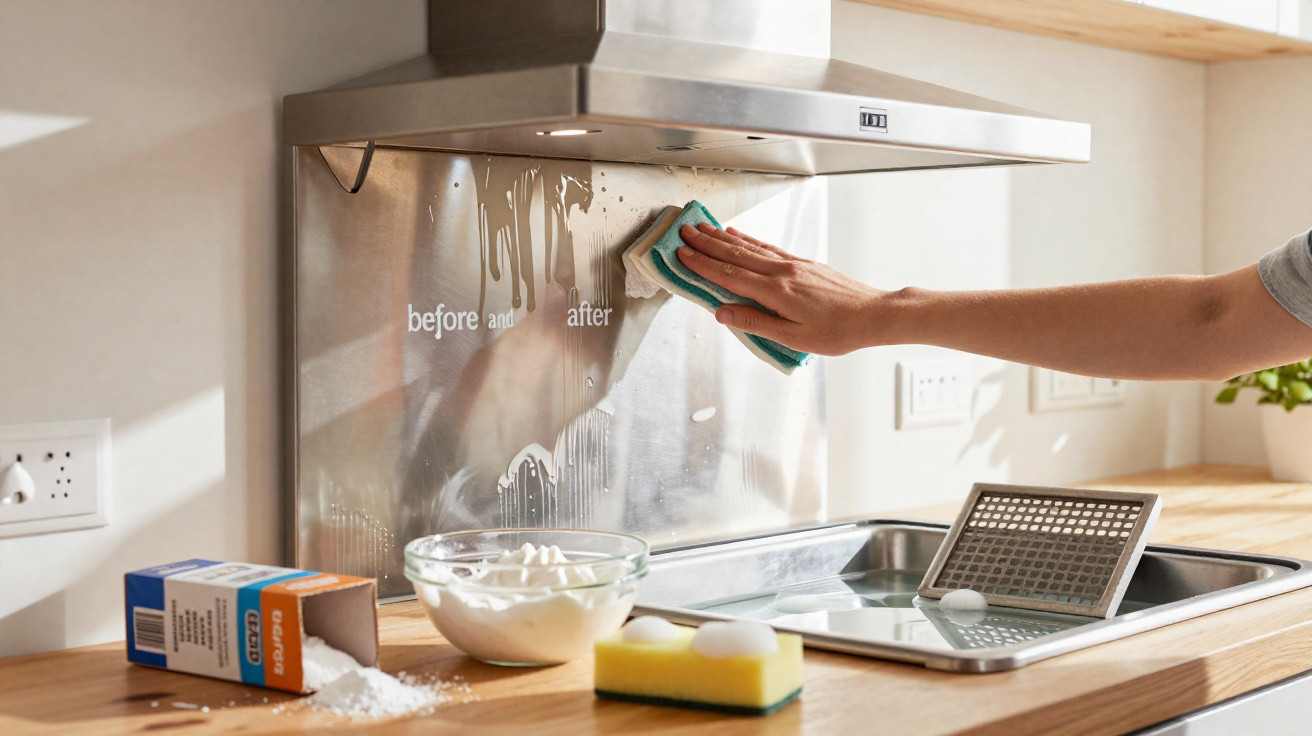
Denise noticed a sticky film of grease on her kitchen extractor hood and immediately knew that a quick wipe with a cloth would not be enough. Steam from cooking pans had left deposits mainly on the outer sections and, over time, the surface had become increasingly difficult to clean. Rather than scrubbing hard, she chose to try a simple blend of washing-up liquid and bicarbonate of soda to loosen the surface grime before cleaning.
Why is grease so difficult to remove from an extractor hood?
When food is being cooked, tiny grease particles can be carried by steam and warm air. Some of this material settles on surfaces near the hob, including the extractor hood, creating a layer that may become tougher as further deposits build up.
If the grease is left for a long period, attempting to remove it with a dry cloth alone will often simply spread the dirt around. Allowing it to soften first can therefore make cleaning easier and reduce the need for vigorous scrubbing.
How can bicarbonate of soda and washing-up liquid help?
Washing-up liquid is designed to help lift grease, while bicarbonate of soda can support cleaning by providing mild abrasion. Used correctly, the two can help release surface deposits from the outside of the extractor hood.
Denise combined a small amount of bicarbonate of soda with washing-up liquid to make a creamy paste. She then spread a thin layer over the cool surface and left it for a few minutes, taking care not to allow the mixture to dry out completely.
How to apply the mixture without damaging the surface
Before starting, switch off the appliance and wait until every part has cooled down. It is best to test the mixture on a small area first, particularly if the extractor hood has a delicate finish.
- Make the mixture: mix a small amount of washing-up liquid with bicarbonate of soda until it forms a paste.
- Apply it gently: spread it over the surface grease without using excessive pressure.
- Remove it: wipe away the mixture and loosened residue with a soft, damp cloth.
- Finish: dry the surface to prevent water marks.
Avoid highly abrasive scourers, steel wool and harsh products, especially on stainless-steel, painted or glossy surfaces. Liquids should also never be applied directly to electrical components, controls, motors or internal parts of the appliance.
What should you do when grease has built up in the filter?
The exterior is not the only area that needs attention. Reusable metal filters can collect grease over time and should be cleaned in line with the manufacturer’s instructions. Disposable filters, meanwhile, need replacing once they reach the stated limit.
Denise found that cleaning was far easier when she did not allow grease to build up for months. Regular maintenance using products suitable for the extractor hood material helps protect the finish and stops a thin layer of residue from becoming much more difficult dirt to remove.



Comments
No comments yet. Be the first to comment!
Leave a Comment