
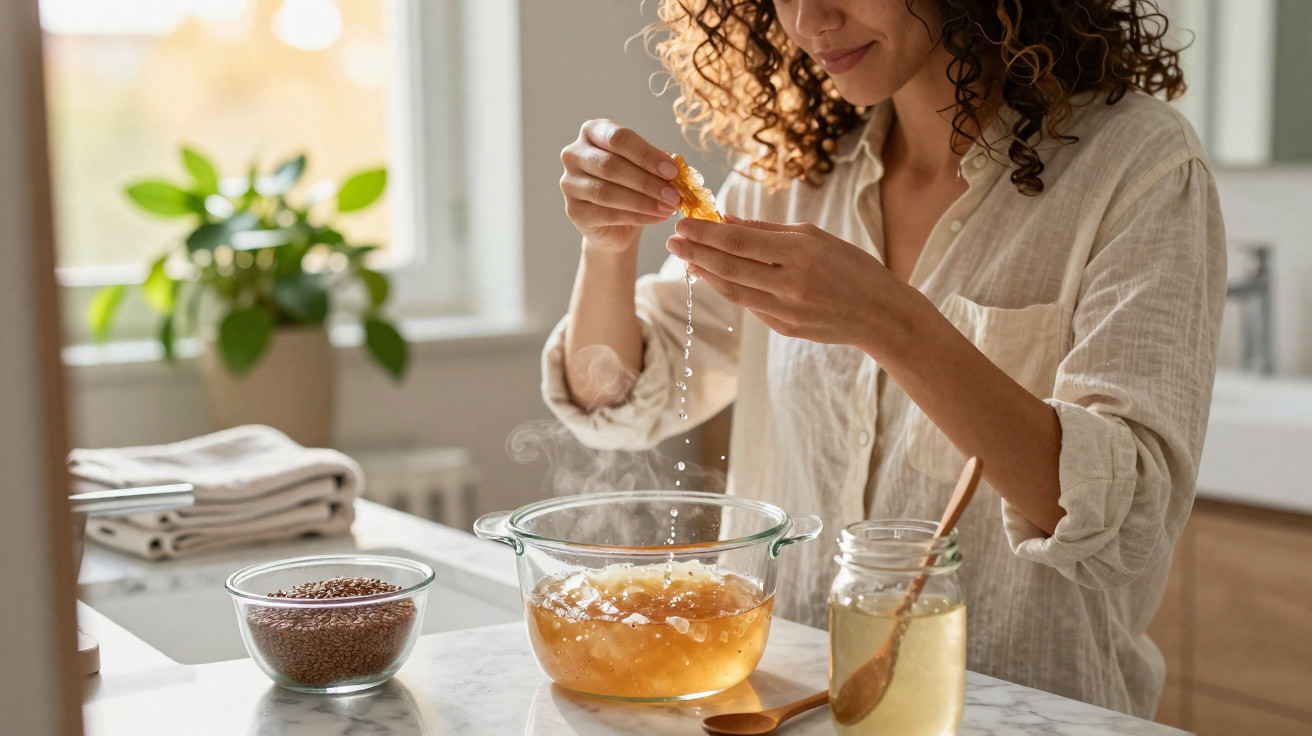
Applying flaxseed gel to hair once a week may help shape curls, tame frizz and lessen the feeling of dryness. Its slippery texture develops when the seeds meet hot water and release mucilage: substances that can create a light coating around the hair without requiring silicones or synthetic polymers.
Why does flaxseed gel help define hair?
Flaxseed has an outer layer that is rich in mucilage, compounds which take up water and create a thick solution when heated. This enables the gel to coat the hair, clump curls together and temporarily reduce flyaways, especially when it is applied to hair that is still damp.
Although flaxseeds are recognised for containing alpha-linolenic acid, a type of omega-3, the hold provided by a water-based gel comes chiefly from the mucilage. This substance can retain water and form films, qualities that help explain its use in cosmetic formulations.
How do you make flaxseed gel at home?
A straightforward recipe uses two tablespoons of whole seeds with around 240 ml of water. Heat the mixture until it becomes slightly viscous, then strain it while hot, as the gel thickens as it cools:
- Add 2 tablespoons of flaxseeds to 240 ml of water;
- Warm over a low heat until it starts to develop a viscous texture;
- Stir from time to time so the seeds do not stick to the base of the pan;
- Remove from the heat before the gel becomes too thick to pass through a sieve;
- Strain straight away, then allow it to cool in a clean container;
- Keep it covered in the fridge and make only small batches.
How should the product be applied to damp hair?
After washing, remove excess water without rubbing the hair. Spread a small amount of the gel through the mid-lengths and ends, using your hands or a suitable comb to distribute it. For curly hair, scrunching sections upwards towards the roots helps curls take shape as the product dries.
The right amount depends on the hair’s length, density and texture. Applying too much gel can leave it stiff or cause residue once dry. Weekly use is a useful starting point, but the frequency can be changed according to how the hair responds and which other products are part of the routine.
What is the difference between homemade gel and an industrially produced cream?
Homemade gel has a simple formula and does not include the same preservatives, stabilisers and conditioning agents found in industrially produced products. As a result, it has a much shorter lifespan and calls for additional care when preparing and storing it:
- Make only enough for a few applications;
- Always keep the container refrigerated and tightly closed;
- Take out the product using clean hands or utensils;
- Do not combine a fresh batch directly with an older one;
- Discard it immediately if its smell, colour or texture changes;
- Do not try to extend its shelf life by leaving the gel at room temperature.
Weekly care works best when the gel is fresh
Because it does not contain a preservative system developed for cosmetics, homemade flaxseed gel can become contaminated within a short time. The most cautious approach is to refrigerate it, make small portions and throw away any leftovers after a few days, particularly if there is any change in its smell or appearance.
When used fresh and in a small amount, flaxseed gel works mainly as a styling product: its mucilage holds water, forms a surface film and helps arrange the hair while it dries. This effect accounts for the curl definition and frizz control noticed during use, without suggesting that the homemade preparation contains the same ingredients or has the same stability as an industrially produced cream.



Comments
No comments yet. Be the first to comment!
Leave a Comment