
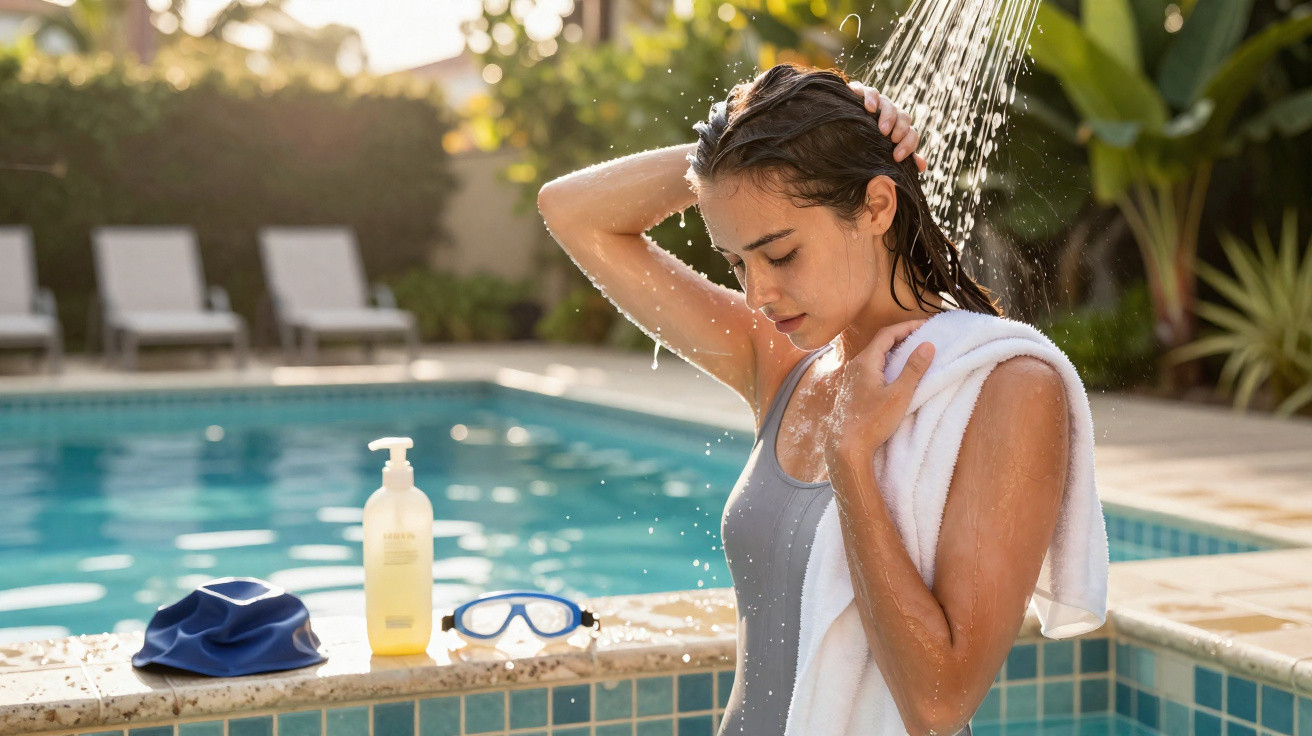
After spending a few hours in the pool, hair may feel rougher, drier or harder to detangle. Contact with treated water, particularly water containing chlorine, can alter how the strands feel. For this reason, taking a simple step as soon as you leave the pool may help limit residue build-up and make hair feel more comfortable.
Why can hair feel rough after swimming?
Pool water contains products used to control microorganisms and maintain water quality. Repeated exposure to this environment may change the feel of the hair, particularly if it is already dry or has undergone chemical treatments.
Sun, heat and extended time in the water can also intensify the feeling of dryness. The more frequent the exposure, the more important it may be to follow a care routine suited to your hair type and condition.
What should you do as soon as you leave the pool?
Start by rinsing your hair with clean water to remove some of the pool water left on the strands. The sooner you rinse it, the less time residues will remain in contact with the hair.
Then wash your hair as part of your usual routine, using a cleansing product suitable for both the scalp and lengths. There is no need to scrub harshly; gentle washing can already help remove built-up residue.
Can conditioner help after swimming?
Yes. After washing, conditioner can improve how the hair feels, especially when it is rough or tangles easily. Apply the product mainly through the lengths and ends, according to your hair’s characteristics.
If your hair is frequently exposed to pool water, it may also be worthwhile to include a treatment routine that matches its needs. Suitable hydration and conditioning help keep the hair fibre more supple.
Is there any care to take before entering the pool?
Yes. Wetting the hair with clean water before entering the pool may reduce the amount of treated water absorbed by the strands. Some people also use products designed specifically to protect hair before exposure.
Wearing a swimming cap is another way to reduce direct contact with the water. For people who swim regularly, combining protection before swimming with rinsing afterwards may be more beneficial than trying to restore the hair only once dryness has appeared.




Comments
No comments yet. Be the first to comment!
Leave a Comment