
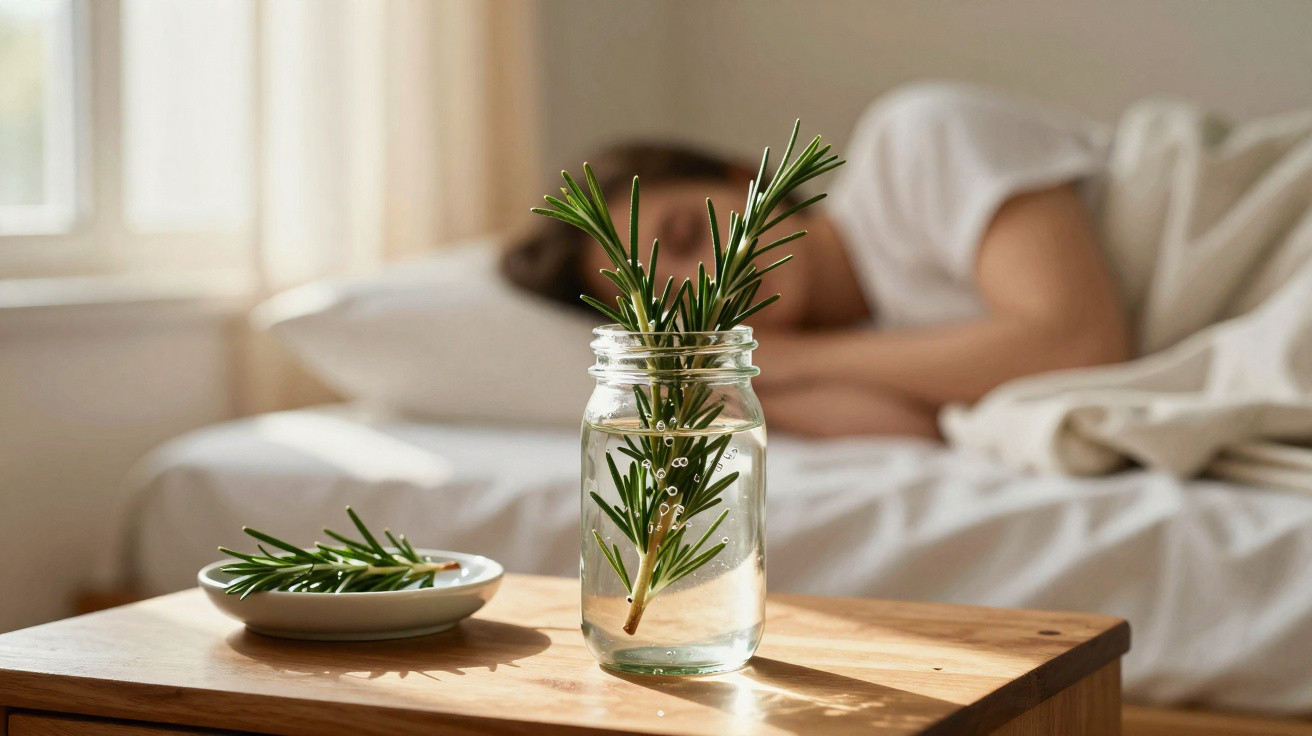
Placing rosemary with water in the bedroom is a household tip mainly used to enjoy the plant’s natural scent and create a fresher-feeling space. Water keeps the sprigs hydrated for longer, allowing them to continue releasing aromatic compounds. This is a straightforward way to fragrance a room, but it does not purify the air and should not be regarded as a proven remedy for insomnia or respiratory problems.
What is the purpose of keeping rosemary in a jar of water?
Rosemary leaves contain essential oils that give the plant its strong herbal fragrance. While the sprigs stay fresh, small amounts of these volatile compounds are released into the air and may be noticed around the room, particularly if the jar is placed near the bed, on a chest of drawers or in another spot with airflow.
The water’s main role is to extend the life of the cut sprigs. Without it, the leaves quickly dehydrate and lose some of their distinctive scent.
- Gently fragrances the bedroom;
- Keeps the sprigs fresh for longer;
- Creates an aromatic feeling of freshness;
- Can temporarily replace artificial fragrances for people who prefer plant-based scents;
- Also serves as a simple decorative feature.
Does the scent of rosemary actually improve sleep?
There is not enough evidence to say that a jar of rosemary in the bedroom can treat insomnia or reliably improve sleep. Research into rosemary aromas has examined possible effects on attention, memory, alertness and the perception of fatigue, but these studies use particular conditions and concentrations. Smelling it in the bedroom may feel pleasant and relaxing for some people, but an individual response is not the same as treatment for sleep disorders.
How should you prepare the jar so the fragrance lasts longer?
Preparation requires only a clean container, fresh water and a few rosemary sprigs. Trim the stem ends before placing them in water, as you would when arranging flowers in a vase. Keep some of the leaves above the waterline, as these release most of the scent that can be detected in the room.
Replace the water regularly to prevent unpleasant smells and residue from developing inside the container. Once the leaves start to darken or the sprigs no longer smell fragrant, dispose of them and prepare a fresh set.
- Use a thoroughly washed glass jar;
- Add enough water to cover the lower section of the stems;
- Keep most of the leaves above the water;
- Change the water every day, or whenever it becomes cloudy;
- Wash the container before adding fresh sprigs.
Why should the same water not be left for many days?
Still water containing plant material can harbour microorganisms, develop biofilm and produce an unpleasant odour. In areas where mosquitoes are present, open containers should not be left unattended with water for several days either. For this reason, the practice remains pleasant only when the jar with rosemary is maintained regularly.
- Do not keep topping up old water indefinitely;
- Throw away sprigs showing signs of decay;
- Avoid allowing submerged leaves to rot;
- Clean the inside walls of the container;
- Do not leave standing water without changing it periodically.
The effect of rosemary in the bedroom is aromatic, not air purification
Rosemary in the bedroom can make the room more pleasant because of its scent, but a small sprig in a jar does not remove pollutants, mould or airborne particles in any meaningful quantity. If the bedroom has dampness, a persistent smell or poor ventilation, opening windows where possible, tackling the source of moisture and keeping the space clean remain far more important measures.
Using rosemary in water makes sense precisely because it is so simple: the stems remain hydrated and the leaves retain their fragrance for longer. With fresh sprigs and regularly changed water, the jar works as a subtle plant-based air freshener. Its main benefit lies in the fragrance and atmosphere it creates, without attributing air-purifying properties or therapeutic effects that this household preparation has not been shown to provide.




Comments
No comments yet. Be the first to comment!
Leave a Comment