
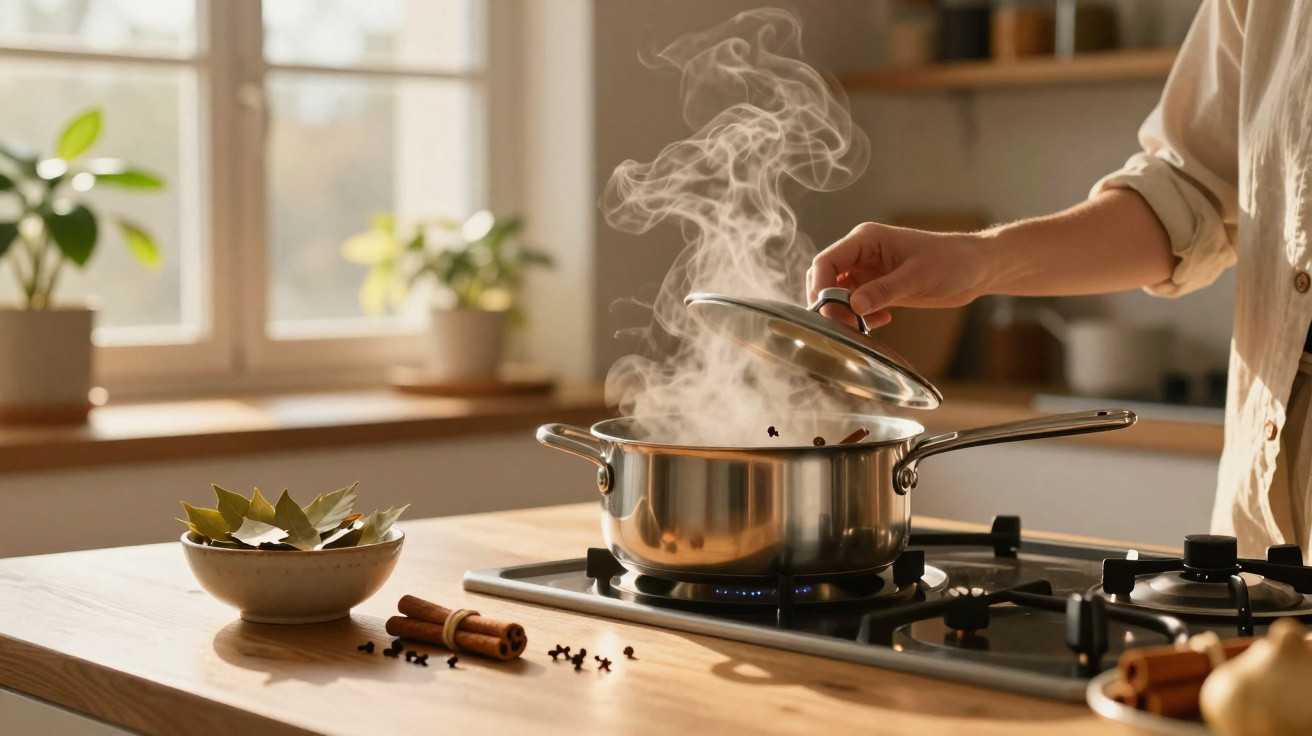
Boiling bay leaves, cinnamon and cloves in a pan is a household trick mainly used to scent the home without relying on aerosol air fresheners. Hot water releases aromatic compounds from the three spices, while the steam carries a herbal, sweet and spicy fragrance through the rooms. The method may reduce the perception of cooking smells or stale indoor odours, but it does not clean the air or remove the underlying cause of damp or mould.
What is the purpose of boiling bay leaves, cinnamon and cloves indoors?
Its main purpose is to make a homemade air freshener. Bay leaves contribute herbal notes, cinnamon adds a warm, sweet scent, and cloves provide a stronger, spicier fragrance. As they are heated together, these volatile compounds enter the steam and become noticeable around the home.
For this reason, the technique is often used after cooking strongly scented food or when a room has been closed for several hours.
- It scents the kitchen, living room and other areas;
- It can temporarily replace artificial fragrances;
- It may lessen the perception of certain household odours;
- It allows the strength of the fragrance to be adjusted by increasing or reducing the spices;
- It uses everyday ingredients that many people already keep in the kitchen.
How do you prepare the mixture so the fragrance spreads around the home?
Fill a pan with water and add a few bay leaves, one or two cinnamon sticks, and several cloves. Once the water starts boiling, turn the heat down and leave the pan uncovered for a few minutes so the scented steam can circulate. Recipes shared for this purpose generally keep it on a low heat for around 15 to 20 minutes.
Why is it inaccurate to say that the mixture purifies the air?
Adding fragrance is not the same as removing pollutants. The smell of the spices may mask food aromas and make a space feel fresher, but the steam does not remove smoke, particles, mould or chemical compounds from the air in any meaningful amount.
Where an odour persists, the first priority should be finding its source. Some measures remain more important than any fragranced pan:
- Open doors and windows to refresh the air whenever possible;
- Clean away grease residue after cooking;
- Check for leaks if there is a damp smell;
- Do not try to conceal mould with fragrances alone;
- Keep bins and drains clean if they are the source of the odour.
What precautions are needed while the pan is on the hob?
The mixture must never be left boiling unattended. As the water evaporates, the level in the pan falls, so you may need to turn off the heat or add more water. People who are sensitive to strong fragrances may also experience discomfort, headaches or irritation, and should stop using it if this happens.
- Keep the heat low once the water has reached boiling point;
- Never leave the pan unattended on the hob;
- Keep children and pets away;
- Do not allow all the water to evaporate;
- Ventilate the room if the scent becomes too strong.
The real benefit comes from the aroma of the three spices
There is no need to attribute energy-cleansing, disinfecting or home-protection properties to bay leaves with cinnamon and cloves to explain their popularity. The combination works because aromatic ingredients release their fragrances when heated, temporarily creating a scent similar to a spiced infusion throughout the room.
The method can be especially useful after cooking or to make a closed room smell more pleasant, provided it is accompanied by ventilation and cleaning when there is a genuine source of bad odour. Boiling these three spices turns simple cupboard ingredients into a temporary air freshener, but the feeling of freshness comes from the fragrance released in the steam, rather than from any invisible purification of the air.


Comments
No comments yet. Be the first to comment!
Leave a Comment