
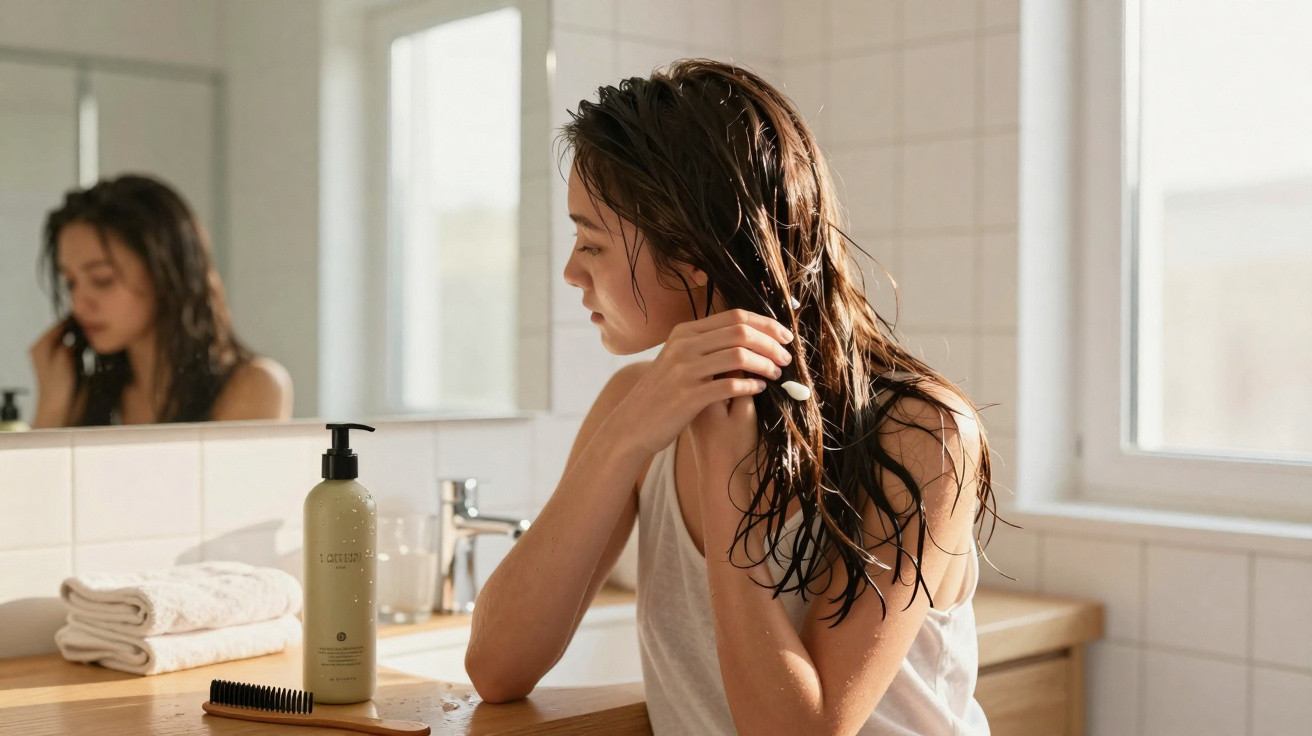
Conditioner after shampoo does more than make hair feel soft. Dermatologists at the American Academy of Dermatology state that it coats the hair shaft, helping to limit breakage and split ends. Meanwhile, a leave-in conditioner or detangler may reduce frizz, tangles and damage caused during everyday hair care.
Why does conditioner help protect hair?
Conditioner makes hair easier to detangle and manage. By coating the strands, it can reduce breakage and the formation of split ends. This is particularly important because wet hair may be more susceptible to damage.
How it is applied can also depend on hair type. Those with fine or straight hair may wish to focus conditioner on the ends, whereas dry or curly hair can be conditioned throughout its length.
What is the difference between conditioner and leave-in?
Traditional conditioner is used during washing and rinsed away after it has been left on for the time specified in the product instructions. A leave-in, on the other hand, is designed to stay in the hair after washing and may help with detangling, frizz control and protection against certain types of damage.
For this reason, the two products do not have to be treated as alternatives. Some people may benefit from using a rinse-out conditioner followed by a leave-in conditioner or detangler.
How can you use both without weighing hair down?
After shampooing, apply conditioner according to your hair type’s needs, then rinse it out. With fine or straight hair, keeping the product mainly on the ends may help prevent the roots from becoming weighed down. For dry or curly hair, it can be applied more widely through the lengths.
If you choose a leave-in, use one specifically formulated to remain in the hair and follow the quantity stated on the label. For curly or very dry hair, a leave-in can support hydration and make post-wash detangling easier.
Who may benefit most from this hair care?
People with dry, curly, damaged or easily tangled hair may notice more of a difference when they add suitable conditioning to their routine. Curly or tightly coiled hair is more prone to dryness and breakage, and may need particular care to detangle it and maintain hydration.
The key point is not to confuse their roles: rinse-out conditioner must be removed after application, while leave-in conditioner is made to stay on the hair. Using each product as formulated helps you gain its benefits without turning a treatment step into an excess of product.






Comments
No comments yet. Be the first to comment!
Leave a Comment