
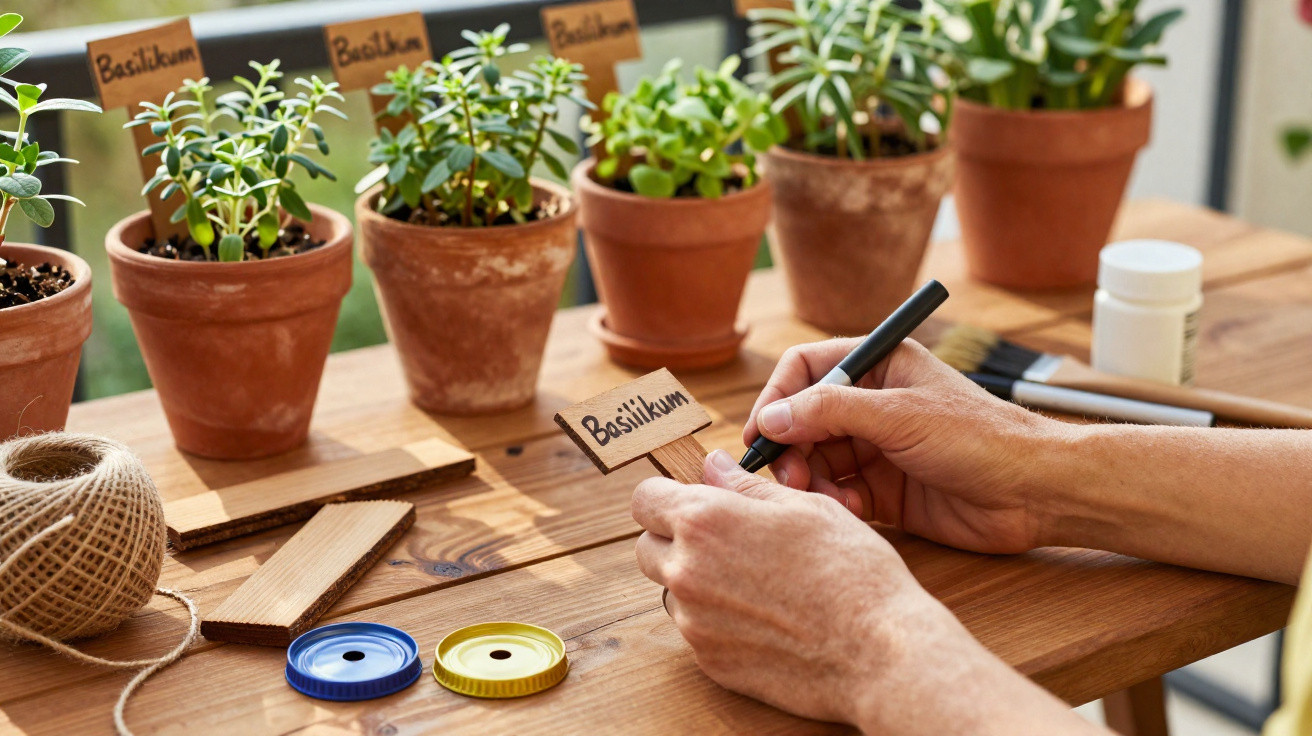
Labelling pots and flower beds can make a garden tidier and simplify the care required by each species. Rather than buying ready-made signs, you can reuse wood, lids and leftover materials that might otherwise be thrown away to make small labels. As well as being straightforward, this approach lets you tailor their appearance to the style of the space.
Which materials can be made into plant identification signs?
Almost any clean, rigid material that is durable enough to remain in place can be repurposed. Offcuts of wood, sticks, rigid packaging lids and small pieces of plastic can all provide a base for plant identifiers.
Before selecting a material, consider where the sign will be placed. In outdoor areas, it is important to account for rain, sunlight and damp, as some materials may warp, fade or deteriorate quickly.
How can you make a sign from reclaimed wood?
A leftover piece of wood can be cut into small rectangles, or into any other preferred shape. If it has splinters or rough edges, sand the surface carefully before writing the plant's name.
Then use a pen or paint suitable for the surface and write the identification in clear lettering. A small wooden piece can be attached to a sturdy stick to create the stem that will go into the soil, provided the structure is secure.
How can lids be turned into small labels?
Rigid packaging lids can also be given a new purpose. Once washed and dried, they can be marked with the plant's name using a pen designed for that material.
If the lid is particularly smooth, first test the writing on a small area to check that the ink adheres. Avoid materials with sharp edges and discard any piece with cracks or warping that could make it difficult to handle.
How can plant identification labels last longer?
Outdoors, sunlight and rain can erase names written with unsuitable materials. For this reason, choose products intended for outdoor use whenever possible, and position the sign where it will not be continually exposed to water.
It is also worth writing the species name in a simple, readable way. For anyone growing several similar plants, it may be useful to add a short detail about the variety, as long as there is enough room on the sign.



Comments
No comments yet. Be the first to comment!
Leave a Comment