
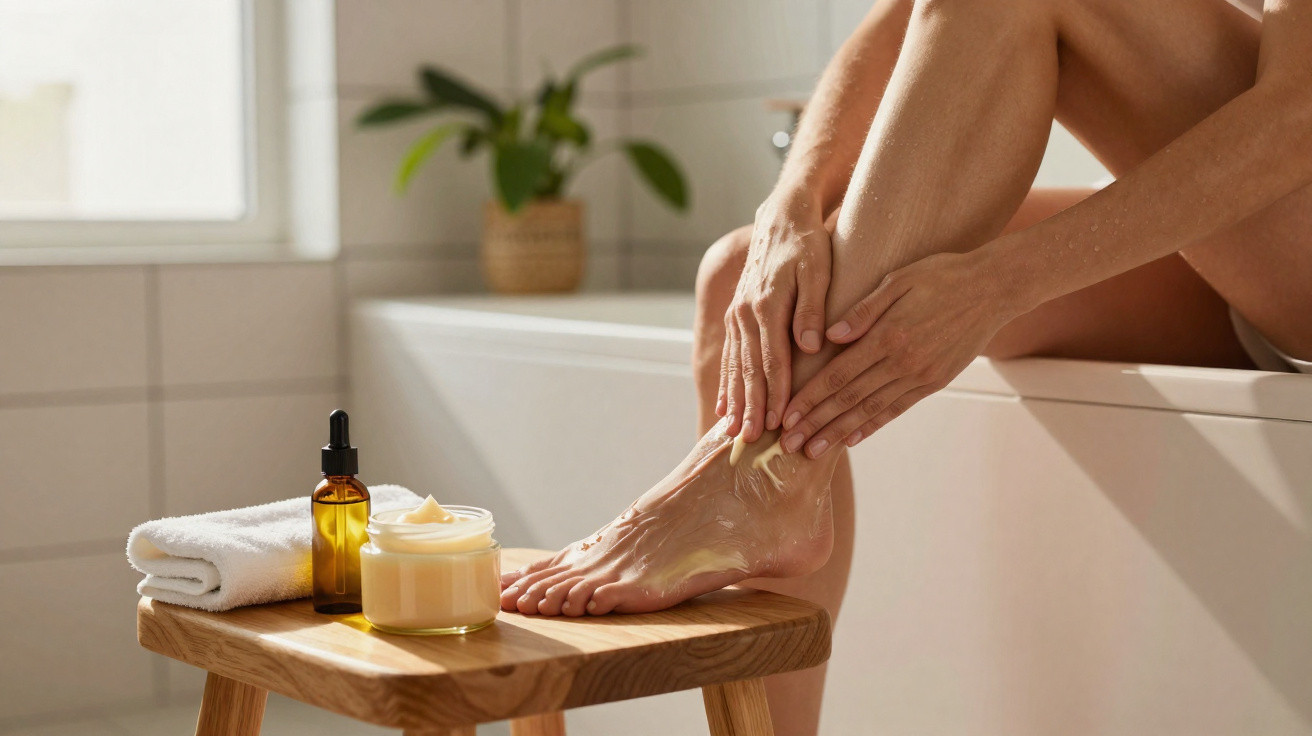
Moisturiser is commonly used on the face, arms and legs, yet certain areas face hot water, soap, friction and exposure to the air without receiving the same care. When the skin barrier loses water, the shins, elbows, backs of the hands and sides of the feet can become rough before the issue is noticed in a regular routine.
Why do shins become so dry?
The skin on the shins has fewer sebaceous glands than areas such as the face, so it can dry out easily, particularly in cold or dry weather. Long, hot showers remove some surface lipids, while excessive soap use makes an already low-oil area even more susceptible.
Use a moisturising cream or ointment straight after showering, while the skin remains slightly damp. The American Academy of Dermatology advises fragrance-free products for dry skin and notes that thicker formulas generally hold water more effectively than very light lotions on rough areas.
What makes elbows look pale and feel rough?
Elbows are constantly exposed to pressure and friction. Resting your arms on a table, leaning against surfaces and rubbing the area while washing all increase mechanical wear, while hot water encourages the loss of natural oils. This can leave the skin thick, dull and sandpaper-like to the touch.
Rather than trying to scrub away the roughness forcefully, moisturise consistently. Applying cream after a shower helps limit water loss and is a straightforward approach for dry elbows. If cracking, pain or ongoing inflammation occurs, seek a dermatological assessment.
Why do the backs of the hands suffer so much in everyday life?
Repeated handwashing, washing-up liquid, hand sanitiser, wind and sunlight mainly affect skin that remains exposed all day. Even essential hygiene can strip oils from the surface. As a result, hands that seem normal in the morning may feel tight, peel or sting between the fingers by the end of the day.
The most helpful habit is to keep a simple cream beside the sink and reapply it after washing, especially if the skin is already dry. Wearing suitable gloves for cleaning and extended contact with detergents also lessens irritation. Fragranced products may cause discomfort when there are small cracks in the skin.
Watch the video shared by the YouTube channel Dr Greice Moraes, which offers advice on creating a skincare routine for dry skin.
Why are the sides of the feet overlooked?
Many people apply cream only to their heels and overlook the outer edges and sides of the feet, which are also subject to pressure from footwear and can become dry. Friction, dry air and hot showers contribute to thickening and flaking, especially where shoes repeatedly rub the same spot.
Moisturise unbroken skin and take care between the toes: excess moisture in this area can encourage fungal problems, so there is no need to build up cream there. The aim is to treat dry areas without making the foot feel stuffy or slippery inside footwear.
- Shins benefit from moisturising after a shower, particularly in dry weather.
- Elbows improve more through regular moisturising than harsh scrubbing.
- The backs of the hands may need cream reapplied after frequent washing.
- The sides of the feet also become dry, but there is no need to soak the area between the toes.
When is the best time to moisturise these areas?
The most effective time is usually immediately after a short, warm shower. Pat the skin dry gently and apply moisturiser before all the surface moisture has evaporated. For very dry skin, fragrance-free creams and ointments tend to create a longer-lasting barrier than thin lotions.
Pay attention to your body before its texture changes. Moisturising works better as a routine than as a rescue treatment after cracking has occurred. If an area remains very rough, itches intensely, becomes inflamed or develops painful cracks despite regular care, the cause may be more than simple dryness and should be professionally assessed.




Comments
No comments yet. Be the first to comment!
Leave a Comment