
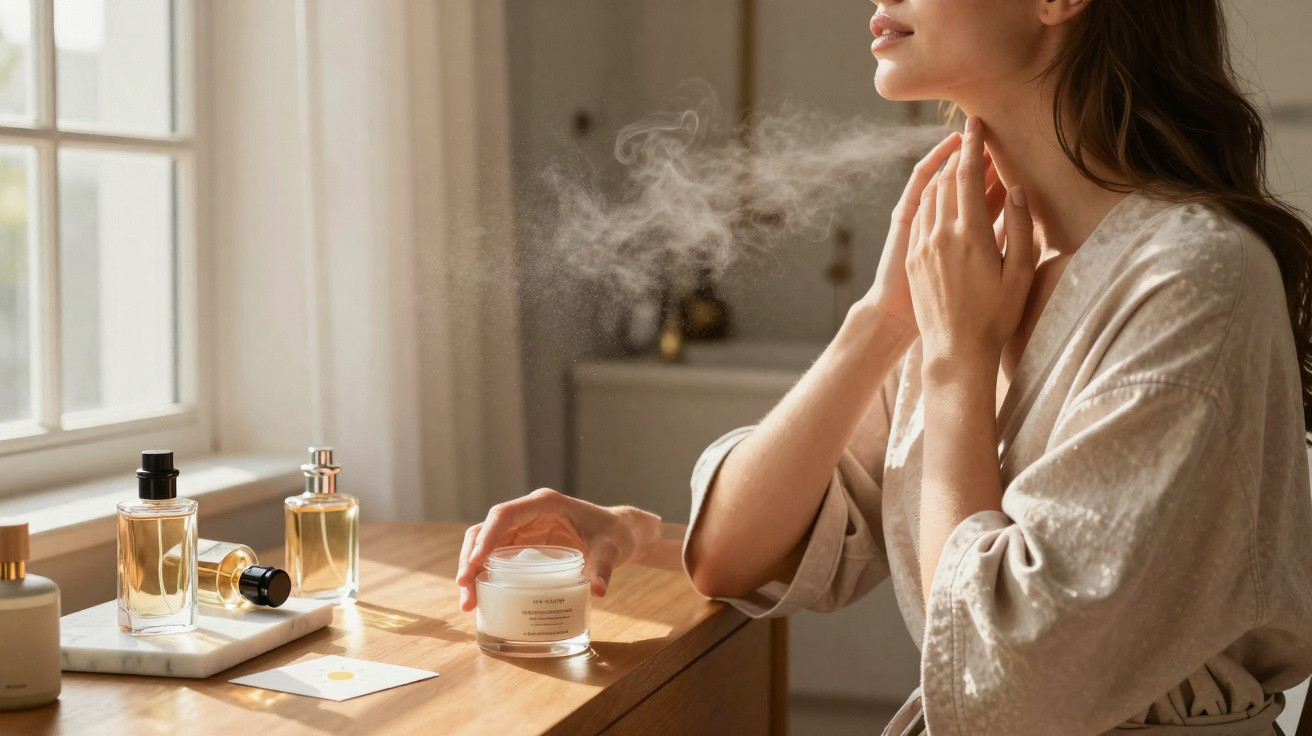
Sometimes the issue is not the perfume itself, but what happens before and after it is sprayed. Very dry skin, rubbing the wrists together, heat and poor storage can all affect how a fragrance develops during the day. Four straightforward adjustments can help preserve the scent without using an excessive amount.
Why can moisturised skin hold a fragrance better?
Fragrances often fade more quickly when the skin’s surface is extremely dry. Using a moisturiser without a strong scent and allowing it to settle before applying perfume provides a more suitable base. The aim is not to create a thick layer, but simply to prevent the skin from being dehydrated.
This step will not make every product a long-lasting perfume, as concentration, formula, weather and perspiration also play a part. Even so, moisturising the skin is among the recommendations most frequently given by specialists and manufacturers to people who feel their scent disappears too soon.
Does rubbing the wrists together really cause problems?
Spraying one wrist and rubbing it against the other is an automatic habit, but it offers no benefit. Friction warms the area, spreads the liquid and may cause the more volatile notes to evaporate faster, changing the initial impression of the fragrance. The simplest approach is to spray it on and allow it to dry naturally.
It is not accurate to claim that rubbing literally breaks perfume molecules, a popular explanation that oversimplifies the process. Heat and evaporation are the more likely effects. For that reason, when wearing perfume on the skin, there is no need to make rubbing the wrists part of the routine.
Can light and heat age perfume prematurely?
Perfume is a chemical blend that is sensitive to environmental conditions. Repeated exposure to heat and intense light can encourage changes in colour and scent over time. Keeping the bottle near a window, inside a car or on a surface exposed to sunlight may reduce the fragrance’s stability long before the liquid has been used up.
Ideally, choose a cool, dry place with a fairly stable temperature, preferably out of direct light. The original box can provide extra protection. Refrigerating most household perfumes is unnecessary, but avoiding temperature extremes makes a difference to preservation.
- Moisturise the skin with a neutral-scented product before applying the fragrance.
- Once sprayed, let the perfume dry without rubbing the wrists.
- Keep the bottle away from direct sunlight and constant heat sources.
- Do not use a hot, humid bathroom as a permanent storage place.
Watch the video shared by the YouTube channel Matt Fragrance, which gives tips on making the scent of perfume last longer on the skin.
Why is a hot bathroom not the best cupboard for perfume?
A bathroom may seem practical because it holds many personal-care products, but hot showers create frequent fluctuations in temperature and humidity. Even with the cap on, leaving a bottle in this environment for months exposes both the packaging and the liquid to less stable conditions than those in a bedroom drawer or cupboard.
A cool, dark location generally protects the formula more effectively. This is especially helpful for transparent bottles, which allow light through easily. If a fragrance changes colour significantly, develops a sour smell or differs noticeably from its original scent, it may have degraded.
What if the perfume still does not last very long?
Not every perfume is designed to remain noticeable for many hours. Eau de parfum, eau de toilette and body splash usually have different concentrations, while citrus notes often seem to fade sooner than richer compositions. Heat, sweat and olfactory habituation can also alter how long a scent is perceived to last.
Before greatly increasing the amount used, first refine the routine and storage conditions. Well-preserved perfume, moisturised skin and friction-free application remove three variables that are easy to control. If the scent is still light, that may simply be a feature of the formula rather than a mistake in how it is used.


Comments
No comments yet. Be the first to comment!
Leave a Comment