
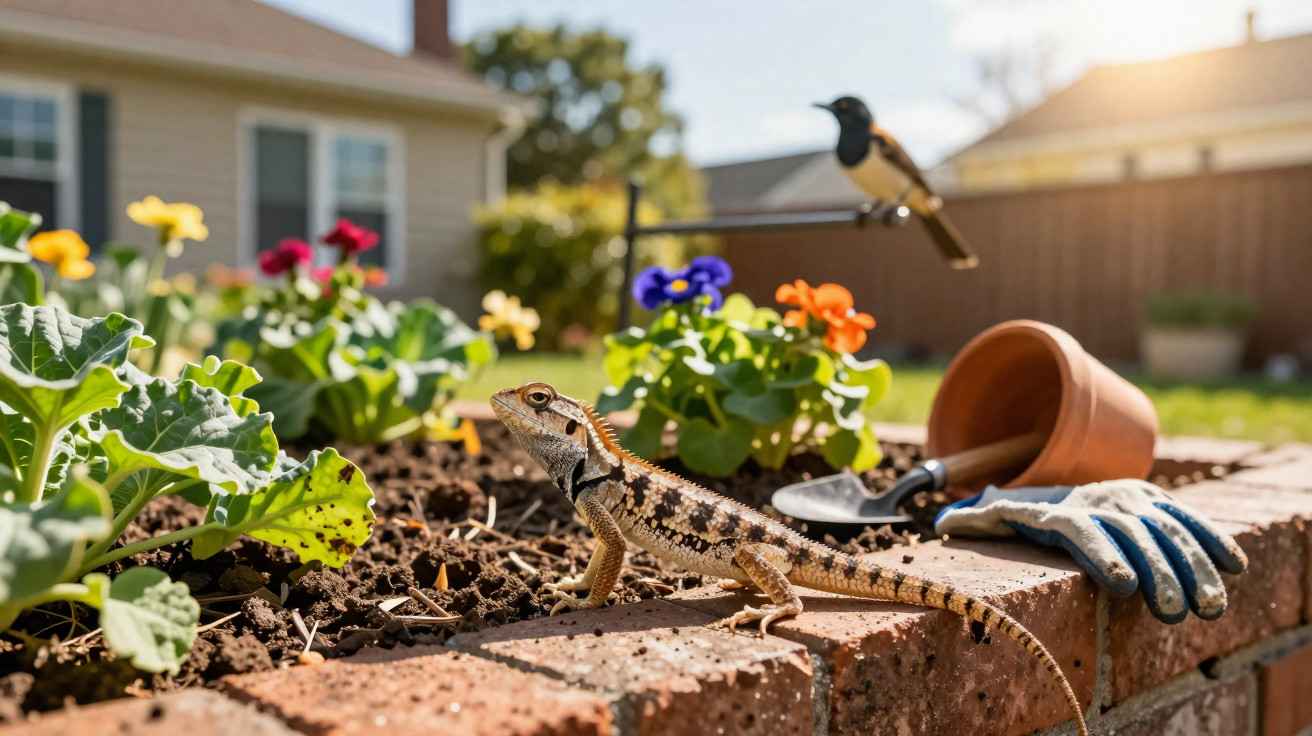
Finding a calango lizard in a home garden often raises questions, yet this reptile’s presence brings valuable benefits. As it moves across walls and sunlit plants, it plays an essential part in the natural regulation of the urban residential ecosystem.
Why do calango lizards often appear in the garden?
Calango lizards seek out warm places to regulate their body temperature, a process called ectothermy. Sun-exposed walls, stones and paving provide the ideal thermal shelter, allowing these small animals to sustain their daily vitality.
In addition to warmth, gardens containing vegetation and stones provide excellent hiding places from larger predators. The combination of secure refuge and available food makes a domestic setting an excellent habitat for these small Brazilian reptiles.
What does hearing the loud call of a great kiskadee in your garden mean?
Hearing this bird make its powerful call near the window may indicate fascinating territorial behaviour and changes in the environment… Read more
How do calango lizards control pests around the home?
The diet of calango lizards consists largely of the frequent consumption of various invertebrates that commonly bother people. By hunting ants, termites and flies, these animals act as an excellent biological predator, reducing the need for harmful chemical products.
Garden spiders and other small arthropods are also part of these lizards’ usual diet. As a result, living harmoniously with these reptiles provides greater safety and helps to keep your property clean.
Below is a video from the Richard Rasmussen YouTube channel that explores the points discussed in this topic in greater depth:
Which calango lizard species are most common in urban areas?
In Brazil, species in the Tropidurus genus are among the wall lizards most commonly encountered in everyday life. They are highly adaptable to urban structures, using cracks and bricks to create their small protected nests.
Another species frequently seen on soil and lawns is Ameiva ameiva, recognised by its vivid green colouring. Learning about the diversity of these species enriches awareness of biodiversity and supports the conservation of local native wildlife.
Benefits of calango lizards in the garden
Advantages of biological control
Here are the main reasons to protect these reptiles at home:
- 1: Ongoing reduction in insects and small arachnids;
- 2: Less use of pesticides and chemical products;
- 3: Maintenance of ecological balance in the garden.
How can you live harmoniously with calango lizards at home?
The best response when you find a calango lizard is to keep your distance and let it continue on its natural path. These animals are harmless to people and quickly flee when they notice any sudden approach in the garden.
Avoiding the excessive application of poisons to plants protects the health of these reptiles and the entire local ecosystem. Creating small spaces with loose stones and native plants offers the ideal shelter for peaceful coexistence.
Here are some simple measures to encourage these reptiles in your residential environment:
- Avoid using chemical pesticides and poisons in the garden;
- Preserve small areas with stones, logs and native vegetation;
- Keep pets supervised so they do not frighten calango lizards.
Why does the presence of calango lizards indicate a healthy environment?
The presence of lizards in residential areas is a strong sign of environmental quality and ecological balance. Their existence shows that the space has suitable natural resources and little contamination from synthetic compounds harmful to local nature.
Respecting the life cycle of these reptiles strengthens neighbourhood biodiversity and encourages environmental awareness. Appreciating calango lizards in the garden is an important step towards building sustainable, harmonious coexistence with the wildlife surrounding our homes.






Comments
No comments yet. Be the first to comment!
Leave a Comment