
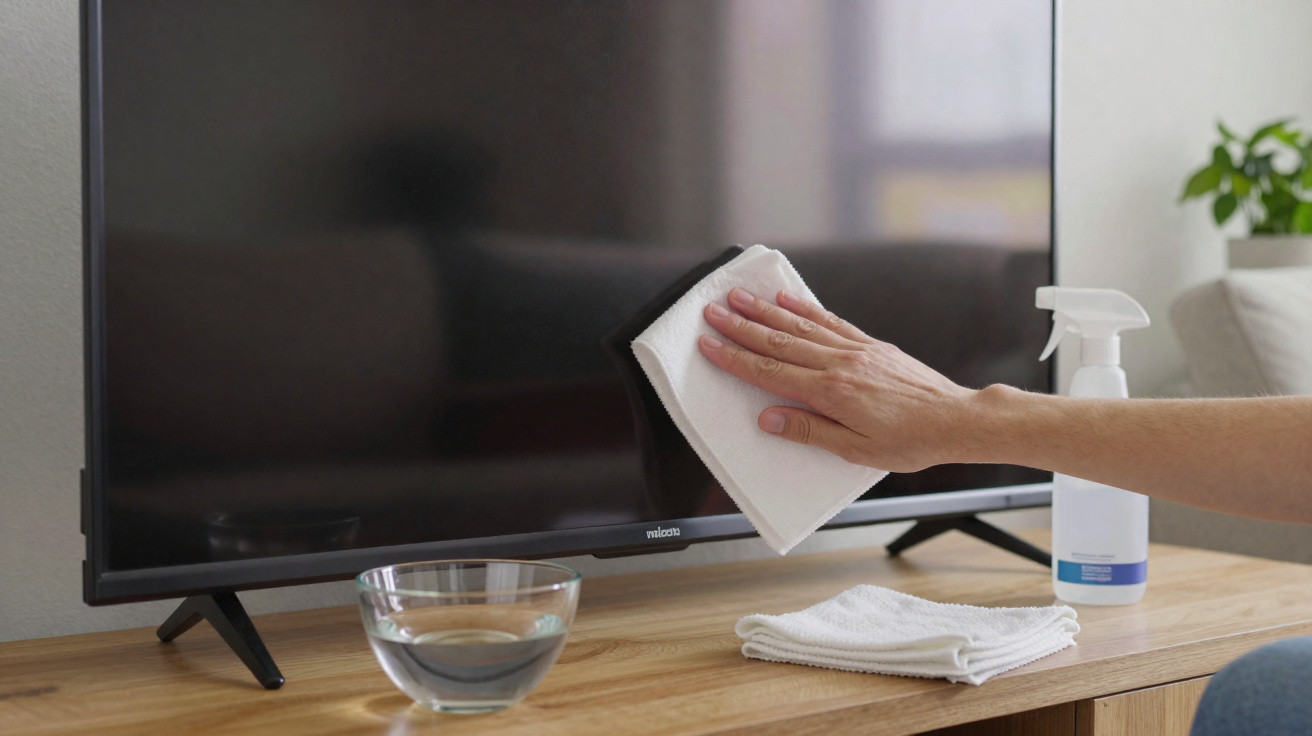
To clean a TV screen with fingerprints safely, switch the set off, allow the panel to cool, and use a clean, soft microfibre cloth. If dry wiping does not remove the marks, lightly dampen the cloth with water, ideally distilled water. Avoid alcohol, glass cleaner, multi-purpose cleaners and kitchen roll, as they can damage surface coatings or cause micro-scratches.
Why can ordinary cleaning products damage the screen?
Modern screens should not be cleaned like window glass. Many panels have anti-reflective films and other surface treatments that may react badly to solvents, ammonia, high-concentration alcohol or household products designed for different materials. This can result in permanent stains, dull patches or uneven brightness.
Some materials are also more abrasive than they appear.
- Avoid glass cleaners and multi-purpose products;
- Do not use alcohol unless the manufacturer specifically recommends it;
- Do not use kitchen roll, napkins or rough cloths;
- Avoid sponges, including those marketed as soft;
- Never spray any liquid directly onto the panel.
How do you remove fingerprints without pressing on the screen?
Start by wiping with a dry microfibre cloth, using gentle movements and no pressure on the panel. Surface dust and some fresh marks may come away at this stage. If finger grease remains, dampen a different section of the cloth very slightly with water and wipe the affected area.
Why must the TV be switched off and cool before cleaning?
When the display is off, smudges, dust and fingerprints are easier to see. Letting the panel cool first also prevents water from evaporating too quickly and avoids cleaning a warm surface.
The process can be straightforward:
- Switch off the TV and unplug it if you are carrying out a more thorough clean;
- Wait until the screen has cooled completely;
- Remove dust using a dry microfibre cloth;
- Lightly dampen the cloth only if persistent marks remain;
- Wipe without pressing, then finish with another dry microfibre cloth.
How much water should be used on the cloth?
Use very little. The cloth should be only slightly damp, never soaked. Excess liquid may run along the edges of the panel and reach internal electronic components. Distilled water is a useful option because it contains fewer minerals that could leave residue after drying.
- Put water on the cloth first, never on the television;
- Wring it out thoroughly before it touches the surface;
- Do not allow droplets to run down the panel;
- Use broad, gentle strokes;
- Let the surface dry before switching the set on again.
A simple fingerprint should not become permanent TV screen damage
The most common mistake is noticing a mark and automatically reaching for the cleaner used on mirrors or windows. On a modern TV, that cleaning attempt can be more troublesome than the dirt itself. Microfibre, minimal pressure and the smallest possible amount of water are usually enough for everyday care, while always following the manufacturer’s specific instructions.
In homes with children, regularly removing small marks also helps to avoid having to rub old residue more firmly. The less product and friction required, the lower the risk to the panel coating. The practical rule is to treat the screen as a delicate surface: keep the set cool, use a soft cloth, and do not improvise with harsh products simply because a fingerprint seems difficult to remove.


Comments
No comments yet. Be the first to comment!
Leave a Comment