
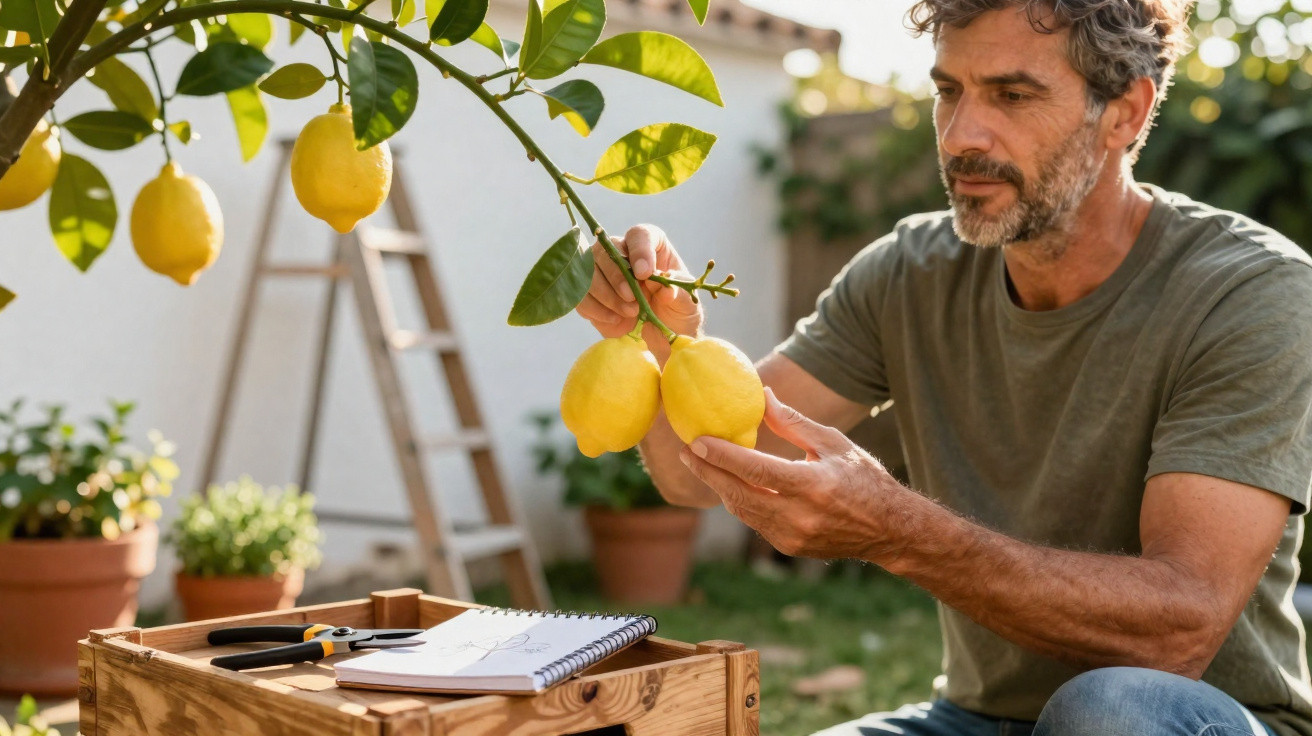
A lemon tree is considered easy to care for, often bears fruit for almost the entire year and is kept in a container on the balcony or patio by many home gardeners. This is precisely why many assume that a little water and fertiliser will be enough. In reality, one carefully timed pruning session in spring determines whether the tree is laden with fruit – or spends the rest of the year struggling in an exhausted state.
Why so many lemon trees suddenly produce hardly any fruit
A lemon tree needs a huge amount of energy for its leaves, flowers and fruit. To provide it, the tree draws on the reserves it has stored. Pruning at the wrong time disrupts this delicate balance.
The most common mistake is cutting the tree back heavily in the middle of winter. The consequences often do not become apparent until weeks later.
Winter pruning weakens the lemon tree
"Winter pruning weakens the lemon tree, the cut surfaces heal poorly and some of the future flowers simply fail to develop."
The newly cut area is exposed to cold without protection. Sap is barely circulating at this stage and the tissue is sensitive. If late frosts then occur, the edges of the young tissue can effectively be scorched. Rather than putting its strength into new fruit, the tree must first focus on healing its wounds.
A lack of pruning creates an overcrowded crown
The opposite extreme is just as troublesome: leaving the tree unpruned for years. Its crown becomes denser, branches cross over and the inner area turns tangled. Hardly any light or air can reach the centre. Fungal diseases find ideal conditions in this damp, shaded area, while fewer flower buds form.
Typical consequences of neglected care:
- fewer and fewer flowers each year





Comments
No comments yet. Be the first to comment!
Leave a Comment