
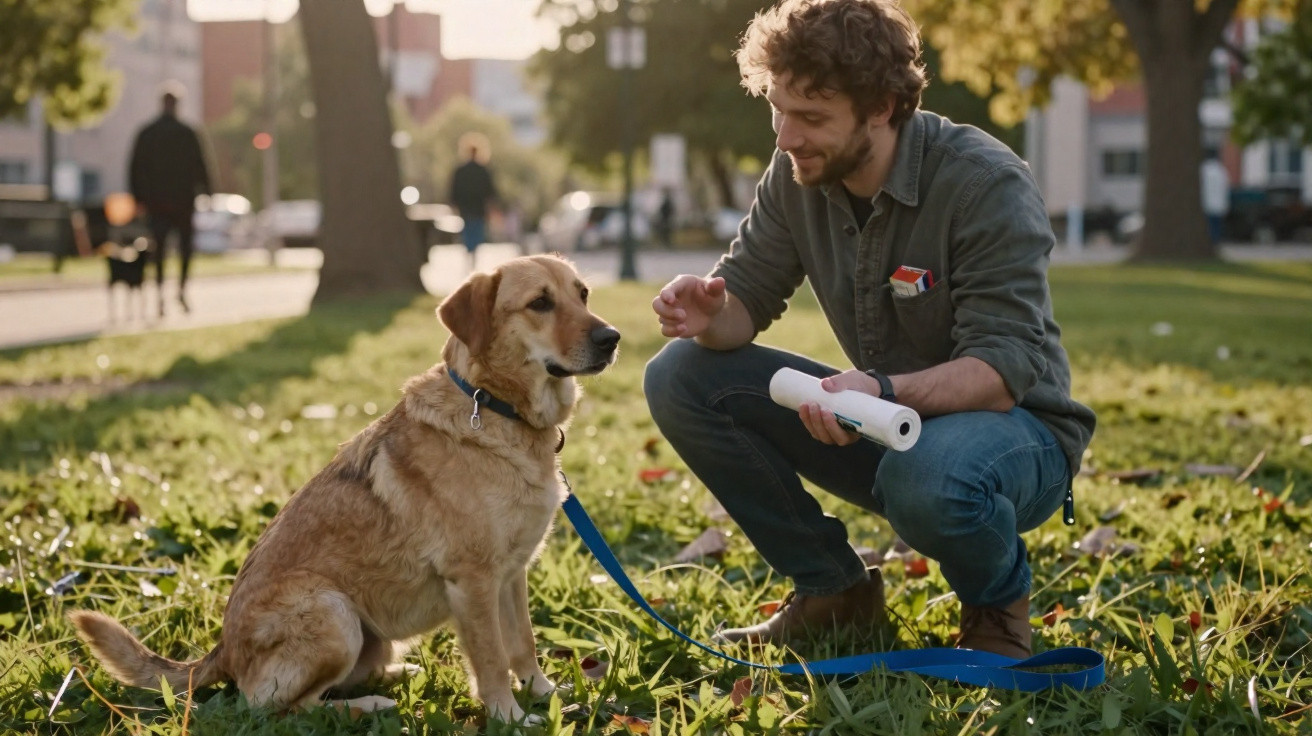
The situation can seem odd to people, and at times even embarrassing. For dogs, however, it has a clear meaning. Understanding why your four-legged companion seeks eye contact during this very private moment can help you assess them better and avoid common training mistakes.
What staring while toileting really means
Dog trainers and veterinary behaviourists agree: your dog's gaze while they relieve themselves is not accidental. It is a form of communication, and it can convey several messages at once.
A dog that looks up at their person while defecating is essentially asking: “Am I in the right place? Is this okay with you?”
Many dogs were praised or rewarded as puppies when they relieved themselves outdoors. That leaves a lasting impression. Even when treats become much less frequent later on, the old pattern remains: correct place, person nearby, look up – perhaps there will still be approval.
Looking for approval: “Is this spot okay?”
Anyone who previously scolded or harshly corrected their dog for toileting indoors can easily create uncertainty. The dog learns: wrong place = trouble, right place = praise. That sounds logical, but it can lead to unusual behaviour in everyday life.
- The dog relieves themselves outdoors – then looks questioningly, as if to ask: “This is the right place, isn’t it?”
- The dog has had negative experiences – they look more intensely for signs that everything is all right.
- The dog likes to “work for their person” – even when toileting, they do not want to get anything wrong.
Many owners underestimate how sensitively dogs respond to moods and body language. An irritated look or a sharp “No” at the wrong moment can be enough for a dog to associate toileting with stress. They may then stare intently in an attempt to read their person's reaction early.
Earlier rewards can have a lasting effect
For reliably house-trained dogs that have received consistent training, a second factor is particularly important: the memory of rewards. Puppies are often given a treat every time they relieve themselves outdoors. From the dog's point of view, this is a clear arrangement: “I do it here – you are pleased, and I get something tasty.”
Even if the person eventually stops giving a reward every time, the pattern remains stored in the brain. In a figurative sense, the dog thinks: “I am doing what you want. So where is the recognition?” Looking up can therefore simply be a polite request for the old “payment”.
Biological reasons: why dogs feel so vulnerable then
Anyone watching their dog in a squat can immediately see that they cannot run away quickly at that moment and have little control over their surroundings. In nature, that is a risky position. It still matters today.
Dogs are descended from wolves. Wolves are also more vulnerable when defecating or urinating. They often turn around in a circle beforehand, sniff thoroughly and scan their surroundings. Many pet dogs show milder remnants of this behaviour.
When your dog stares at you while relieving themselves, they are making you their “lookout”. You are meant to warn them if something is wrong.
Eye contact makes the dog feel safe. Your body, posture and calmness communicate: “Everything is fine; nothing will happen here.” This feeling is not merely psychological, but also linked to hormones.
Oxytocin: the “bonding hormone” also plays a part
Studies show that when dogs and people look at one another, oxytocin release increases in both. This hormone strengthens trust and attachment, much like it does between parents and children.
For a dog, toileting with direct eye contact can therefore become a kind of small bonding moment. They feel secure, protected and “part of a team” with their person, despite being especially exposed at that time.
| Aspect | Meaning for the dog |
|---|---|
| Body posture while defecating | Vulnerable position, limited ability to escape |
| Eye contact with their person | Safety check, trust, monitoring the situation |
| Oxytocin release | Stronger bond, greater calm, less stress |
Could your dog want “privacy” too?
Interestingly, not all experts interpret staring purely as a search for safety or rewards. Some veterinary behaviourists point out that, depending on the situation, dogs may mean very different things.
A dog looking at you may internally feel almost the opposite of what we assume. Some animals appear stressed, hold an especially fixed gaze, show tense muscles or lick their lips. In this case, the staring may be close to a cry for help: “You are too close; I am not sure how I should behave.”
Other dogs turn slightly away, glance briefly and then look away again, as if saying: “I want to know you are nearby, but please do not watch me directly.” Anyone who knows their dog well will recognise these subtle differences.
When and how you should respond
Body language is the key factor:
- A loose, relaxed body, soft facial features and a relaxed tail: your dog apparently feels safe and is using you for orientation.
- A rigid posture, tucked tail and tense muscles: your dog feels uncertain or stressed.
- Frequent lip-licking, yawning and turning the head away: possible appeasement signals; they are trying to avoid conflict.
If your dog appears stressed, it can help to step back a little, look slightly to one side and give them more space. A calm, friendly “Everything is fine” is often enough. Constantly staring down at a dog can seem threatening from their perspective.
What to avoid in dog training
Toileting is an everyday routine, and that is exactly why there is considerable potential for misunderstandings. A few principles can reduce stress and build greater trust:
Do not scold for using the wrong place
Punishing puddles or droppings found indoors later achieves nothing. Your dog will not connect your reaction with what you believe you are correcting; they will only sense your anger. This can create uncertainty whenever they need to relieve themselves afterwards.Praise deliberately and at the right time
When your dog relieves themselves outdoors, a calm word of praise or a brief stroke can still be appropriate, even after puppyhood. This reinforces a clear, positive routine.Use eye contact in moderation
A short, calm look, a smile or a quiet phrase is often all that is needed. Fixating on your dog throughout can easily feel controlling.
Those who establish clean, clear routines will usually have a relaxed dog that relieves themselves outdoors without any fuss – and without staring nervously every time.
When the behaviour is suddenly new
It becomes more noteworthy if your dog never used to stare while toileting but is suddenly strongly fixated on you. In that case, it is worth taking a closer look.
Possible causes include:
- Changes in the environment, such as moving home, a new family member or a new dog in the neighbourhood.
- Painful experiences when relieving themselves, for example diarrhoea, constipation or joint problems.
- Unpleasant outdoor experiences, such as fireworks, loud noises or aggression from other dogs.
If your dog appears tense, whines or hesitates for a long time before squatting, a visit to the vet is advisable. Pain or gastrointestinal problems can greatly affect their behaviour, including the way they look towards their person.
How to help your dog feel safe
The best “answer” to your dog's intense gaze is usually surprisingly simple: be responsive, calm and predictable. Do not pace about distractedly on your phone, do not scold, and do not pull your dog onwards while they are relieving themselves.
Many animals visibly relax when they realise: “My person has time, waits, looks around and keeps watch over me.” Toileting can then become a small, unobtrusive bonding ritual rather than an awkward moment in which the owner feels watched.
Taking your dog's behaviour seriously in this inconspicuous situation can teach you a great deal about their trust, communication and past experiences. Suddenly, that fixed gaze while they poop no longer seems embarrassing, but rather what it is: a quiet and remarkably honest attempt to connect.
Comments
No comments yet. Be the first to comment!
Leave a Comment