
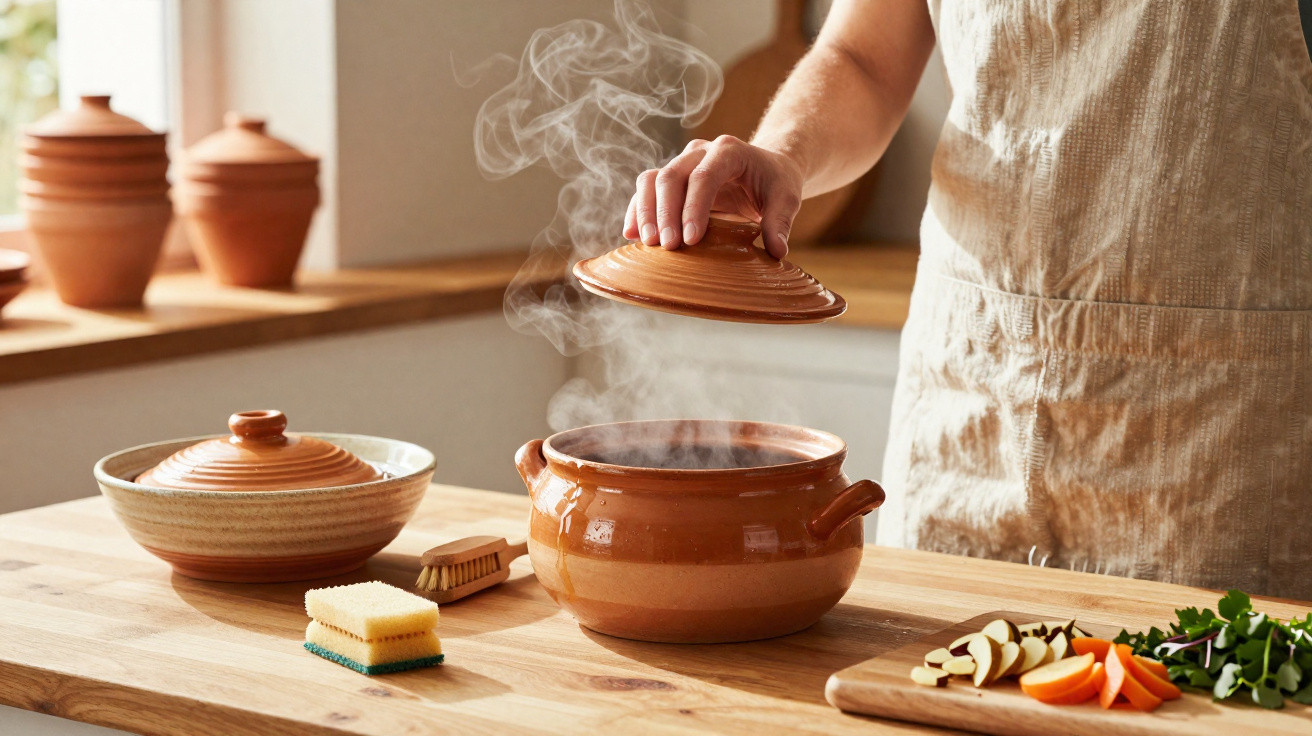
Cooking with traditional utensils gives Brazilian families meals with far richer flavour and aroma in everyday life. A clay pot made from mineral material holds heat for extended periods, so it requires specific handling practices to prevent structural damage and ensure succulent dishes.
Why does a clay pot require special care with heat?
The natural structure of clay has microscopic pores that respond slowly to sudden changes in heat from the flame. This gradual warming alters the internal temperature of food, whereas immediate exposure to high heat can cause serious cracks because the pot expands unevenly.
Cooling must also be done patiently once cooking is finished. Placing the hot base on a cold surface or pouring in chilled water creates a damaging thermal shock, so the container should be left to rest on suitable wooden supports.
How can you prevent a clay pot from breaking during its first use?
The proper process of pre-soaking and sealing with vegetable oil reduces the clay’s porosity, preventing the initial heat… Read more
How should a new clay utensil be seasoned correctly?
Before it is used for any recipe, a new piece must undergo an essential preparation process at home. This initial soaking closes the material’s pores, reducing any lingering mineral taste and providing considerably greater durability during daily cooking.
Apply a thin layer of vegetable oil, then heat it gently with water to seal the surface. The mild heat should remain in place for several continuous minutes, allowing the item to cool naturally before washing.
Below is a video from the Vera Verinha Barros YouTube channel that explores the points covered in this topic in greater detail:
Which foods work best in this type of pot?
Brothy dishes and moist preparations are ideally suited to this material, as it allows seasonings to develop slowly. Recipes such as beans, stews and cooked meat become tender, because the even concentration of energy enriches the broth without quickly scorching the base.
In contrast, deep-frying and placing frozen food into a heated pot should be avoided. The temperature shock and excess fat put strain on the ceramic, reducing the useful life of this highly traditional cooking utensil.
Ideal clay-pot dishes
Recommended recipes: Certain dishes make the most of clay’s thermal properties:
- Thick broths and meat stews with vegetables;
- Traditional Brazilian fish stews and fish casseroles with cassava porridge;
- Slow-cooked homemade beans and moist rice.
How can you clean it without damaging the clay?
Proper cleaning means waiting until the container has cooled completely before exposing it to running water. Using a soft sponge and mild washing-up liquid protects the item’s integrity, preventing wear caused by harsh steel wool.
Avoid leaving it soaking in the sink for long periods, as this can allow the ceramic to absorb greasy residue or unwanted food odours. To loosen stubborn crusts, add a little warm water and use lemon with salt to remove any lingering smell.
A few essential steps ensure the utensil is cleaned properly at the sink:
- Use only soft, non-abrasive sponges;
- Apply mild soap sparingly to avoid residue becoming absorbed;
- Rinse thoroughly under running water before the final drying stage.
What is the correct way to store clay pots?
Complete drying is a crucial step in preventing fungal growth on the ceramic’s inner walls. Storing the pot while it is still damp in enclosed spaces encourages mould and dark marks, so it should be aired in a well-ventilated area after washing.
Inside the kitchen cupboard, do not stack excessive weight on the lids, as this may crack their delicate edges. With daily care and careful storage, this traditional cooking utensil will continue to serve memorable meals to the whole family for generations.



Comments
No comments yet. Be the first to comment!
Leave a Comment