
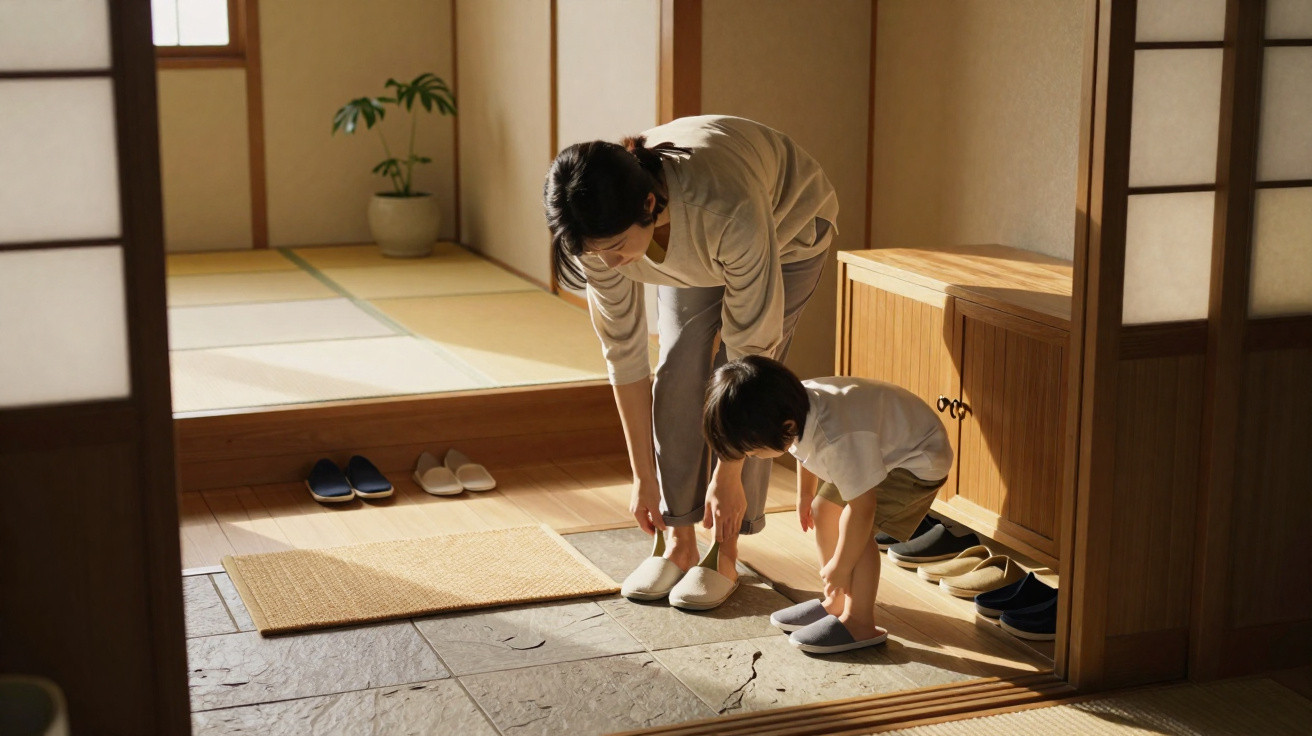
In Japan, taking off shoes before entering a home is more than a hygiene rule. The custom distinguishes the outside world from private living space, protects delicate surfaces such as tatami, and makes the entrance - known as the genkan - a clear boundary between the street and the home.
Why are shoes left at the entrance?
The genkan is the lowered area immediately inside the front door, where shoes are removed before stepping up to the indoor floor. This change in height physically indicates where the outdoors ends and the clean area of the home begins.
The etiquette is also about consideration for others. By removing their shoes, visitors show respect for the home, the host and the work involved in keeping the space clean, particularly in households where people sit, sleep or eat close to the floor.
What is the origin of this Japanese custom?
The practice of taking footwear off indoors has existed in Japan for many centuries. Records link it to at least the Heian period, from 794 to 1192, when it was initially observed by elite groups before becoming more widespread throughout society.
- The humid climate meant footwear often carried mud and dirt.
- Raised-floor homes required a division between the street and the interior.
- Rooms with tatami needed protection from dust and moisture.
- Living close to the floor reinforced the importance of keeping indoor flooring clean.
What do shoes reveal about the organisation of a Japanese home?
This habit demonstrates that a Japanese home is arranged not only by rooms, but also by different levels of cleanliness and purpose. The outside brings dust, rain, soil and impurities from the street, whereas the interior is expected to remain suitable for resting, eating and spending time together.
In many homes, people put on indoor slippers after removing their shoes. In certain areas, including tatami rooms, even these slippers are left outside to avoid damaging the straw and bringing dirt onto the surface.
How does this Japanese custom support wellbeing at home?
Going indoors without shoes limits the dirt brought in from the street, makes cleaning easier and leaves the floor more pleasant for walking barefoot or in socks. Its everyday effect is clear: less dust, fewer marks on the floor and a more distinct sense of transition when arriving home.
- The entrance becomes a place to slow down after being outside.
- Indoor floors stay cleaner for longer.
- Children can play on the floor with less contact with external dirt.
- Rugs, tatami and wooden floors experience less wear.
- Changing footwear creates a small arrival ritual.
A custom that has crossed borders
The Japanese practice has attracted attention in other countries because it addresses a straightforward issue: less of the street enters the home when shoes stop at the door. In small flats, homes with babies, allergy sufferers or light-coloured flooring, the change reduces visible dirt and makes cleaning easier to manage.
Adopting this habit does not mean replicating an entire Japanese home. A simple entrance area with a mat, shoe rack and clean slippers for visitors is enough. The central principle remains unchanged: keep what has come in from the street separate from the space where the home breathes, rests and welcomes its residents.




Comments
No comments yet. Be the first to comment!
Leave a Comment