
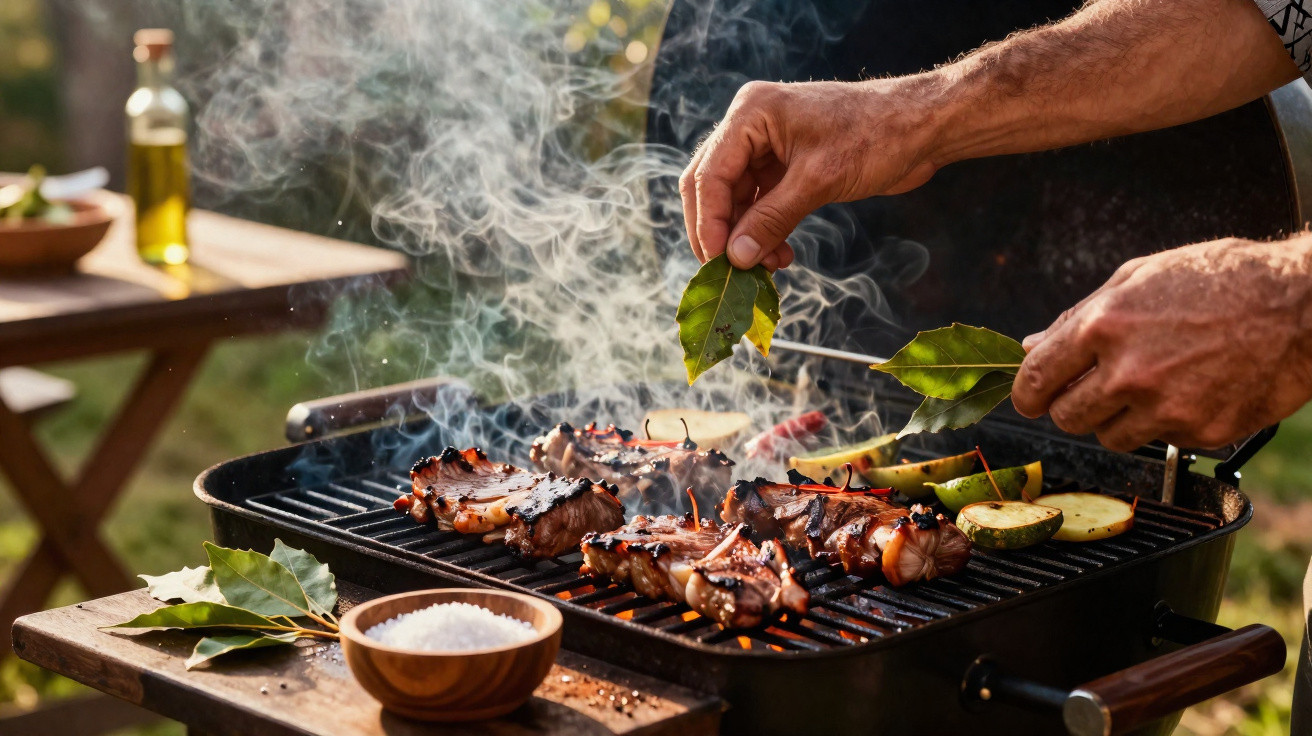
Throwing bay leaves on barbecue coals scents the smoke surrounding meat, vegetables and cheese as they cook. Heat releases the leaves’ aromatic oils, producing a subtle herbal fragrance that works best when used sparingly towards the end of barbecuing.
Why do bay leaves alter the aroma of a barbecue?
Bay leaves contain aromatic compounds that become especially noticeable when heated. On the coals, these scents rise with the smoke and reach the food’s surface, particularly fatty cuts of meat, chicken, sausages, grilled vegetables and grilling cheese.
This is not the same as seasoning meat throughout. The leaves mainly add an outer fragrance, like a final layer of aromatic smoke. For that reason, bay leaves are more effective as a barbecue finishing touch than as a replacement for salt, a marinade or resting the meat.
When should you throw bay leaves on barbecue coals?
The ideal time is once the coals are established, with no high flames, and the meat is nearly cooked. This lets the bay leaves burn slowly, release their fragrance and avoid producing overly harsh smoke.
- Use them at the end of cooking, during the final few minutes on the grill.
- Choose glowing coals without high flames.
- Add only a few leaves at a time to prevent a bitter aroma.
- Pair them with fattier meat, chicken, firm fish, vegetables and cheese.
How can you use bay leaves without creating a bitter taste?
The most frequent mistake is using too much. A large handful of dried leaves can produce dense, bitter smoke, particularly on a small barbecue or in an area with limited ventilation.
Start with 2 to 4 dried leaves for a domestic grill. Place them straight onto the coals or on a hot piece of charcoal, wait for the smoke to rise, then keep the food on the grill for just a few minutes so that it picks up the fragrance.
What precautions should you take before adding them to the barbecue?
Use clean, dry culinary bay leaves. Avoid leaves from similar-looking ornamental plants, mouldy leaves, branches treated with chemicals, or plant material collected from streets, public gardens or sprayed areas.
- Do not add too many damp leaves, as they can put out some of the coals.
- Do not use bay leaves with oil, alcohol or any other firelighter.
- Keep children away from the barbecue while cooking.
- Avoid excessive smoke in enclosed or poorly ventilated spaces.
- Remove whole leaves from food if they have been used directly as seasoning.
Bay leaves work best as a detail, not the main feature
Bay leaves on the coals provide a brief aromatic note, ideal for anyone wanting to vary a barbecue without changing the main cooking method. They perfume the smoke, complement hot fat and leave an herbal undertone that is more apparent in the aroma than in the meat’s deep flavour.
For the best result, use only a few leaves, maintain steady coals and keep exposure brief. Added at the right time, bay leaves do not overpower the barbecue; they simply bring another aromatic layer to the grill, charcoal and juices already browning over the fire.





Comments
No comments yet. Be the first to comment!
Leave a Comment