
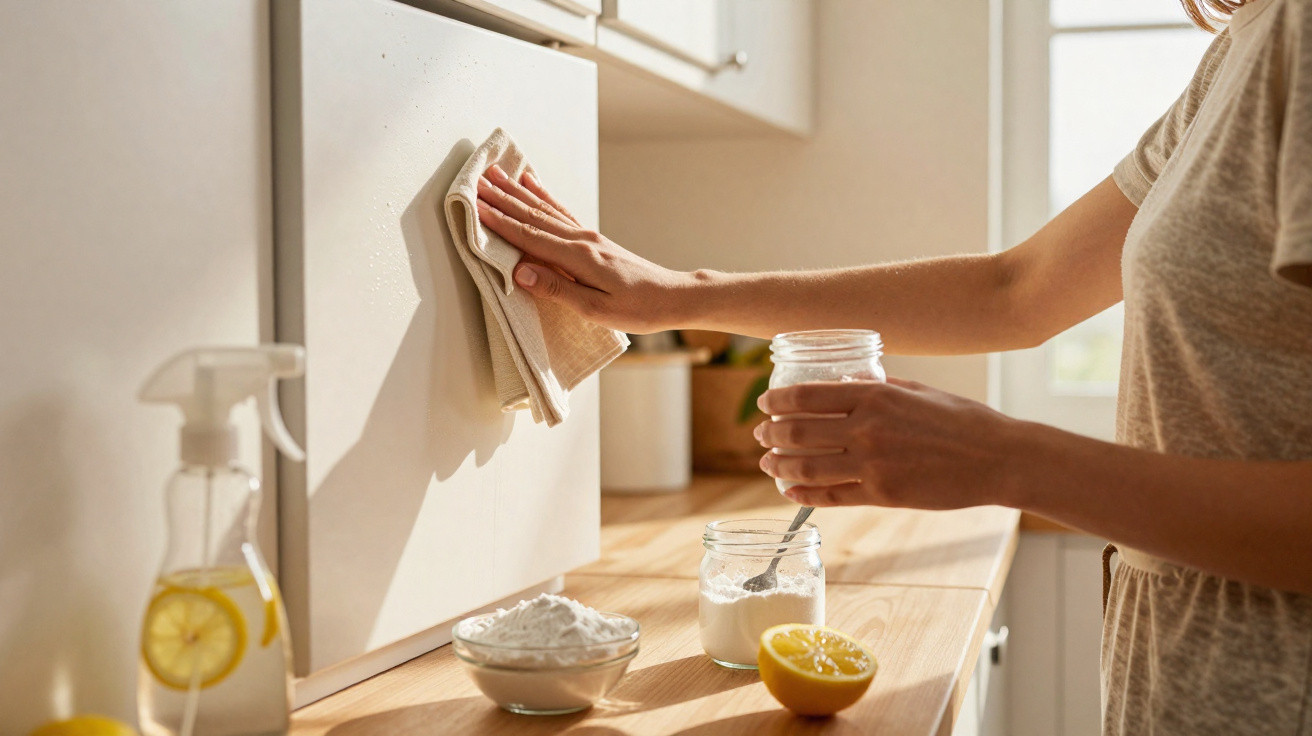
In many kitchens, a sticky layer builds up on wall cabinets without anyone noticing straight away: a stubborn mix of grease and dust that gradually turns into a dull, grimy film. Rather than reaching for costly specialist cleaners, the answer is usually already in the cupboard – and it works remarkably well.
Why kitchen cabinets become greasy so quickly
When frying, deep-frying or cooking, tiny droplets of fat rise into the air. They settle on any surfaces that are not wiped down regularly. Dust and dirt from the room then cling to them, creating the familiar slightly yellowish layer of grease.
- Wall cabinets above the cooker are affected most severely.
- Matt or textured cabinet fronts absorb grease more readily than smooth, high-gloss surfaces.
- Infrequent ventilation or not using the extractor hood makes the problem worse.
Over time, ordinary washing-up water is often no longer enough. The coating becomes streaky, feels sticky and seems to return after every clean.
Bicarbonate of soda: an unassuming powder with powerful results
The simplest yet highly effective solution can be found in the baking or spice cupboard: bicarbonate of soda. Many people know it as a raising agent or a remedy for indigestion, but this powder is also surprisingly effective as a cleaner.
“Bicarbonate of soda breaks down grease and dirt, provides gentle abrasion and is considerably milder than harsh kitchen cleaners.”
How to use bicarbonate of soda
A small amount is all that is needed to give kitchen cabinets a thorough clean:
- Mix the solution: Add two to three teaspoons of bicarbonate of soda to a bowl of warm water and stir well until most of the powder has dissolved.
- Prepare the sponge: Dip a soft sponge or microfibre cloth into the mixture and wring it out lightly so that it does not drip.
- Clean the surfaces: Rub the greasy areas using circular movements. For particularly stubborn patches, leave the cloth slightly wetter.
- Allow a brief contact time: Leave the solution on the surface for one to two minutes so the bicarbonate of soda can soften the grease and dirt.
- Wipe over afterwards: Thoroughly wipe the area with a clean, damp cloth, then dry it off.
Bicarbonate of soda is mildly abrasive. It gently removes an extremely thin layer of grime without scratching most surfaces. A soft sponge is ideal for painted or coated cabinet fronts. On hard-wearing, textured surfaces, a little more pressure can be used.
When the grease film is especially stubborn
In older kitchens or on badly neglected surfaces, grease often works its way deep into small pores and textures. In this case, a simple extra step can help:
- Add a squirt of washing-up liquid directly to the bicarbonate of soda solution.
- Stir thoroughly until it foams slightly.
- Apply it as described above, leave it briefly, then wipe the surface clean thoroughly.
The washing-up liquid dissolves grease chemically, while the bicarbonate of soda provides mechanical support. Together, they noticeably boost the cleaning effect without filling the air with strongly scented sprays.
Vinegar, lemon and more: what else works and when to take care
Alongside bicarbonate of soda, many households use other straightforward kitchen cupboard products. They can be useful, although they need to be used with some care.
Vinegar water for grease and odours
A mixture of warm water and a little vinegar removes greasy residue, neutralises odours and also has an antibacterial effect. It is a practical option for durable surfaces, particularly inside cabinet surfaces and handles.
It can be problematic on:
- untreated wood,
- delicate painted finishes,
- marble or natural stone surfaces close to cabinets.
The acid may roughen or discolour these surfaces. If in doubt, test vinegar water first on a concealed area.
Lemon for a fresh scent
Lemon juice has grease-cutting qualities similar to vinegar, but smells much more pleasant. A few splashes in lukewarm water are often enough to remove light greasy haze and leave the kitchen smelling fresh.
“Lemon gently removes grease, leaves a fresh scent and is particularly suitable for a quick clean in between.”
Here too, test an inconspicuous area first if the cabinet fronts appear delicate or the manufacturer does not recommend acidic cleaners.
How to prevent new greasy films
Anyone who does not want to clean their cabinets constantly should rely on small, regular tasks. This keeps the grease layer much thinner and makes it easier to remove.
Wipe down regularly
Using a damp microfibre cloth after cooking is almost like an insurance policy against grease build-up. A quick wipe over the fronts, especially above the cooker, prevents the film from forming in the first place.
- After intensive frying, quickly wipe the area with clean water.
- Use a milder bicarbonate of soda solution once a week.
- Change cloths regularly so that grease is not reapplied.
A thin protective layer of oil
It may sound surprising, but a trace of cooking oil on freshly cleaned surfaces can make dirt less likely to stick. The idea is that the oil forms an ultra-thin layer on which fresh grime settles less readily and can be wiped away more easily.
Here is how it works:
- Clean the surface thoroughly and allow it to dry completely.
- Put a few drops of neutral oil, such as sunflower oil, onto a soft cloth.
- Spread it very thinly over the cabinet front without leaving streaks.
- Buff with a second cloth.
This method is best suited to durable, smooth surfaces. Use it sparingly and carefully on open-pored wood or paintwork that is already heavily worn.
What to consider for different materials
Not all kitchen cabinet fronts are the same. The right cleaning method depends heavily on the material. This general guide can help prevent damage:
| Material | Suitable product | What to watch for |
|---|---|---|
| Melamine / coated chipboard | Bicarbonate of soda solution, mild washing-up liquid | Do not use abrasive sponges |
| Painted cabinet fronts | Diluted bicarbonate of soda solution, soft cloth | Always test on an inconspicuous area first |
| Oiled solid wood | Mild soap solution only; dry very thoroughly | No acids; use bicarbonate of soda only if extremely diluted |
| High-gloss cabinet fronts | Damp microfibre cloth, minimal cleaning product | Buff away streaks with a dry cloth |
Why bicarbonate of soda suits households so well
Bicarbonate of soda is a classic household remedy. It is inexpensive, available in almost every supermarket and has many uses, from baking to cleaning. Unlike many ready-made cleaners, it contains no fragrances, colourings or harsh chemicals.
This is exactly why it appeals to people with pets or young children: if some ends up on the floor, a damp cloth is usually all that is needed, rather than worrying about irritating residue. Nevertheless, do not inhale bicarbonate of soda, avoid getting it in the eyes and keep it out of children’s reach.
Anyone wishing to make gradual changes in their kitchen can first replace some specialist degreasers with bicarbonate of soda and see how well it works in everyday use. In many homes, harsh sprays are then needed only for extreme cases – while powder, warm water and a few targeted steps take care of the rest.






Comments
No comments yet. Be the first to comment!
Leave a Comment