
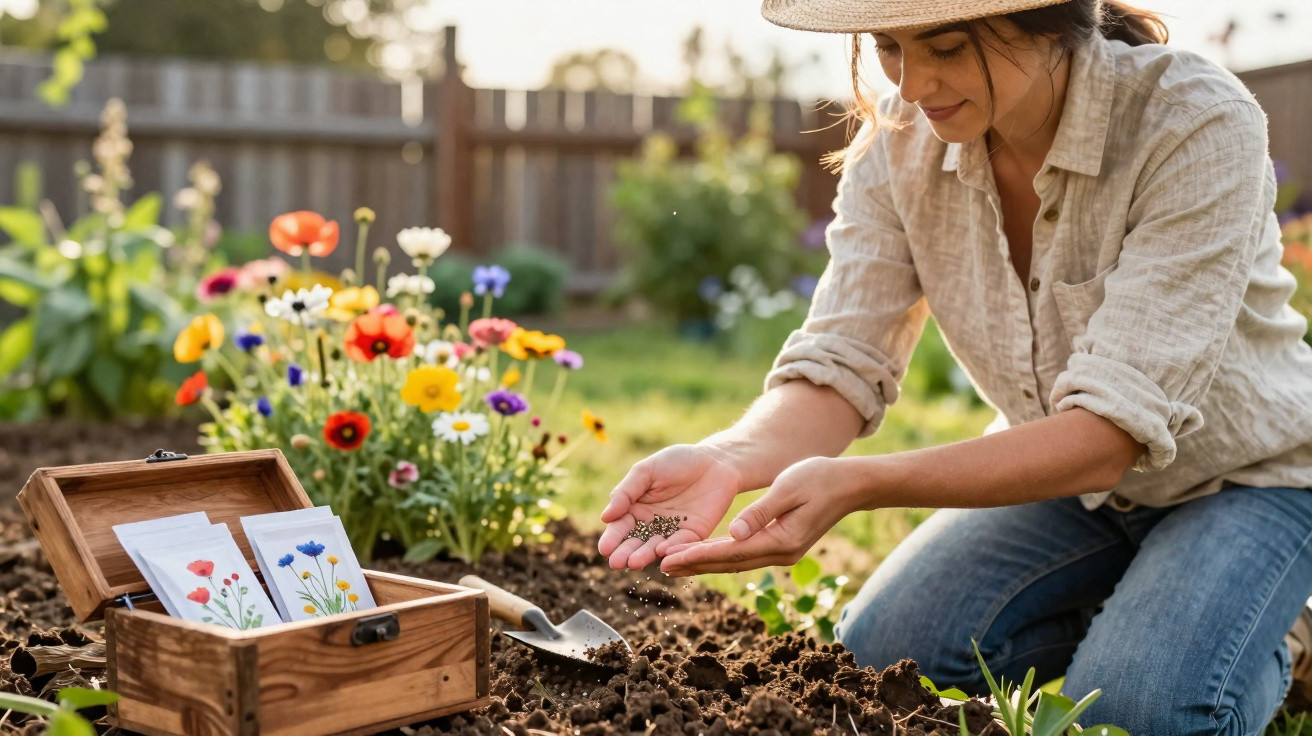
Many amateur gardeners face the same dilemma in spring when looking at packets of seed: too much choice and too little time. Yet experts have long praised one delicate, “feathery” summer flower that can turn beds, pots and even gloomy rented balconies into a sea of blooms for months, with remarkably little effort.
Why this ‘feather flower’ belongs in every garden now
The plant in question is Nigella damascena, often known in English as love-in-a-mist. Its defining features are its fine, almost feather-like foliage and floating blooms, which evoke traditional cottage gardens. Garden professionals have relied on it for years whenever they want a quick, easy yet romantic-looking display.
“Those who sow Nigella now can expect fresh blooms from June right through to September – even in a small urban garden.”
Its major benefit is that Nigella is considered a tough annual summer flower. It germinates dependably, copes with cooler nights and manages well in average soil. This makes it ideal for anyone who does not want to spend hours gardening but still wants plenty of colour.
The key benefits at a glance
- Long flowering period, roughly from June to September
- Suitable for flower beds, raised beds, containers and window boxes
- Attracts bees, bumblebees and hoverflies
- Excellent as a cut flower for a vase, where it lasts for up to ten days
- Self-seeds readily, often returning by itself the following year
Many nurseries and experienced home gardeners now agree: if you only want to buy one packet of seed, it is difficult to go wrong with Nigella.
How to sow Nigella properly now
The good news is that there is no need for laborious indoor propagation. Most gardeners sow straight outdoors once the soil has dried out and is no longer frozen. In mild areas, this can start as early as March; in cooler regions, April is usually more suitable.
Direct sowing in a bed or raised bed
- Loosen the soil and remove any large stones or remaining roots.
- Scatter the fine seeds thinly across the surface, taking care not to sow them too densely.
- Cover them with a light layer of soil or compost, around 0.5–1 cm deep.
- Water gently so that the seeds are not washed away.
- Keep the soil evenly and lightly moist until germination, which takes 1–3 weeks.
Once the seedlings are a few centimetres tall, they should be thinned out. A spacing of 20–30 cm is ideal for producing open, bushy plants. If this is overlooked, flowers will still appear, but there will be noticeably fewer of them and the plants are more likely to be thin and stunted.
An ideal option for balconies and small spaces
Anyone without garden soil can simply begin in shallow trays or pots. This method also works on a windowsill, terrace or compact city balcony.
- Fill a shallow tray with loose potting compost.
- Scatter the seeds fairly densely, as they will be planted out later.
- Do not firm them down; simply dust them lightly with compost.
- Position them somewhere bright but out of intense midday sun.
As soon as the young plants look sturdy and have produced a few true leaves, they can be moved on – into larger containers, among perennials or even into gaps in the vegetable plot. This is where Nigella proves particularly useful as a gap-filling plant.
Position, care and flowering tips: how to fill summer with colour
Nigella thrives in sunshine. A position in full sun to light partial shade will produce the greatest number of flowers. The soil needs to drain freely, as the plant does not tolerate waterlogging at all.
| Criterion | Recommendation for Nigella |
|---|---|
| Position | Sunny to partially shaded |
| Soil | Loose, rather low in nutrients, well-drained |
| Watering | Regularly, but never constantly wet |
| Plant spacing | 20–30 cm |
| Use | Bed, container, cut flower, dried flower |
Continuous blooms with minimal care
Maintenance is straightforward. Keeping a few simple tasks in mind will reward you with an impressively long flowering period:
- Water regularly, particularly during prolonged dry spells.
- Remove faded flower heads to encourage new buds.
- Sow fresh seeds every two to three weeks if an especially long flowering display is wanted.
- In very nutrient-poor soil, apply a small amount of organic fertiliser occasionally.
“The more often you cut Nigella for the vase or remove spent flowers, the more vigorously it responds with fresh blooms.”
For this reason, many home gardeners adopt a small routine: during an evening walk around the garden, they cut a few stems for a vase and pick off faded blooms at the same time – often, that is all it takes.
Why Nigella is especially practical for families
Anyone trying to balance work, children, household duties and a garden needs reliable partners in the flower bed. Nigella meets these needs remarkably well.
Benefits beyond appearance
- A plant for pollinators: Its flowers draw in numerous insects, which can also have a positive long-term effect on fruit and vegetable yields.
- Low-cost decoration: A packet of seed usually costs only a few pounds, yet provides weeks of cut flowers.
- A teaching plant for children: Its readily germinating seeds are ideal for showing children how plants grow and how nature’s cycle works.
At the end of the season, many gardeners deliberately allow some seed pods to ripen. The attractive, balloon-shaped seed heads not only look lovely in dried arrangements; they also often ensure that new plants emerge in the same spot the following year, without any further sowing.
Creative ideas: how to showcase Nigella to best effect
Nigella looks particularly attractive when distributed loosely and naturally. Rather than being planted in formal rows, it is better suited to a slightly wild cottage-garden style.
Popular combinations for flower beds
- Between roses, to soften the rigid look of rose beds
- With lavender, cosmos or baby’s breath for airy, romantic mixed planting
- In the vegetable plot among lettuce, cabbage or tomatoes – helpful for pollinators and visually striking
- In larger containers alongside grasses and fragrant herbs such as thyme
If you want to try making floral arrangements, cut the stems in the morning when the plants are well hydrated. In a simple glass vase with a few grasses or roses, Nigella appears far more elegant than its easy-care nature might suggest.
What beginners should also know
A few details repeatedly worry new gardeners: the fine, needle-like leaves look almost exotic in photographs, but appear very delicate in a flower bed. This is perfectly normal and not a sign of deficiency. As long as the plants are standing firmly and producing buds, everything is progressing as it should.
Those gardening through a particularly wet summer only need to watch two things: prevent waterlogging in pots and, where necessary, lightly support plants that have fallen over badly. Usually, a slim cane or leaning them against neighbouring perennials is sufficient.
For people with very little time, Nigella can become something of a “no-worries flower”: sow it once in spring, water it a little from time to time and occasionally cut some stems for a vase – and suddenly the garden looks as though a professional stylist has had a hand in it.




Comments
No comments yet. Be the first to comment!
Leave a Comment