
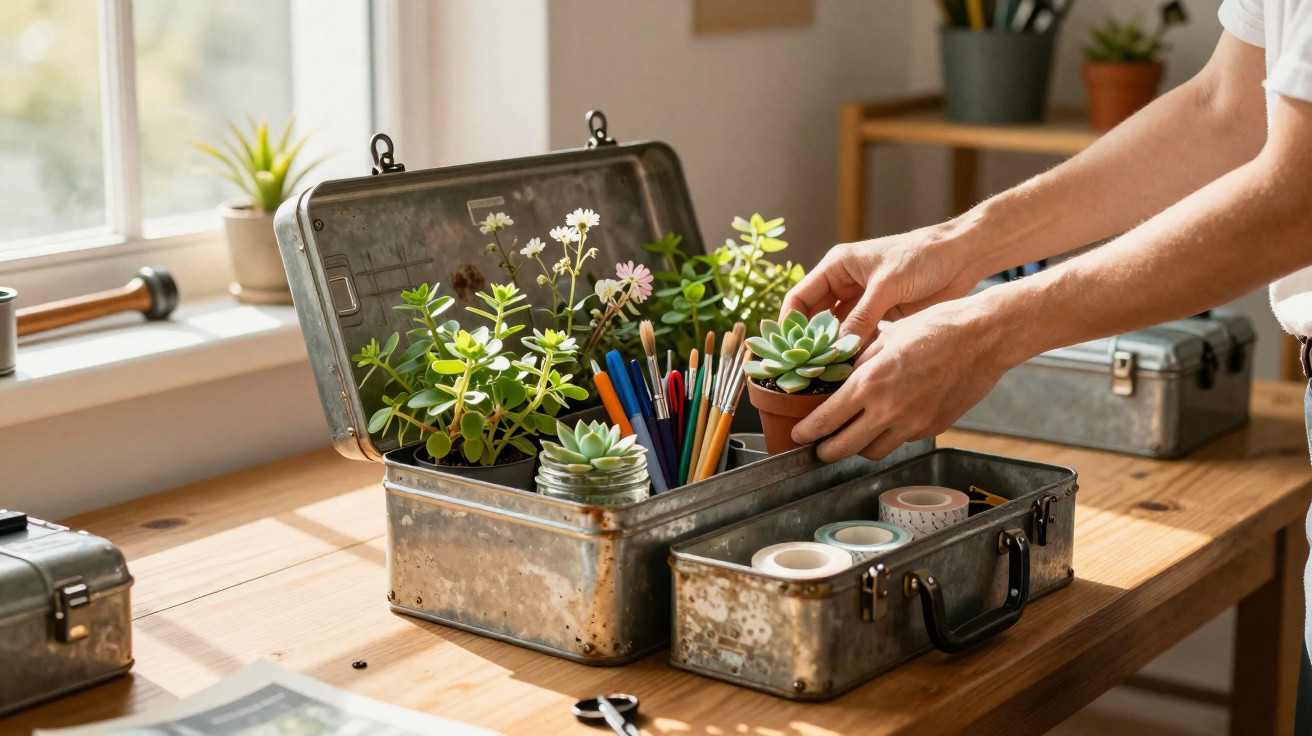
That rusty toolbox sitting at the back of the garage or tucked into a corner of the utility room may offer far more than it first suggests. Its sturdy sheet-metal construction, internal compartments and rugged industrial look give it real decorative potential, without the need for drastic restoration or significant expense.
What to check before making any changes
Before sanding, painting or cutting anything, inspect the item carefully. Some old toolboxes carry sentimental, historical or even collectors’ value, and heavy-handed alterations can destroy the very features that made them distinctive. Embossed manufacturer’s marks, original rivets, hinged catches and lettering are details worth retaining.
From a structural perspective, check that the metal is sound, the hinges work properly, and that any rust is superficial rather than having eaten through the metal. Raised edges and sharp points must be dealt with before the box is used in the home. For the initial clean, wear work gloves and use a damp cloth with mild detergent; do not dry-sand before establishing what the original paint is. Very old paint may contain lead, and removal with sanders or heat can release dust that is harmful to health.
- Work gloves: protect hands from sharp edges, rust and possible old-paint residue throughout cleaning and preparation.
- Damp cloth and mild detergent: the first clean should lift grease, dust and loose rust without dry-sanding before the paint composition has been identified.
- Felt or EVA foam for the interior: removable liners protect stored items without being glued directly to the metal, preserving the box and making it easier to clean.
- Plastic tray for plant pots: when using it as a planter, never put soil straight into the toolbox; a removable tray shields the metal from moisture and rust.
- Light machine oil for hinges: use only if the mechanism has seized, applying it sparingly so it does not stain the interior or the items stored inside.
First idea: a portable organiser for an office or craft room
The easiest and most reversible transformation is to turn the toolbox into a portable organiser. Compartments once used for screws, spanners and pliers can hold pencils, brushes, scissors, thread, ribbons or make-up supplies. Its existing internal layout already does much of the organising work, with no need to add new dividers.
To line the inside without harming the metal, cut removable felt or EVA foam inserts to fit each compartment. Avoid sticking them directly to the sheet metal, so the solution remains reversible. This lets you change how the box is used whenever you wish, while protecting the metal from scratches and residue. The original handle is another advantage: it makes it easy to carry the organiser from room to room, something an ordinary desk storage box cannot offer.
Second idea: an industrial-style planter for plants and flowers
A toolbox can also make an excellent decorative planter with an industrial aesthetic, a style especially popular in modern interiors, lofts and rustic balconies. Left open and filled with small plants, it creates an appealing contrast between aged metal and green foliage.
How to use a toolbox as a planter without rusting the inside
Never place soil directly in the toolbox.
The essential rule is to put a removable plastic saucer or tray in the bottom of the box before adding potted plants. Damp growing medium in direct contact with the sheet metal greatly speeds up internal oxidation, potentially damaging both the box and the plants’ roots. With a tray in place, the toolbox acts as an outer container that can be cleaned and maintained easily.
Succulents, cacti and other low-watering species are best suited to this use, as they create little moisture and visually complement the box’s rustic metal appearance. If you want to avoid all contact with moisture, good-quality dried flowers or artificial plants work just as well, particularly where the box has more delicate rust that cannot get wet.
Another approach is to place small pots, each with its own saucer, directly inside the open toolbox without covering the bottom with a plastic tray. This keeps every plant entirely separate, allowing them to be watered or replaced individually without moving the others. The toolbox serves as a frame and supporting base, rather than as a container for growing medium.
Other uses to consider beyond the two main ideas
A toolbox with a range of compartments can also become a spice rack in the kitchen, with small spice jars arranged in its internal sections. In ateliers and art studios, it can work as a portable kit for taking materials to classes and workshops. In children’s bedrooms, it can store collections of small toys, miniature cars or stationery supplies. The size of the toolbox will determine the most practical purpose.
All of these transformations share one principle: respect for the original object. An old toolbox does not need to stop being what it has always been in order to look attractive in a new setting. Sometimes, the rusty detail, faded factory marking or worn catch is precisely what gives it character-something no new version of the same product could replicate.
Where to find old toolboxes and what is worth looking for
Beyond the toolboxes already at home, antique fairs, charity shops, second-hand shops and garage sales are excellent places to find pieces with far more personality than modern alternatives. Toolboxes from historic brands, featuring old embossed or printed logos, have extra visual appeal that can make a more dedicated search worthwhile. Prices are usually very affordable, as most people do not immediately recognise these items’ decorative potential.
If this idea has made you see a forgotten corner of the garage differently, share it with someone else who keeps old things waiting for the right moment to become something new.





Comments
No comments yet. Be the first to comment!
Leave a Comment