
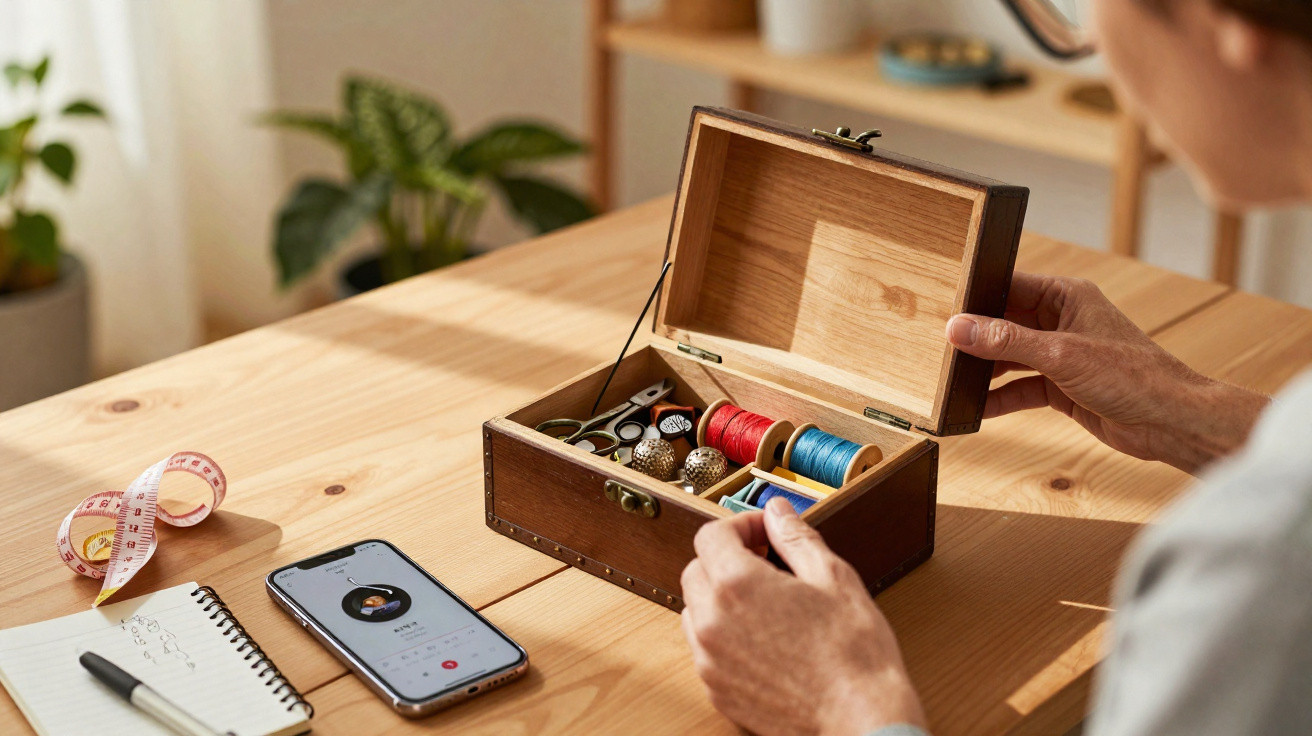
Countless cupboards still contain a forgotten wooden box filled with reels of thread, buttons and bent pins. Usually inherited, never used and often on the verge of being taken to the tip. Throwing it away without a second thought could prove an expensive mistake: the market for vintage furniture and old needlework accessories is booming, and classic sewing boxes and their contents are benefiting from it.
Why old sewing boxes are suddenly in demand
Retro fashion, “do it yourself” culture and sustainable consumption have all gained enormous momentum in recent years. At the same time, the global market for vintage clothing and accessories has grown into a multi-billion-pound sector. The trend extends far beyond designer handbags, reaching right down to the small wooden box with a pin cushion from Grandma’s day.
Old sewing boxes and their contents are moving from bric-a-brac into a serious collecting category, sometimes fetching surprising prices.
The explanation is simple: many items that were once ordinary are no longer manufactured, at least not to the same standard. Skilled workmanship, solid timber, finely made metalwork and carefully considered details have largely disappeared from mass production. Collectors, vintage enthusiasts and interior stylists are prepared to pay for precisely these qualities.
The most sought-after examples include:
- solid-wood sewing boxes dating from the 1950s to the 1970s
- older tools, such as embroidery scissors, thimbles and tape measures, made to a high standard
- accessories in silver, brass, mother-of-pearl or finely worked steel
- unusual designs, including legged sewing cabinets or distinctive compartment layouts
Features of a valuable sewing box
Assessing the shape, age and type of wood
You do not need to be a restorer to spot the first clues. Take time to inspect the box closely:
- Construction: The classic work box with folding, concertina-style compartments is especially popular, as are freestanding sewing cabinets on legs.
- 1950s and 1960s styling: Slim splayed legs, sometimes called “grapefruit” or compass feet, warm honey-coloured veneer and clean lines are characteristic of the post-war economic boom years.
- Solid wood rather than cheap board: Noticeable weight, visible grain and edges that are not crumbling are positive signs. Beech, walnut, rosewood and oak were commonly used.
- Joints: Small dovetail joints at the corners indicate high-quality cabinetmaking.
A light, wobbly box made from thin chipboard with swollen synthetic-resin decoration is more likely to sit at the lower end of the market. A sturdy, well-made sewing box with a smoothly operating mechanism has far stronger prospects.
Checking the mechanism and details
Open every compartment, move the hinges and examine the underside. The key points are:
- Mechanism: Does everything open easily, without sticking or jolting? Older, solidly made boxes often still work remarkably well.
- Fittings: Thicker hinges, screws instead of staples, and neatly fitted metal components suggest better quality than flimsy strips of sheet metal.
- Surface: Minor scratches and patina are not a problem; they can even add authenticity. Flaking varnish, water damage or mould will significantly reduce the value.
The real treasures are often inside the sewing box
Many people underestimate the contents and focus solely on the wooden box. Yet the real sources of value are often tucked into the small compartments among leftover thread and assorted buttons.
Thimbles, scissors and more with an unexpected range in value
A basic plastic thimble has no real value. However, pieces made from genuine silver, often dating from the 19th or early 20th century, can quickly achieve two-figure sums and, in individual cases, three-figure prices.
Indicative values:
| Item | Typical price range | Notes |
|---|---|---|
| Older silver thimble | approx. 50–300 € | depends on condition and silversmith |
| Embroidery scissors in forged steel | from approx. 20–80 € | the “stork” design is especially popular |
| Branded scissors from Nogent | at least 13–55 € (new), older examples often more | look for the maker’s mark on the metal |
Silver can be identified by its characteristic hallmarks and with a magnet test: genuine silver items are not magnetic. A strong magnet therefore will not stick. Small animal heads or stylised women’s faces used as stamps often point to silverware.
What the box itself can be worth – from 20 to 250 euros and beyond
Its price depends heavily on age, condition, material and design:
- Legged sewing cabinets from the 1960s: In good condition, these often sell for 80–150 €, while particularly attractive pieces can reach around 160–250 € in the decorative interiors market.
- Unusual forms: Highly original or rare designs can also achieve nearly 200 € or more at auction.
- Simple cardboard or velvet boxes from the 1930s: These are generally worth more like 20–40 €.
- Woven basket-style models: Usually around 40–60 €.
In one documented case, a combination of a high-quality wooden box and a good selection of tools realised more than 200 euros because the items were sold separately: the box on its own and the tools individually.
Preparing your sewing box for sale
Cleaning without reducing its value
Many owners are tempted to scrub everything until it looks “as new”. That can be costly. Collectors value patina, the natural ageing of a surface. Aggressive metal polish or abrasive sponges can destroy exactly that layer.
- Clean metal components only with a soft cloth and a little white toothpaste, then wipe with water and dry immediately.
- Lightly dust wooden surfaces, then apply a thin layer of a mixture of linseed oil and white spirit substitute to nourish the timber without stripping the old finish.
- Vacuum or gently brush out the internal compartments, removing old thread remnants and dust, but initially keep the contents together in sorted groups.
Do not “polish it up at any cost” – careful care improves the sale proceeds far more effectively than radical cosmetic treatment.
Photographs and a sales strategy
Clear photographs are essential for a credible valuation and a good selling price. Take pictures of:
- the overall view when closed and when opened
- close-ups of hinges, legs and handles
- every hallmark, engraved brand name and stamp
- individual especially interesting items, such as scissors, thimbles and tape measures
Then consider how you want to sell:
- Online marketplaces and local classified listings: Best suited to sound but not exceptional boxes priced at up to around 150 euros.
- Online brocante and home décor platforms: These appeal mainly to interior stylists and vintage fans willing to pay for design.
- Auction houses: Worth considering where an expert values the item clearly above 150–200 euros, or where there are many valuable individual pieces.
The following approach has proved useful for setting a price: begin slightly above the figure you realistically expect, then monitor interest. If many enquiries arrive, keep the price where it is. If there is little response, reduce it gradually.
When selling items separately makes sense – and when it does not
Not every box needs to remain intact as a complete set. If it contains several silver pieces, branded tools or particularly rare accessories, selling them individually may be worthwhile. This allows you to make better use of their collector value.
A sensible split would be:
- list high-quality thimbles, scissors and tape measures separately
- leave standard buttons, ordinary thread reels and everyday needles as a bundle or in the box
- sell the wooden box itself as a decorative piece if enough individual items are of interest separately
Anyone with limited time who does not want to manage dozens of separate listings is better off selling everything together. The overall price will be a little lower, but it saves effort.
How to recognise quality without specialist knowledge
Many readers feel uncertain when dealing with “antiques”. Even so, a few straightforward rules of thumb can help:
- Heavier pieces usually feel more substantial than extremely lightweight ones.
- Neatly executed engraving, patterns and edges point towards hand craftsmanship.
- Always make a note of unfamiliar brand names on metal tools and research them.
- If something appears “too good to be cheap mass-produced goods”, it is often a collector’s item.
If you would rather not make a judgement yourself, you can send photographs to local auction houses or specialists on relevant platforms. Many will provide a rough price range, sometimes free of charge and sometimes for a small fee.
An old-fashioned hobby, a modern side income
Sewing may seem like a relic from another era to many people, but it is becoming important again through repair trends and the desire for individuality. It is precisely in this space between nostalgia and sustainability that old sewing boxes offer opportunities for their owners.
Rather than disposing of what appears to be a dusty box, it is worth taking a closer look. In some cases, it can become an attractive home accessory for your living room; in others, it may provide an unexpected contribution towards the next electricity bill. Anyone familiar with a few basic principles of materials, workmanship and silver hallmarks can quickly identify one small valuable object in a dusty inherited box – or several.




Comments
No comments yet. Be the first to comment!
Leave a Comment